
Overview
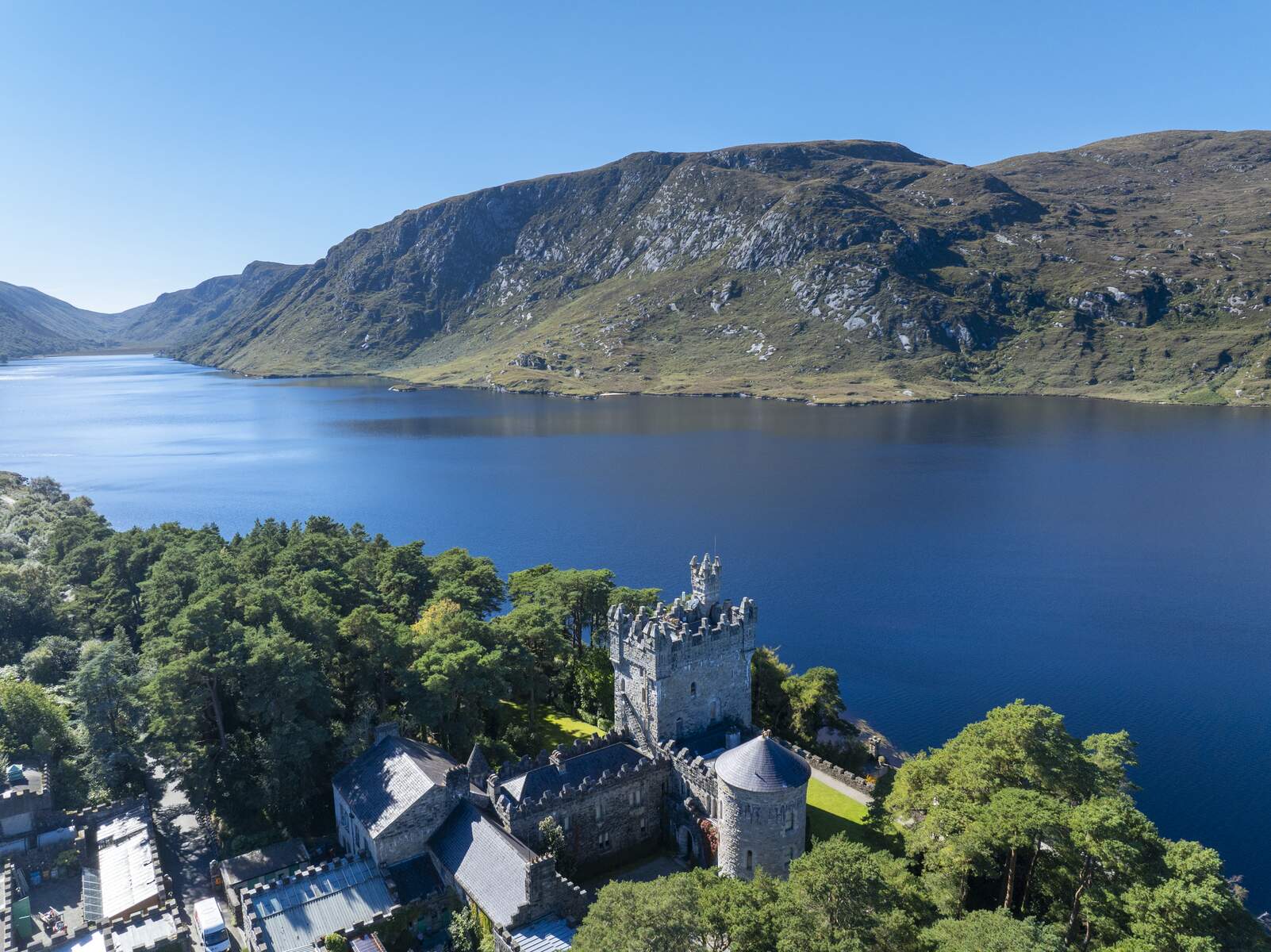
Poisoned Glen (Irish: An Gleann Neamhe) lies in the heart of the Derryveagh Mountains, just outside the village of Dunlewey in the Donegal Gaeltacht. The valley stretches beneath the iconic silhouette of Mount Errigal, the highest peak in the range, and opens onto the shimmering waters of Dunlewey Lough. Its name – a mis‑translation of the original Heavenly Glen – adds a layer of mythic intrigue, but the scenery is anything but poisonous: endless green moorland, dramatic rock faces and a solitary 19th‑century marble church create a landscape that feels both timeless and otherworldly.
History & Legend
Local folklore tells that the valley earned its ominous name when the one‑eyed giant king Balor of Tory was slain here by his grandson Lughaidh. According to legend, the poison from Balor’s eye seeped into the rock, “poisoning” the glen. A more prosaic explanation points to a cartographic error: the Irish word neamh (heaven) was mistakenly rendered as neimhe (poison) by an English map‑maker, and the misnomer stuck. Both stories are woven into the visitor experience, with the “green lady” ghost said to haunt the area, adding a touch of the supernatural to the walk.
What to See & Do
- Walk the 4 km round‑trip trail – The main footpath begins at a roadside parking spot at a hairpin bend on the R251, just east of the Dunlewey turn‑off. The trail winds through the glen’s lush valley, past the ruined Dunlewey Church (c. 1830, built of locally quarried white marble) and along the right bank of the Owenabhainn River. The walk is unpaved and can be muddy in places, so sturdy hiking boots are advisable.
- Mount Errigal backdrop – The valley offers unrivalled views of Errigal’s jagged summit, especially from the designated Poison Glen View Point. Photographers love the contrast of the dark rock crags against the green valley and the distant ocean horizon.
- Bearnas Buttress – For the more adventurous, the glen hosts Ireland’s largest continuous rock face, a popular venue for climbers and mountaineers.
- Cultural connections – The landscape has inspired musicians such as Clannad and Altan; Altan’s 2015 album Gleann Nimhe – The Poison Glen pays homage to the area. The nearby community remains a hub for traditional Irish music.
- Viewpoint amenities – At the viewpoint you’ll find benches, free parking, a coffee van, and a buggy‑friendly surface, making it a comfortable spot to pause and soak in the panorama.
Practical Information
Poisoned Glen is freely accessible to the public and open every day. The most straightforward route is via the R251, which branches off the N56 about 3 km east of Gweedore. After turning onto the R251, continue for roughly 4.7 km; the road narrows and winds, ending at a fork marked for the glen. A small lay‑by provides free parking at the trailhead. The walk itself is self‑guided – no ticket is required, and there are no formal opening hours beyond the public right‑of‑way.
| Opening Hours | Admission |
|---|---|
| Open daily | Free |
The glen’s GPS coordinates are 55.018596, -8.111524. While the terrain is rugged, the path is well‑marked, and the ruined church at the valley’s entrance offers a striking photographic subject. Visitors often combine the glen walk with a stroll around Dunlewey Lough or a visit to nearby Glenveagh National Park, both reachable within a short drive.
Getting there – From Letterkenny, follow the N56 eastward toward Gweedore, then take the R251 as described. The drive from Gweedore to the glen takes about 15 minutes. Public transport options are limited; a private car or a local taxi service is the most reliable way to reach the trailhead.
Facilities – The viewpoint provides benches and a coffee van for a quick refreshment. Pets are allowed, and the area is buggy‑friendly, making it suitable for families with young children who can manage the uneven ground.
Safety – The path can be slippery after rain, and some sections are steep. While there are no official rescue services on site, the route is popular and mobile coverage is generally good.
Nearby attractions – After exploring the glen, consider the Lakeside Walk to Glenveagh Castle, or continue on to the Seven Sisters peaks of the Derryveagh range for more extensive hiking.
With its blend of dramatic geology, mythic history and vibrant cultural ties, Poisoned Glen offers a uniquely Irish experience that feels both wild and welcoming.
Useful links