
Overview
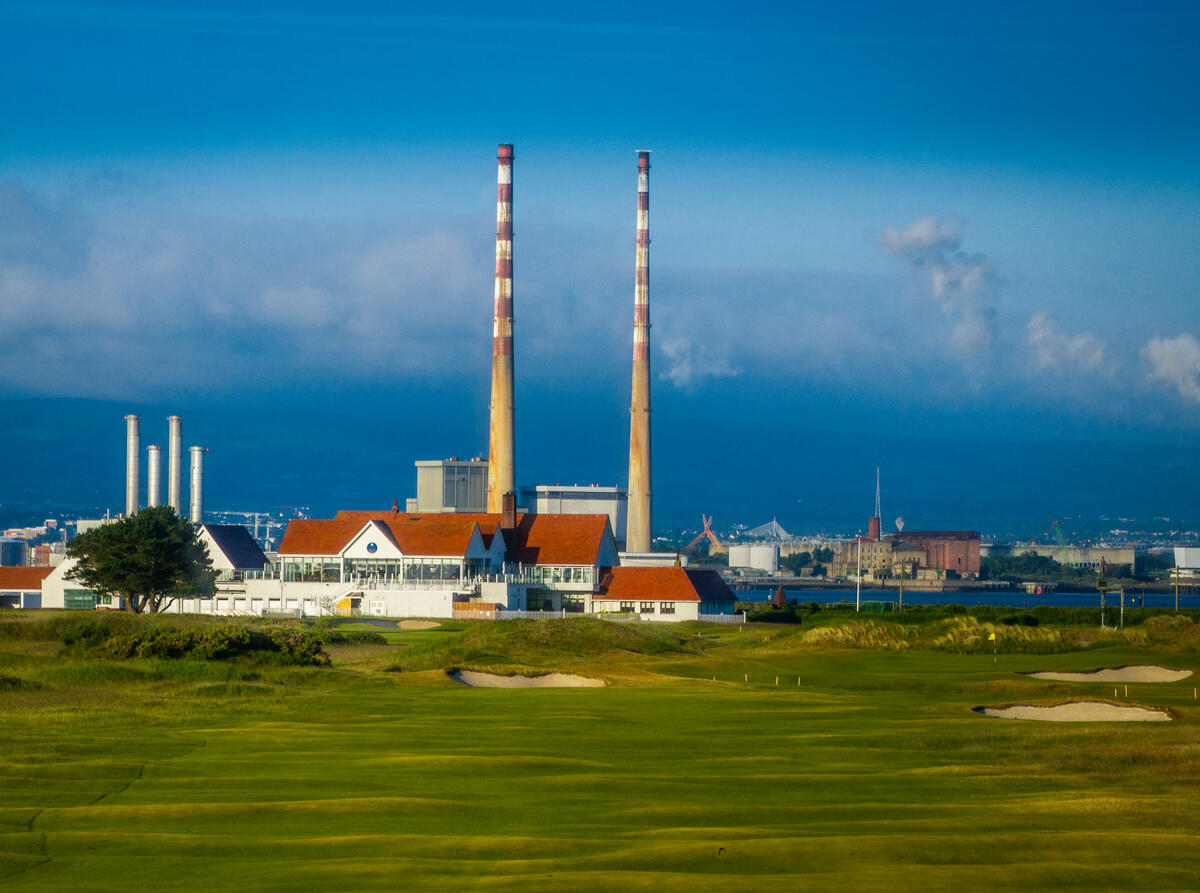
Poolbeg Power Station, often referred to as the “Poolbeg Stacks,” sits on the reclaimed Poolbeg Peninsula at the mouth of the River Liffey. Its two concrete chimneys rise just over 207 metres (about 680 ft), making them the tallest structures in Dublin and among the most recognisable landmarks in the capital. The station is owned and operated by the Electricity Supply Board (ESB) and currently runs a combined‑cycle gas turbine (CCGT) plant with a capacity of roughly 463 MW. Although the industrial complex itself is not open for tours, the surrounding waterfront provides striking vistas of the stacks, the Dublin Port, and the historic Great South Wall.
History
The site’s story stretches back to the 18th century when a caretaker’s lodge – the original “Pigeon House” – was built to support workers constructing the Great South Wall. By 1793 a hotel had opened, later converted into a military fort after the 1798 Rebellion. In 1897 the fort was sold to Dublin Corporation, which established the city’s first major electricity generating station, the Pigeon House Power Station, operating from 1903 until its decommissioning in 1976.
The modern Poolbeg complex was conceived in the mid‑1960s. Construction began in 1965 and the first two thermal units (Units 1 and 2) were commissioned in 1971 at a cost of £20 million. Unit 3 followed in 1978. These three units could fire on oil or gas, a flexibility that kept the plant relevant for decades. In the 1990s the ESB added a combined‑cycle gas plant – CG14 (1994), CG15 (1998) and steam turbine ST16 (2001) – boosting efficiency and output. The older thermal units were retired on 31 March 2010, leaving the CCGT plant as the sole source of power at the site.
The twin chimneys, known locally as Chimney A (completed 1971) and Chimney B (1977), were engineered using vertical slip‑form concrete techniques. Both stand over 207 m tall, with Chimney B slightly taller. Their upper sections are painted red and white and fitted with warning lights to aid aircraft navigation. In 2014 the stacks were listed as protected structures, cementing their status as industrial heritage icons.
What to See & Do
Even though the interior of the power station is off‑limits, the surrounding area offers several rewarding experiences:
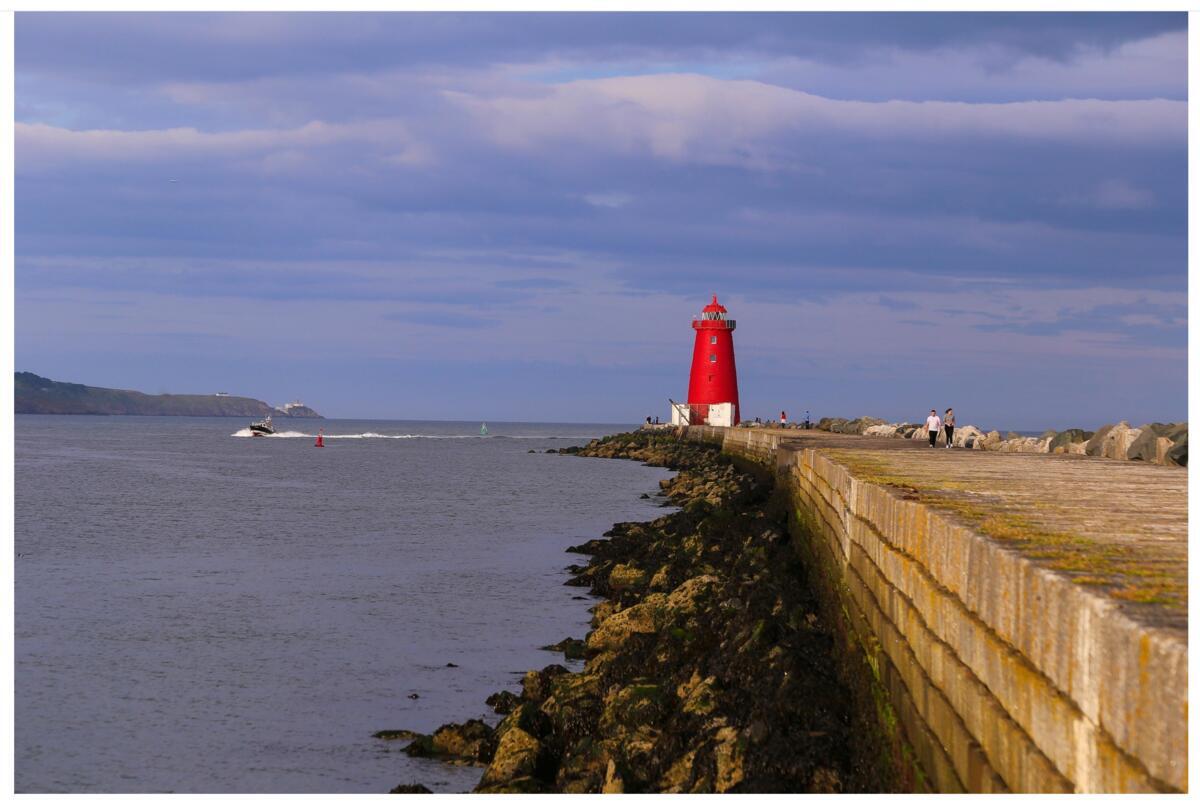
- Photographic viewpoints – The stacks dominate the horizon from many angles. The most celebrated perspective is from the sun‑deck of the Ulysses ferry, which sails the Dublin Bay route. Photographers also favour the promenade along the Great South Wall and the area near the historic Poolbeg Lighthouse for sunrise shots.
- Historical context – Walk along Pigeon House Road and spot the red‑brick façade of the original Pigeon House generating station (1903) to the right of the modern plant. Interpretive plaques near the site explain the evolution from the 18th‑century fort to today’s CCGT facility.
- Industrial architecture – Observe the seamless concrete rings of Chimney A, a testament to the slip‑form method, and compare its tapering profile with the broader base of Chimney B. The contrasting designs illustrate changes in engineering practice over the 1970s.
- Nearby attractions – The Poolbeg Peninsula is adjacent to Dublin Port, the historic Great South Wall, and the modern Dublin Waste‑to‑Energy plant (operational since 2017). A short walk brings you to the iconic Poolbeg Lighthouse, offering panoramic views of the bay and the city skyline.
Practical Information
- Access – The power‑station grounds are fenced and not open to the public. Visitors are encouraged to view the stacks from public walkways, the ferry deck, or nearby roads. The address for navigation is Pigeon House Rd, Ringsend, Dublin 4.
- Viewing safety – The chimneys are equipped with red‑white day‑time markings and navigation lights; they are safe to view from a distance. The site’s perimeter is clearly sign‑posted.
- Transport – The location is a short drive from Dublin city centre. Several Dublin Bus routes serve the Ringsend area and drop passengers within walking distance of the waterfront promenade. Parking is available in the public car parks operated by Dublin Port; check local signage for any time limits.
- Facilities – There are no visitor facilities on the power‑station site itself. Nearby cafés and eateries can be found in the Docklands and along the waterfront.
- Online resources – For up‑to‑date technical details, refer to the ESB’s official page on Poolbeg (link to be verified).
Visiting Tips
- Best photo times – Early morning light and the golden hour provide dramatic contrast against the stacks; the sunrise over the lighthouse is especially popular.
- Weather – The site is exposed to the sea breeze; a wind‑proof jacket is advisable year‑round.
- Dog‑friendly – Dogs are permitted on the public walkways and in the car parks, provided they are kept on a lead.
- Family‑friendly – The open promenade is safe for children, though the fenced power‑station area must be respected.
The Stacks in Culture
The Poolbeg stacks have become a visual shorthand for Dublin in film, music, and art. They appear in the video for U2’s “Pride (In The Name Of Love)” and feature prominently in countless paintings of the city’s harbour. Their silhouette greets arriving aircraft and departing ships, symbolising both the industrial past and the city’s ongoing transformation toward cleaner energy.
Looking Ahead
While the original thermal units have been retired, the CCGT plant continues to supply a substantial share of Dublin’s electricity. The ESB’s broader strategy includes expanding renewable generation, but the Poolbeg site remains a critical piece of the national grid. Conservation debates about adaptive reuse of the chimneys are ongoing, ensuring that these towering landmarks will remain part of Dublin’s skyline for generations to come.
Poolbeg Power Station is best experienced as a landmark rather than a conventional attraction. Bring a camera, enjoy the waterfront ambience, and let the twin stacks remind you of Dublin’s industrious spirit.