
Overview
Renmore Barracks – known in Irish as Dún Uí Mhaoilíosa – is a working Irish Army installation on the outskirts of Galway city. Though the gates are active military property, the site welcomes the public to its military museum and the adjoining St Patrick’s Garrison Church. Together they form a compact heritage precinct that tells the story of the Connaught Rangers, the Irish Volunteers, the Civil War, and the modern 1st Infantry Battalion’s peace‑keeping deployments across the globe.
The barracks lie at the end of Renmore Road, just a short walk from Lough Atalia and the coastal promenade of Ballyloughane beach. Its location makes it an easy add‑on to a day exploring Galway’s west‑coast attractions.
History
Early military use
The site’s military history predates the 19th‑century barracks. In the 1640s a fort known as St Augustine’s Fort was erected on the headland to protect the southern approach to Galway. By the 1780s two separate army buildings existed in the town – the Shambles Barracks and the Castle Barracks – which later proved inadequate for a modern depot.
19th‑century origins
The War Department purchased the Renmore lands and, in 1880‑1881, commissioned the Dublin contractor Colleran Brothers to build a new depot. Completed in 1881, the complex became the training depot for the 87th (Royal Irish Fusiliers) Regiment of Foot and the 88th Regiment of Foot (Connaught Rangers). After the Childers Reforms the 88th merged with the 94th to form the Connaught Rangers, who made Renmore their home depot.
War of Independence, Civil War and rebuilding
Following the Anglo‑Irish Treaty, the British garrison withdrew in early 1922. On 13 February 1922 IRA commandant Seán Broderick led the 4th Battalion into the gates, signalling the hand‑over to the Irish Free State. The barracks changed hands during the Civil War and suffered damage. In 1936 the Irish Army, under contractor H. McNally & Co., rebuilt the complex, adding the distinctive square‑plan tower with blocked gun loops that still dominates the south‑west corner.
Renaming and modern use
In 1952 the site was renamed Dún Uí Mhaoilíosa in honour of Liam Mellows, a Galway‑born leader of the 1916 Rising. Today it houses the 1st Infantry Battalion (An Chéad Cathlán Coisithe).
Architecture (Buildings of Ireland)
The compound is a rectangular walled enclosure built of coursed snecked limestone. It features rusticated ashlar gate piers with double‑leaf metal gates, a square‑plan tower with gun‑loop apertures, and a central guardhouse with crenellated parapet. The interior includes a seventeen‑bay single‑storey block with a round‑headed doorway and a series of single‑storey service buildings, all typical of late‑19th‑century British military architecture.
What to See & Do
Dún Uí Mhaoilíosa Museum
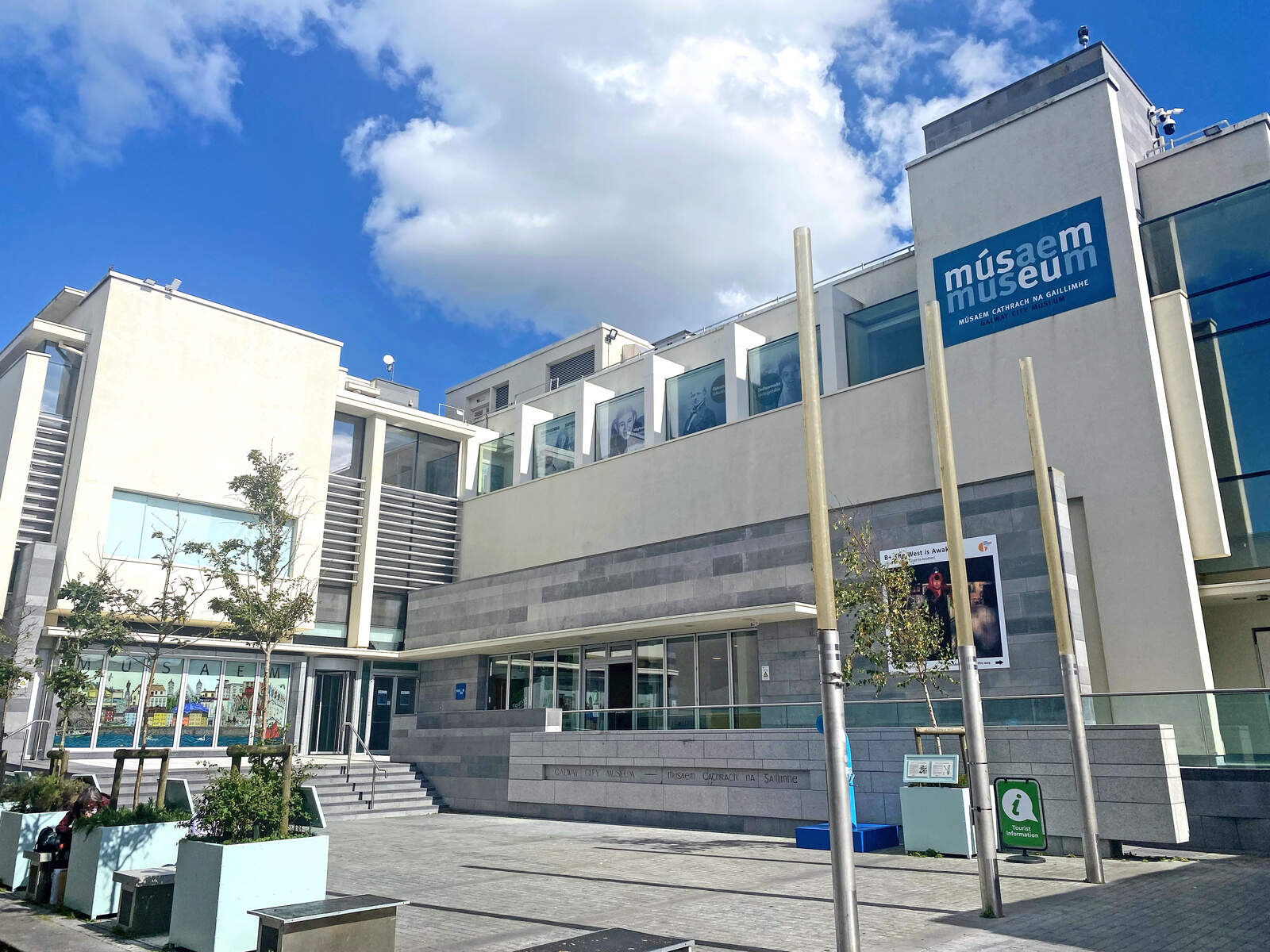
The museum, originally opened in 1985 and modernised in 2008, is dedicated to preserving the memory of the men and women who served through more than a century of conflict and peace‑keeping. Its three galleries cover:
- The Connaught Rangers (1881‑1922) – uniforms, weapons, personal letters, a drum and a mounted ram’s head from the officers’ mess.
- The struggle for independence – artefacts from the War of Independence, the Civil War and the early Irish Free State, plus a display on Liam Mellows (motorbike, walking stick, revolvers, signed book).
- UN peace‑keeping missions – weapons and memorabilia from deployments to the Congo, Cyprus, Lebanon, Chad and Afghanistan, including the axe from the 1960 Niemba Ambush.
The museum is run by a small team of volunteers; there is no admission fee, though donations are welcome.
St Patrick’s Garrison Church
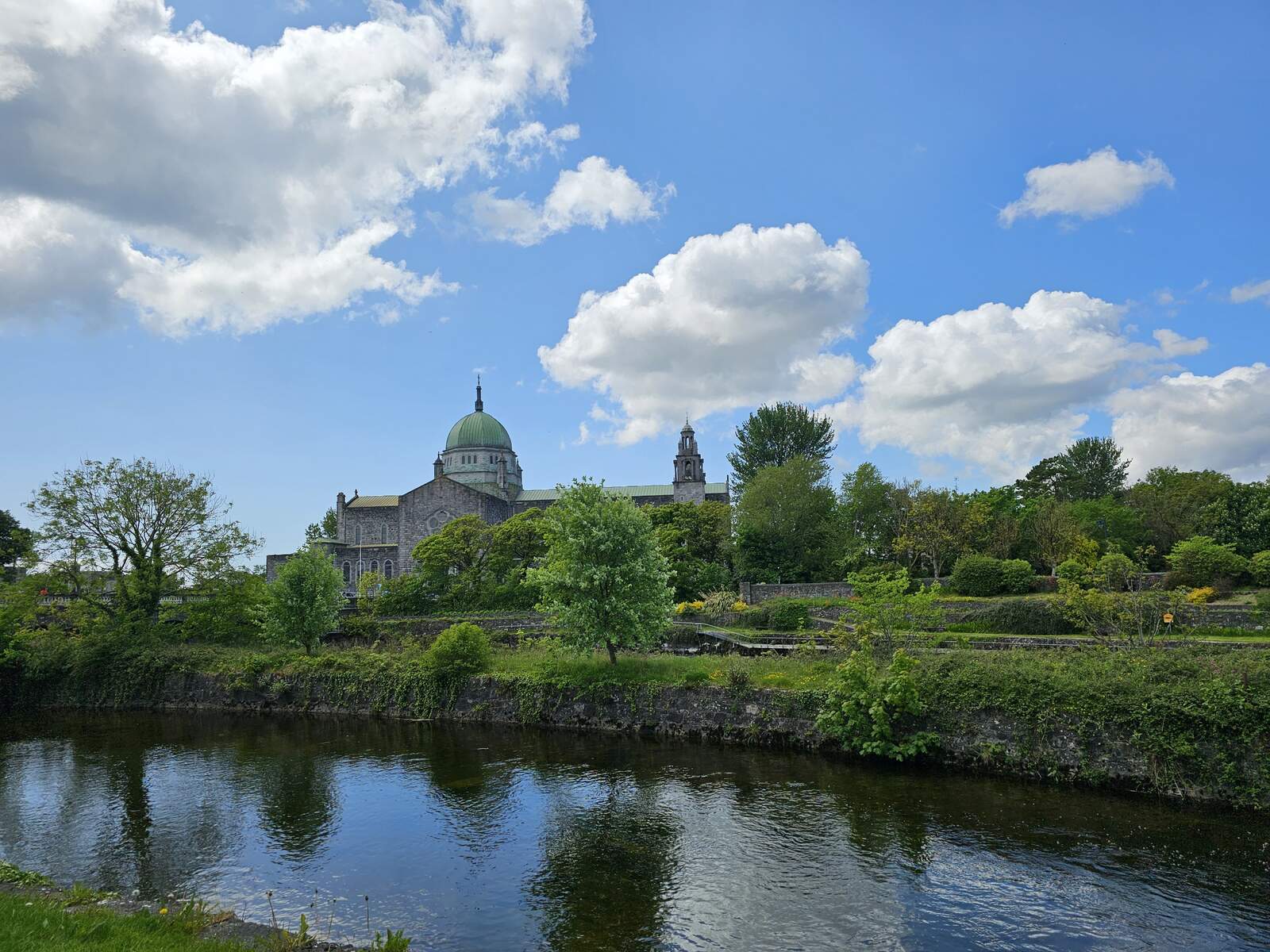
Built in the 19th century, the church is a fine example of Gothic Revival architecture with lancet windows, a rose window, and a wooden vaulted ceiling. Inside visitors can see:
- Stained‑glass windows depicting saints and regimental symbols.
- Regimental standards and memorial plaques for soldiers who fell in the Crimean War, the Boer War, the First World War and later UN missions.
- A quiet chapel still used for Defence Forces services.
Guided tours
The Galway Civic Trust organises heritage tours that combine the church and museum. Tours are by appointment and places are limited.
| Date | Time | Contact |
|---|---|---|
| 13 Aug 2022 | 13:00 – 14:30 | 086 327 3349 / bookings@galwaycivictrust.ie |
| 17 Aug 2024 | 12:00 – 13:30 | 086 327 3349 / bookings@galwaycivictrust.ie |
| 22 Aug 2025 | 14:00 – 16:00 | 086 327 3349 / bookings@galwaycivictrust.ie |
Practical Information
Booking a visit
The museum is open by appointment only. Appointments should be made at least one week in advance.
- Email: dunuimhaoiliosamuseum@defenceforces.ie
- Phone: (091) 751156 (Adjutant or Sgt PJ Maloney)
- Website: https://www.military.ie/en/public-information/defence-forces-museums/dun-ui-mhaoiliosa-museum/
Accessibility
Wheelchair access is available to the ground‑floor exhibition rooms; the upper gallery and church nave have steps. Visitors needing assistance should mention this when booking.
Parking & transport
- Car: A free perimeter car park is available for museum visitors. Spaces are limited during tour times.
- Bus: Routes #401 and #402 stop at “Renmore Barracks” on Renmore Road.
- Walking: A paved promenade from Lough Atalia to the barracks takes about 15 minutes.
Opening hours
- By appointment only – typical tour windows are 12:00‑13:30 or 14:00‑16:00. Confirm exact times when you book.
Nearby attractions
Renmore Barracks sits close to the Lough Atalia nature walk and the Ballyloughane beach promenade, making it easy to combine a cultural visit with a coastal stroll. The city centre of Galway is only 2 km away and offers a wide range of restaurants, shops and historic sites such as the Spanish Arch and St Nicholas’ Collegiate Church.
Further Reading
- Wikipedia entry: Renmore Barracks
- Galway Civic Trust event page: Tour of the Garrison Church and Renmore Barracks Military Museum (2024)
- Detailed historical blog on the 1922 takeover: Takeover of Renmore Barracks – 13 February 1922
Renmore Barracks offers a rare blend of active military life and carefully curated heritage. Whether you are a history enthusiast, a student of Irish independence, or simply curious about the nation’s modern peace‑keeping contributions, a visit to Dún Uí Mhaoilíosa provides a tangible link to the past.