
Overview
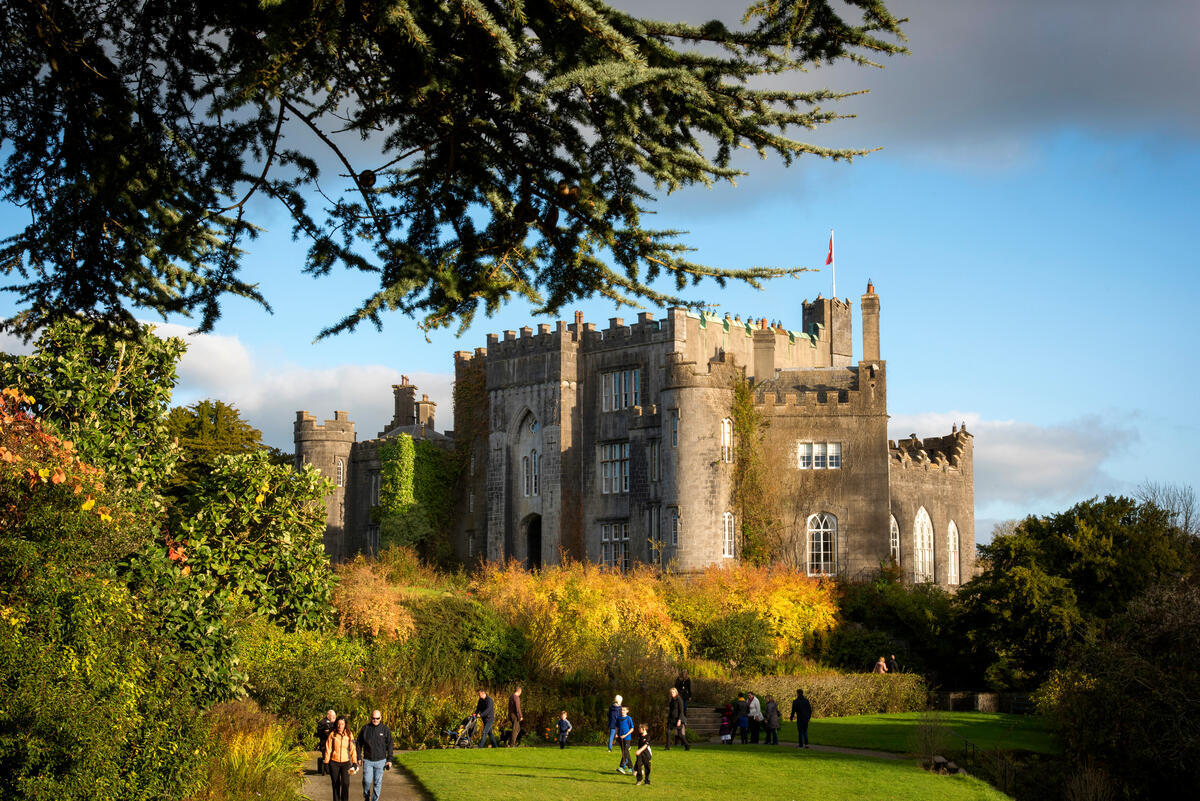
The River Camcor is a lively tributary of the Little Brosna River, rising on the western slopes of the Slieve Bloom Mountains and winding its way south‑east for about 12 miles (19 km) before joining the Little Brosna in the demesne of Birr Castle. From there the waters continue to the River Shannon via the Little Brosna. The Camcor is a classic Irish spate river – its level can rise dramatically after heavy rain in the Bloom mountains, creating rapid flows, striking waterfalls and a burst of life for fish and birds alike. Today the river is a free‑entry natural amenity that frames the historic town of Birr, offering walkers, anglers and history lovers a compact yet richly layered experience.
History & Background
The Camcor has been a lifeline for the Birr area since at least the 6th century, when a monastic settlement was founded by St Brendan of Birr on its banks. During the 19th century the river powered sawmills, corn‑milling stones and even generated electricity for the town, cementing its role in the industrial growth of Parsonstown (the former name of Birr). Within the castle’s demesne the Camcor meets the Little Brosna, a confluence that has been deliberately altered over centuries to suit milling and later landscaping needs. The river’s clean springs, abundant watercress and easy crossing points helped early settlements thrive, and its name – Abhainn Camcor – still echoes the Gaelic heritage of the landscape.
Recent Archaeology
In 2025 a team from the Irish Heritage School excavated the ruins of Clonoghill Castle on the Camcor’s southern bank. Radiocarbon dating placed the structure between 1380‑1480 AD, linking it to the O’Carroll clan’s medieval strongholds. The dig uncovered thick stone walls, possible floor‑level features and evidence of 18th‑century glass‑making activity. The site is now part of a newly sign‑posted heritage walk that follows the river from Elmgrove to the castle, funded by a €17,538 Outdoor Recreation Projects grant announced in 2024. Interpretive panels along the route explain the castle’s history and the later glass‑making phase.
What to See & Do
Riverside Walks
The Birr Town Trail includes a dedicated River Walk (Route 2) that follows the Camcor for 1.1 km through Mill Island and Camcor Parks. Strolling along the well‑maintained path you’ll pass the historic weir set against the striking façade of St Brendan’s Catholic Church – a favourite spot for Instagram photos. Further downstream the old library, housed in a former convent chapel, offers stained‑glass windows and hand‑painted murals that add a cultural twist to the riverside stroll. The walk is paved and suitable for strollers, push‑chairs and most mobility aids. A parallel fisher‑man’s path on the northern bank remains unpaved and can be eroded after floods.
Angling
The Camcor is renowned for its “Croneen” trout – a unique brown‑trout strain that migrates from Lough Derg each year to spawn in the river’s gravel beds. Salmon also make the journey, leaping the falls during the autumn run. Key fishing stretches include Palmers Flats (from Syngfield (Green) Bridge to Clonbrone (Red) Bridge) and the reaches from the Maltings upstream through Sandymount and Syngefield. The river’s character changes with the water level: low water offers quiet pools for dry‑fly tactics, while flood‑high water brings fast riffles that respond well to larger wet‑fly patterns such as Bloody Butcher or Thunder & Lightning.
Wildlife & Nature
Beyond fish, the Camcor’s banks are dotted with patches of watercress, a plant with a culinary tradition that stretches back millennia. Birdwatchers can spot kingfishers, grey herons, dipper and occasional king‑eiders that hunt the river’s abundant insects. The limestone‑rich water supports a healthy macro‑invertebrate community, which in turn sustains the trout population.
Ecology & Conservation
The Camcor flows over a limestone substrate, giving the water an alkaline pH (typically 7.5‑8.5) that favours brown trout and salmon. It is designated a Wild Trout Conservation Area, meaning artificial‑fly‑only fishing is mandatory from the source to Elmgrove Bridge; downstream of that bridge both artificial fly and worm/spinning methods are permitted, though fishing is prohibited within the Birr Castle demesne. The river’s banks host alluvial woodlands and watercress beds, both of which are important for biodiversity. Regular surveys note healthy stocks of brown trout (6‑10 oz) and larger Croneen (1‑1.5 lb). Occasional salmon runs occur in late summer and early autumn.
Flood Management & Safety
As a spate river, the Camcor can rise quickly after heavy rain on the Slieve Bloom slopes. Historical flood events in 1954 and 1999/2000 affected low‑lying parts of Birr. The river lies within Flood Zone A (high probability) in the town centre and Flood Zone B (moderate probability) along its lower reaches. Anglers and walkers are advised to check recent water‑level data on the Irish Water River Levels website before setting out, especially in winter months. Local authorities maintain weirs and embankments, and the Office of Public Works (OPW) oversees broader catch‑catchment flood‑risk measures. Non‑structural advice includes avoiding the riverbank after heavy rain and keeping dogs on a lead near nesting birds.
Future Developments & Recent Studies
The Birr 20|20 vision includes a 5 km Camcor Loop Walk linking the town centre, Elmgrove, and the historic Clonoghill Castle site. Expected to open in 2025, the route will be fully sign‑posted, wheelchair‑friendly where possible, and feature interpretive panels on the river’s natural and industrial heritage. Funding for the project comes from the €17,538 grant awarded in 2024, supplemented by community volunteer work through the Camcor Working Group. A 2021 independent study commissioned by Birr 20|20 (JBA Consulting) proposed a suite of nature‑based improvements: additional seating, native‑plant planting from the All‑Ireland Pollinator Plan, biodiversity trails, temporary event spaces and enhanced foot‑path linkages. Many of these recommendations are being incorporated into the Loop Walk. The Camcor Working Group, chaired originally by Councillor Peter Ormond and now overseen by the Birr 20|20 Vision team, continues to monitor the river’s health, coordinate fencing works, and promote educational resources such as the 2022 book Camcor – The River of Birr by John Feehan.
Practical Information
The Camcor is open year‑round and free to access.
Access & Parking
- Car parks – Free parking is available at the Birr Castle demesne car park and at the town’s main car parks on Main Street and the Castle Grounds. Both are a short, sign‑posted walk to the River Walk.
- Public transport – Birr is served by Bus Éireann routes 321 and 322 from Tullamore and Portlaoise; the nearest stop is the Birr bus station, a 5‑minute walk to the river trail.
- Path condition – The River Walk (Route 2) is paved and suitable for strollers and most mobility aids. The northern fisher‑man’s path is unpaved and may be eroded after floods; a new fence and signage are being installed as part of the 2024 grant works.
Angling Permits & Regulations
Fishing on the Camcor is managed by Inland Fisheries Ireland’s Midland Fisheries Group. Anglers must hold a valid fishing permit, which can be purchased online via the Midland Permit page or at local tackle shops.
| Regulation | Detail |
|---|---|
| Size limit | 9 inches |
| Bag limit | 6 trout per day |
| Permit required | Yes (Midland Fisheries Group) |
The river is designated a Wild Trout Conservation Area. Artificial fly‑only fishing is mandatory from the source to Elmgrove Bridge; downstream of Elmgrove Bridge to the Maltings, both artificial fly and worm/spinning methods are permitted, but fishing is prohibited within the Birr Castle demesne at all times.
Anglers are encouraged to practice catch‑and‑release, especially in September when the Croneen run peaks. The Little Brosna and Camcor Fishing Club oversees local rules; they can be contacted at +353 86 385 8221 (mobile) for advice or to arrange club‑specific permits.
Seasonal Highlights
- March – September – Open fishing season, with the best trout action from July to September.
- Winter floods – The river can rise quickly after heavy rain; anglers should check water levels before heading out.
Further Reading & Resources
- Birr FAN Trail – Camcor page – https://birrfantrail.ie/abhainn-the‑river‑camcor/ (official trail information, maps and signage details).
- Irish Water River Levels – https://www.irishwater.ie/river-levels (real‑time water‑level data).
- Camcor – The River of Birr by John Feehan (2022) – a concise guide to the river’s natural history, mills, biodiversity and heritage.
- Midland Fisheries Group – Permit information – https://www.fisheriesireland.ie/midland (official permit purchase page).
For more detailed history and walking maps, visit the dedicated Camcor page on the Birr FAN Trail website.