
Overview
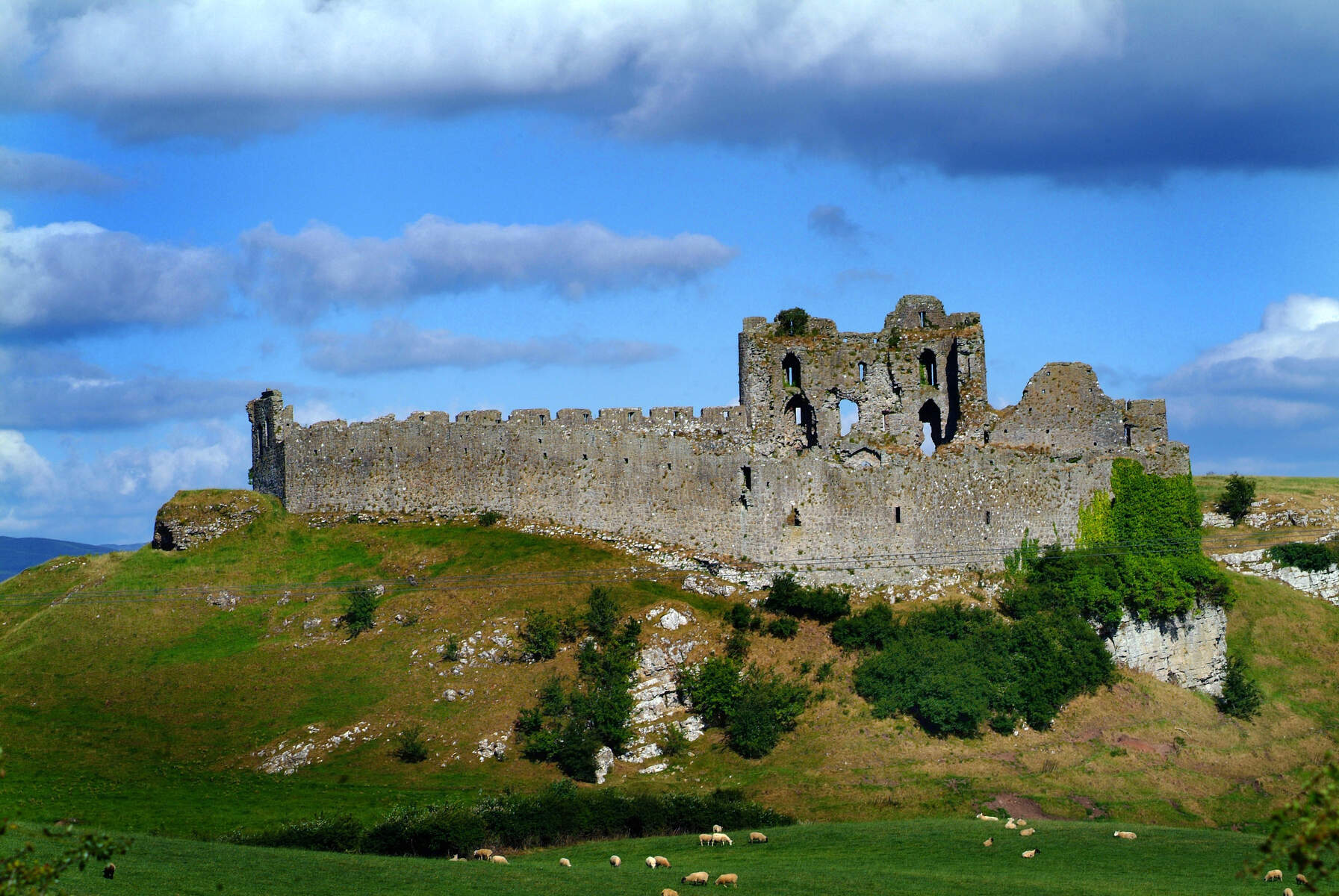
Roche Castle (sometimes written Castleroche) dominates a high rocky limestone promontory 7.3 km north‑west of Dundalk in the townland of Roche, County Louth. The name derives from the French roche – “rock” – and the ruins sit atop a natural outcrop that provides uninterrupted panoramas of the surrounding countryside, the Fews of South Armagh, and, on clear days, the silhouette of Slieve Gullion to the north. The site is a protected National Monument under the guardianship of the Office of Public Works (OPW) and is accessible for external viewing only, as interior works continue.
History
The castle’s origins are as dramatic as its setting. In April 1185, Bertram de Verdun arrived from Alton Castle, Staffordshire, as part of King John’s first Irish expedition. The fortress most likely rose in 1236 under the direction of his granddaughter, Lady Rohesia (also recorded as Roesia or Rose) de Verdun (1204‑1247). She is celebrated as the first woman known to have commissioned a castle in Ireland. Legend tells that she promised her hand in marriage to any man who could design a castle to her liking; when the architect succeeded, she led him to the bedroom window on their wedding night and pushed him to his death – a story that lives on as the “murder window”.
The castle marked the northernmost boundary of the English Pale, the area of direct English control in medieval Ireland. Its strategic position guarded a vital pass into South Armagh and acted as a deterrent against Gaelic incursions. Over the centuries the Verdun family held the stronghold, collecting taxes from the surrounding lands. In 1315 Edward de Bruce, the self‑styled High King of Ireland, chose not to assault the fortress but instead burned the nearby town of Dundalk to cut off its revenue.
During the Elizabethan era the castle served as a rallying point for English forces; a 1561 muster called for all lords, knights and officials of the Pale to assemble at Roche. The site endured the tumult of the 17th century, being repaired in 1642 by Richard Bellew, defended for King Charles I in 1649, and finally reduced to ruin by Oliver Cromwell’s troops in 1641‑42. Today the crumbling walls, twin‑towered gatehouse, and the faint outline of a keep testify to its turbulent past.
What to See & Do
Visitors are greeted first by the twin towers that flank the gatehouse – an instantly recognisable silhouette against the sky. The longest curtain wall stretches just under 72 m, while a shorter 37 m wall forms the opposite side. The D‑shaped tower at the northern end and the remnants of two circular towers with arrow‑slits illustrate the castle’s defensive sophistication.
Inside the enclosure, the ruins of a keep sit at the southern end, alongside the remnants of a gatehouse where the entrance once lay between two towers. The gatehouse’s sallyport – a small arched opening – hints at the original fortified entry. A rectangular residential building to the south once housed a great hall, its three fine windows still visible, and the hall’s stone seats suggest where medieval feasts would have been enjoyed.
The “murder window” remains a focal point for the imagination; it is said that the ghost of the architect still haunts the site. The surrounding landscape, with its rolling green fields, gorse bushes, and occasional jackdaws, adds a timeless atmosphere. From the ramparts you can scan the patchwork of County Louth, spotting the distant hills of the Oriel Kingdom and the historic border of the Pale.
For the more inquisitive, the irregular triangular layout of the castle follows the shape of the rock itself. Subtle ground depressions mark where a bailey once stood, and a square indentation may have housed a well, essential for standing sieges. While the interior is not open to the public, the external walk offers ample opportunity for photography, quiet contemplation, and a tangible sense of medieval life.
Practical Information
Roche Castle is free to visit; there is no ticket office, queue or admission fee. Access is via a farm gate on a narrow country road; visitors are asked to keep the gate clear of vehicles and close it after use, as the site sits on private farmland. Parking is limited to the side of the road near the castle – there is no dedicated car park, so drivers should be prepared to park responsibly and respect local residents.
The terrain is rugged, with steep drops on three sides of the ruin. While the site is safe for most walkers, those with limited mobility should be aware that the ground is uneven and there are no formal accessibility facilities. The castle is open year‑round for external viewing; however, weather can affect visibility from the promontory, and the interior remains closed for ongoing conservation work.
For further details, maps and the option to purchase a Heritage Ireland Card (which grants unlimited access to many state‑guarded sites) visit the official Heritage Ireland page:
Castle Roche – Heritage Ireland
Nearby attractions include County Louth Golf Club, the Carlingford Greenway walking trail, Slieve Gullion, and the County Museum in Dundalk – all reachable within a short drive.
Note: The OPW does not assume liability for injuries or loss on the site; visitors should exercise a reasonable level of care.