
Overview
Rosemount House dominates the gentle rise of Mount Elliott, offering a striking silhouette against the rolling landscape of County Wexford. Built in the early 1760s, the detached five‑bay, two‑storey house commands sweeping views of the meandering River Barrow, a setting that has inspired artists and historians alike. Though the house is a private residence today, its restored granite façade, elegant roofline and surrounding outbuildings make it a compelling landmark for anyone exploring the historic heart of New Ross and its environs.
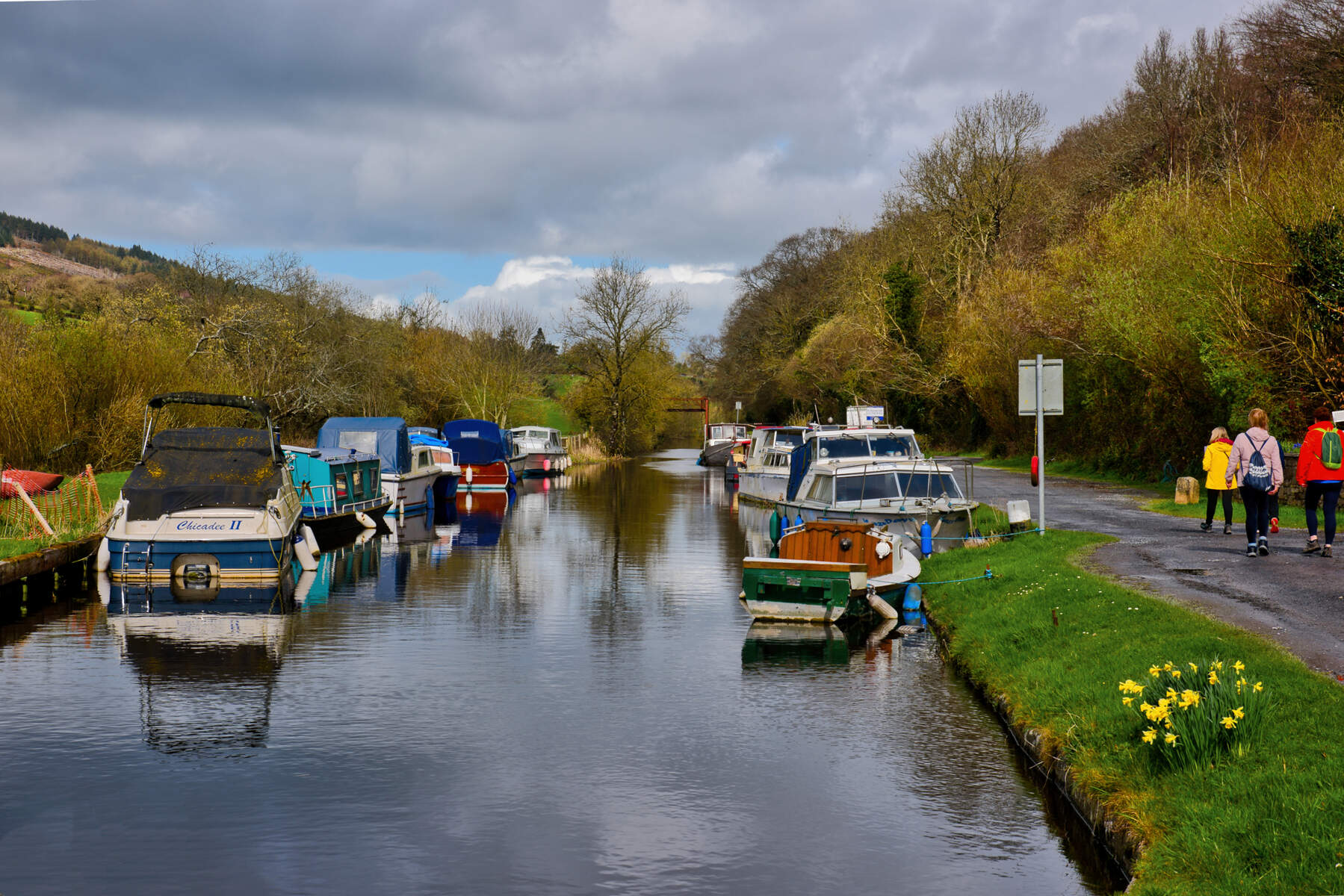
The house sits alongside the River Barrow Blueway, a well‑marked walking and cycling route that follows the river’s course through County Wexford. The Blueway provides easy, traffic‑free access to viewpoints from which the house’s façade can be admired.
History
The origins of Rosemount House date back to 1761, when it was erected as a country house for the local gentry. Originally known as Mount Elliott House, the building was recorded as extant by 1777. Its early years were marked by occupancy by prominent families, including the Rossiters, the Byrne family—most notably James Edmond Byrne JP (d. 1898) and Edmond Allen Byrne JP (d. 1900)—and the Place family, whose members served as Justices of the Peace and local landowners.
The house suffered a series of calamities: it was burnt in 1925, changed hands in 1972 and again in 1982, and endured a second fire in 1997. A meticulous restoration carried out between 1998 and 2002 returned the house to its former glory, preserving both original and faithfully replicated fabric. The restoration respected the building’s “Gibbsian‑like” doorcase, silver‑grey granite perron, and the distinctive “Cyma Recta” and “Cyma Reversa” cornices that cap the gable ends.
Beyond the main house, the estate includes several ancillary structures that contribute to its historic character: a gate lodge, a summerhouse (recorded as a folly), and outbuildings dating from 1902. These elements together illustrate the evolution of a working country estate over two centuries.
A curious footnote in Rosemount’s story is its connection to the Hollywood actor Aristotelis “Telly” Savalas (1922‑1994), best known for his role as Kojak. While the details of his association are sparse, the mention adds a touch of 20th‑century celebrity to the house’s long narrative.
What to See & Do
Even though Rosemount House is not open for interior tours, its exterior offers a wealth of visual interest:
- Architectural Details: Observe the nine‑over‑nine sash windows framed by concealed dressings, the ribbed yellow terracotta pots perched on the chimney caps, and the lichen‑covered cut‑granite coping that crowns the gables.
- Panoramic Vistas: From the south façade, the house’s alignment was deliberately chosen to maximise views over the River Barrow. On a clear day, the river’s gentle bends and the surrounding countryside unfold in a picture‑postcard tableau.
- Estate Outbuildings: The gate lodge and the nearby summerhouse, both listed in the heritage record, can be glimpsed from the public road. Their modest scale and complementary granite work echo the main house’s aesthetic.
- Equestrian Activity: The wider estate is home to a small stud farm, occasionally visible from the Blueway. While not open to visitors, the presence of horses adds a lively rural dimension to the landscape.
- Historical Context: A quick stop at the nearby town of New Ross allows visitors to explore the broader 18th‑century landscape, including the Taylor and Skinner map (1778) that annotates the house as “Mount Elliott of Garret Esquire”.
Rosemount House B&B – Separate Accommodation
A property called Rosemount House B&B operates on Spawell Road in Wexford town, roughly 0.5 mi from the town centre. It is an unrelated period residence offering guest rooms, a traditional Irish breakfast and complimentary Wi‑Fi. Recent online listings rate it 4‑star with an average score of 8.9/10 from over 300 reviews. Amenities include private parking, spacious rooms and easy access to Wexford’s main attractions such as Westgate Tower and the National Opera House. Visitors should ensure they are booking the correct property, as the historic Rosemount House near Mount Elliott remains a private home and is not open to guests.
Access & Parking
Rosemount House is set back from the regional road that runs alongside the River Barrow. Visitors can stop at the lay‑by opposite the gate lodge and park in the roadside verge, observing any local signage. As the property is a private residence, there is no dedicated car park; vehicles should be kept to a minimum and occupants’ privacy respected.
Getting There
Parking: The lay‑by opposite the gate lodge provides the only on‑site parking option. Please check for any local restrictions before leaving your vehicle.
Public transport: Specific bus or train services to the immediate vicinity are not listed online. Visitors without a car should consult the Wexford Bus timetable or Irish Rail for the nearest stop (likely Wexford town) and then travel by taxi or rideshare to the lay‑by.
Walking & Cycling
The house is visible from the River Barrow Blueway, a well‑marked walking and cycling route that follows the river’s course through County Wexford. The Blueway provides an easy, traffic‑free stretch for walkers and cyclists who wish to admire the house’s façade from a distance while enjoying riverside scenery.
Nearby Attractions
While in the area, consider extending your visit to:
- New Ross – a historic market town with a medieval bridge, the Titanic Experience and a lively riverside promenade.
- Duncannon – a coastal village famous for Duncannon Fort and a scenic harbour, reachable within a short drive.
- Bunclody – situated at the foot of the Blackstairs Mountains, offering additional walking routes and a charming town centre.
These sites are all within a 15‑minute drive and provide complementary cultural and natural experiences.
Practical Information
Rosemount House remains a private residence, and there is no public admission fee or set opening hours. Visitors are encouraged to view the house from the public road that skirts the estate, respecting the privacy of the occupants and the property’s boundaries. Parking is available along the roadside, but be mindful of local traffic signs.
For those interested in deeper research, the National Inventory of Architectural Heritage provides a detailed entry, complete with architectural drawings and a map link. The entry can be accessed here: Rosemount House – Buildings of Ireland.
Note on Rosemount House B&B
A separate accommodation, Rosemount House B&B, operates on Spawell Road in Wexford town. It is an unrelated period residence offering guest rooms and a traditional Irish breakfast. Visitors looking for lodging should ensure they are booking the correct property, as the historic Rosemount House near Mount Elliott is a private home and not open to guests.
Key Dates
| Year | Event |
|---|---|
| 1761 | Construction of the original country house |
| 1777 | First recorded as extant |
| 1901‑1911 | Occupied by the Byrne and Place families |
| 1925 | First fire destroys part of the house |
| 1972 | Property sold to a new owner |
| 1982 | Resold again |
| 1997 | Second fire damages the structure |
| 1998‑2002 | Comprehensive restoration completed |
While Rosemount House itself is not a visitor centre, its presence enriches the cultural tapestry of County Wexford. The house stands as a testament to Georgian architectural ambition, the resilience of historic fabric, and the layered stories of the families who called it home. Whether you are a lover of architecture, a history enthusiast, or simply a traveller seeking a striking silhouette on the Wexford horizon, Rosemount House offers a quiet yet powerful reminder of Ireland’s rich built heritage.