
Overview
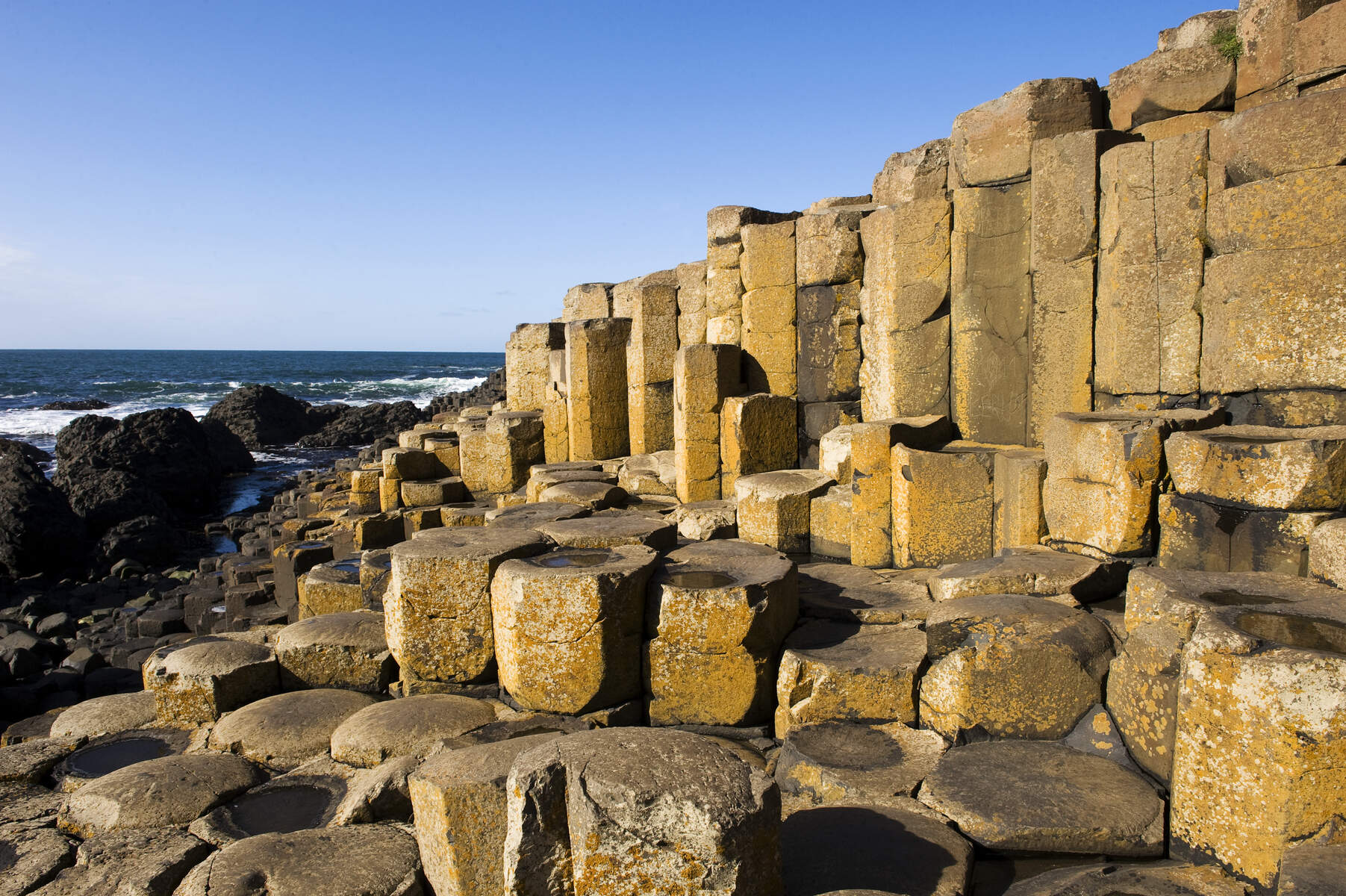
Runkerry Headland sits at the eastern edge of Runkerry Strand – locally known as Bushfoot Strand – in the tiny coastal village of Portballintrae, County Antrim. The headland marks the transition from the golden crescent of sand to the rugged basalt cliffs that frame the world‑famous Giant’s Causeway. From the summit visitors can photograph the sweeping Atlantic, the meandering River Bush, and the sandstone Runkerry House perched on the point. The whole area is designated an Area of Special Scientific Interest for its unique geology, powerful Atlantic swells and rich coastal wildlife.
History & Background
The headland has long been a focal point for maritime and community life. In the 1860s Sir Edward Macnaghten commissioned the sandstone Runkerry House (sometimes called Runkerry Point) as a private residence; today it has been converted into private apartments but still dominates the skyline.
The surrounding waters are littered with stories of shipwrecks – the Reliance (1847), Thomas Graham (1879) and Royal Standard (1887) all met their end on the sands of Bushfoot Strand. During the Second World War a training aircraft was forced to ditch near the River Bush mouth, adding another dramatic chapter.
In the late 1800s the flat beach hosted massive crowds for annual horse races run directly on the sand. Winter storms would strip the beach, exposing ancient river‑beds and rock platforms that later rebuilt into a broad shoreline. Smuggling thrived in the 18th and 19th centuries; tea, illicit whiskey and other contraband were off‑loaded from larger vessels onto small boats and hidden along the dunes. A purpose‑built customs house in nearby Portballintrae once kept a watchful eye on these activities.
The National Trust now maintains the quieter Runkerry Trail, a scenic alternative to the heavily visited Giant’s Causeway path, allowing walkers to experience the same dramatic scenery without the crowds.
Nature & Wildlife
Runkerry Strand is a textbook example of a dynamic beach – sand is constantly shifted by the Atlantic swells, creating seasonal changes in beach width and exposing ancient river‑beds in the dunes. Over 30 species of wildflowers have been recorded, including yellow primroses, buttercups, bluebells, pink thrift and several orchid varieties.
The cliffs support seabird colonies, and dolphin sightings are not uncommon off the headland. The area’s geology, with basalt columns that echo the nearby Giant’s Causeway, makes it a favourite spot for photographers.
Surfing & Water Sports
Bushfoot Strand is regarded as one of the best surfing beaches in the UK. Wave heights range from a modest 2 ft in summer to up to 12 ft during stormy winter swells. The beach is exposed to the full force of Atlantic swells, so it is suited to experienced surfers. There is no lifeguard service; the nearest lifeguarded beach is Whiterocks, a few miles down the coast.
Strong rip currents have been recorded and have claimed lives, so swimmers should check tide tables and heed local warnings.
Walking Routes
Short coastal walk (≈3 mi)
Start at the Portballintrae car park, cross the ‘Threequarter’ footbridge and follow the Runkerry Trail along the dunes. The route offers uninterrupted views of the basalt cliffs, the River Bush mouth and the Giant’s Causeway in the distance. The walk can be completed in about an hour.
Longer walk to Bushmills (≈6 mi)
Continue past the headland, joining the boardwalk that runs alongside the Giant’s Causeway and Bushmills Heritage Railway. The walk passes the historic railway line, the old customs house and finishes in Bushmills, where the famous distillery awaits.
Both routes are marked and may be narrow or rough in places; sturdy walking shoes are recommended.
Getting There
- Access & Parking – A small free car park is available at the edge of Portballintrae village. For the longer walk a fee‑paying car park opposite the Bushmills Inn can be used.
- Public Transport – Bus 172 (Causeway Rambler) stops in Portballintrae and connects to Coleraine and Belfast. The nearest train station is Coleraine; regular services run to Belfast and Derry.
- Cycling – The coastal road is popular with cyclists, but be aware of narrow sections near the headland.
- Dog‑friendly – The beach is dog‑friendly outside the restricted period 1 June – 15 September, when dogs must be kept on a lead.
- Facilities – Basic public toilets and a café are located near the village car park. Disabled toilets and parking are available in the main village car park (as noted in the front‑matter).
- Nearby attractions – The Giant’s Causeway, Dunluce Castle, Bushmills Distillery and the Giant’s Causeway & Bushmills Heritage Railway are all within a short drive or walk.
Practical Information
- Opening Hours – The headland and strand are open year‑round; the National Trust trail has no specific opening times.
- Safety Tips – The Atlantic swells can be strong; only confident surfers should attempt the break. The sandbars shift with storms, so consult local tide tables before walking far out on the beach.
- Best Times to Visit – Late spring to early autumn offers milder weather for walks, while winter provides the biggest surf. Early morning or late evening provides the most dramatic light for photography.
Runkerry Headland delivers a blend of natural drama, rich history and active recreation, making it a rewarding stop on any Antrim coastal itinerary. For a broader view of the region, see the Antrim Coast and Glens guide.