
Overview
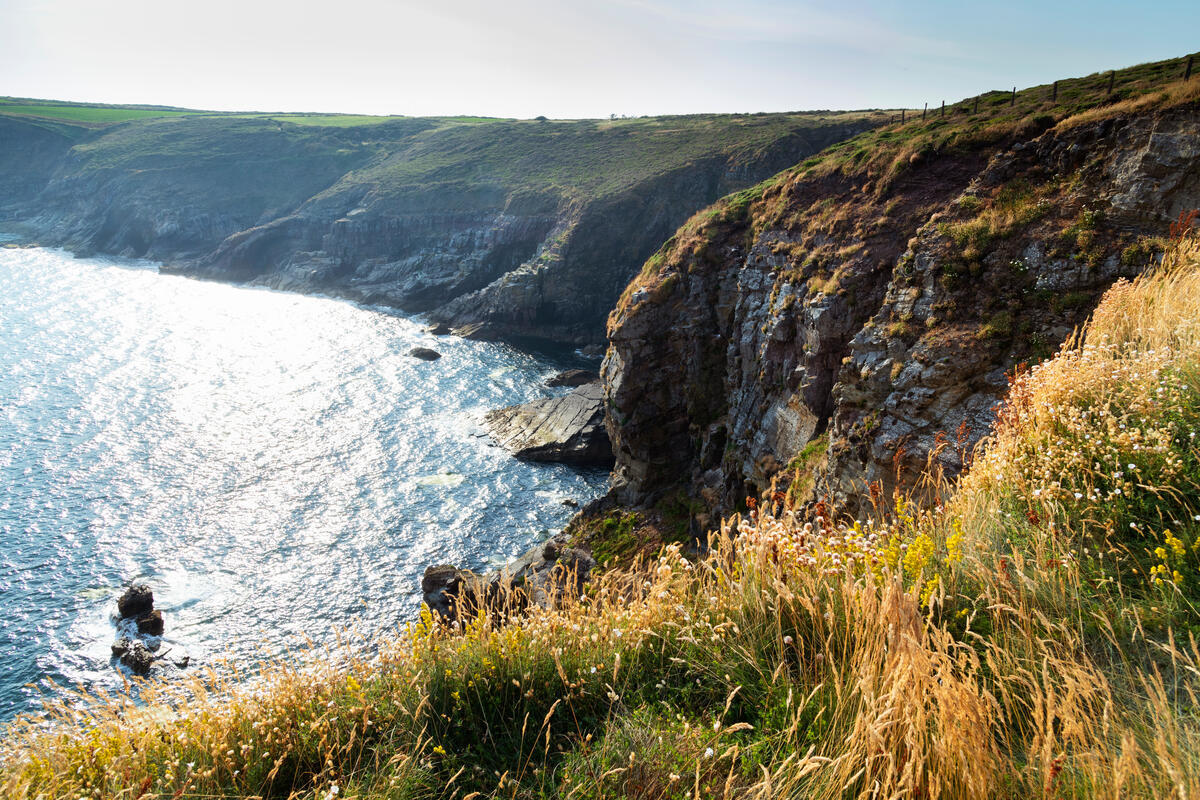
Rams Head is a rocky promontory just outside the fishing village of Ardmore in County Waterford, forming part of the Copper Coast. The centerpiece of this open‑air museum is the Samson – a 1959‑built floating crane barge that ran aground on 12 December 1987. Its rust‑streaked hull and skeletal jib dominate the cliffs, providing a dramatic photo opportunity from the popular St Declan’s Walk (also known as the Ardmore Cliff Walk). The site is free to visit, but the wreck itself is unsafe to climb.
History / Background
- Construction: Built in 1959 in the United Kingdom as a crane barge for shipyards and ports.
- Final voyage: Departed Liverpool on 9 December 1987, bound for Valletta, Malta, under tow by a tug.
- Accident: On 11 December, near‑gale‑force winds off the Welsh coast snapped the towline. Two men remained aboard; they were rescued by an RAF Sea King helicopter operating from RAF Brawdy.
- Grounding: The unmanned barge drifted south‑west and struck the rocks at Rams Head at about 07:50 am on 12 December 1987.
- Aftermath: Dangerous pollutants were removed, but the wreck was never salvaged. In April 2016 the entire jib collapsed into the sea, leaving the hull and remaining superstructure as a weather‑worn monument.
- Legacy: The barge’s propeller was recovered and now sits on public display in Ardmore village square, linking the wreck to the community.
What to See & Do
- The wreck itself – View the rust‑streaked hull and the collapsed jib from the cliff edge. Low tide reveals the deck and a host of tide‑pool marine life that has colonised the structure.
- Photography – The contrast of metal against the Atlantic waves makes for striking images, especially at sunrise or sunset.
- Walking – Follow the 4 km Ardmore Cliff Walk (St Declan’s Walk) which passes the wreck, historic watch‑towers, a 12th‑century round tower and St Declan’s Well. See also the dedicated Ardmore Cliff Walk page for detailed route information.
- Kayaking – The wreck can be approached from sea‑kayak for a closer look, provided conditions are safe.
- Village attractions – After the walk, explore Ardmore’s harbour, the propeller display, the round tower, and the early‑Christian wells.
Practical Information
- Access: The wreck is reachable on foot via the St Declan’s Walk from Ardmore harbour. Parking is available in the village car park (pay‑and‑display).
- Opening hours: The site is open year‑round; there are no tickets or entry fees.
- Safety: The wreck is not climbable. Stay on marked paths, watch for slippery rocks, and keep a safe distance from the edge, especially in wet or windy weather.
- Tides: Check tide tables – the deck is most visible at low tide, while high tide can make the wreck appear as a narrow silhouette.
- Facilities: Restrooms and a café are located in Ardmore village. Public toilets are also near the harbour.
- Public transport: Regular bus services run between Waterford city and Ardmore; the nearest stop is a short walk from the harbour. (Please confirm current timetables.)
- Weather: The Atlantic coast can be changeable; bring waterproof clothing and sturdy walking shoes.
- Nearby amenities: Restaurants, B&Bs and hotels in Ardmore cater to a range of budgets.
Nearby Attractions
While you’re in the area, consider adding these stops to your itinerary:
- The Aird Mhór Peninsula – a spectacular stretch of cliffs and beaches linked to the Ardmore walk. Learn more at Aird Mhór Peninsula.
- Copper Coast Geopark – the wider UNESCO‑recognised landscape that includes Rams Head, offering geology tours and interpretive centres. See the overview at Copper Coast.
- St Declan’s Well and the 12th‑century round tower, both visible along the cliff walk.
- Dunmore East – a short drive north, famous for its harbour and seafood restaurants.
Enjoy the blend of natural beauty and industrial heritage that the Samson crane barge wreck offers – a unique reminder of the sea’s power on Ireland’s rugged southwest coast.