
Overview
The Santry River (Irish: An tSruthán Santrach) is a modest watercourse that rises near Harristown/Dubber, close to Dublin Airport, at about 80 m above sea level. From its source it flows south‑west through open countryside, public parks and residential suburbs before reaching the sea at Raheny, where its mouth feeds the lagoon behind North Bull Island. Most of the river remains unculverted, offering a rare ribbon of natural habitat within the dense urban fabric of Dublin.
History & Background
The river’s valley has long been a focal point for local activity. In the 19th century a water‑mill – often called The Mill of Raheny – stood on Watermill Road, and a stone quay once supported oyster harvesting at the former Raheny Strand. Early maps sometimes refer to the waterway as Skillings Glas.
The surrounding lands were dominated by Santry Demesne, the estate of an 18th‑century manor house built in 1703 on the site of an earlier medieval residence. The house fell into disrepair, was badly damaged by fire in 1947 and was demolished in 1959, but its foundations, front steps, tree‑lined avenue and walled garden survive within the present park.
Today the river is one of roughly forty watercourses monitored by Dublin City Council. It features in EU‑mandated flood‑risk studies and is the centerpiece of the Santry River Restoration and Greenway Project, a joint effort by Dublin City Council, Fingal County Council and the National Transport Authority.
Ecology & Wildlife
Despite its urban setting, the Santry supports a surprising range of wildlife. Regular sightings include otters, kingfishers, a resident heron and occasional badgers. The lower reaches, especially the mud‑flats and salt‑marshes behind North Bull Island, attract wading birds such as oystercatchers, curlews and redshanks during migration seasons. In spring the banks are dotted with wildflowers, while autumn brings colourful foliage that frames the waterway.
River Restoration & Greenway Project
The Santry River Restoration and Greenway Project was launched in 2019 with a single‑party framework agreement. Key milestones:
- 2020 – Expressions of interest opened (Stage 1).
- 2021 – Tender invitation issued (Stage 2).
- 2022 – Successful contractor appointed; works began on flood walls, swales and rain‑garden installations.
- 2023‑2024 – Phased construction of the greenway, including new boardwalks, interpretive signage and improved riverbank planting.
- 2025 – Detailed design and planning for the final stretch to St Anne’s Park.
- 2026+ – Ongoing habitat creation and maintenance.
The €60 million programme aims to:
- Reduce flood risk for Raheny and surrounding estates.
- Re‑natural the river’s meanders and create wetland habitats that absorb stormwater.
- Replace hard surfaces with swales and rain‑gardens capable of holding up to 400,000 litres of runoff.
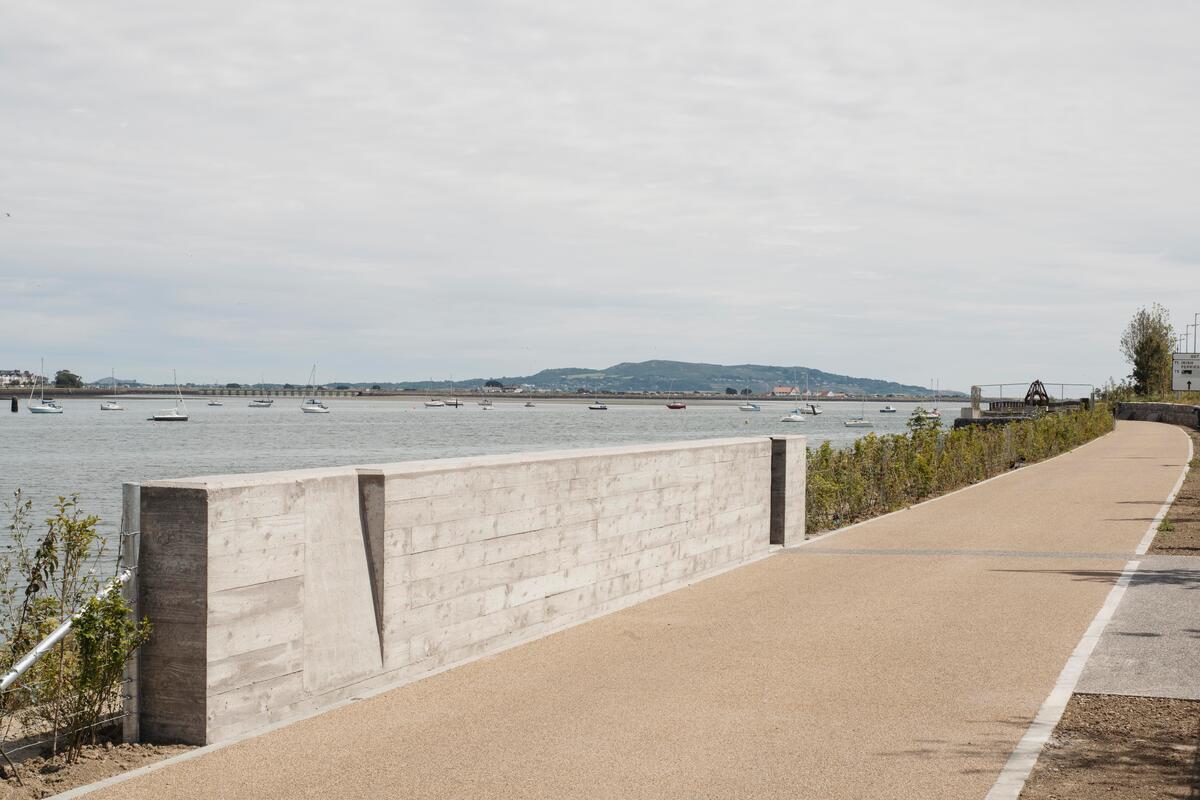
- Provide a continuous, wheelchair‑friendly green‑blue corridor for walkers, joggers and cyclists.
Environmental Challenges
Historically the Santry has suffered from pollution incidents – industrial effluent, building‑site runoff and illegal discharges have degraded water quality. The river is classified as Poor in its upper section under the EU Water Framework Directive, with the lower section currently unassigned. Ongoing monitoring by the EPA and Dublin City Council tracks ammonia, BOD and E. coli levels, informing the restoration works.
What to See & Do
Santry Demesne Regional Park & Linear Park
The 72‑acre Santry Demesne Regional Park, opened in 2004, contains a 15‑acre linear park that follows the river’s course. Well‑marked, mostly level pathways run alongside the water, making the route ideal for walkers, joggers, cyclists and wheelchair users. Highlights include:
- Heritage Orchard & Community Garden – nestled in the walled garden, the orchard boasts heritage apple, pear and plum trees, while a volunteer‑run kitchen garden supplies fresh produce to local schools and hosts sustainability workshops.
- Playground & Family Areas – a modern children’s playground with climbing frames, slides and sensory equipment sits near the main entrance, surrounded by open grass for picnics and off‑lead dog walking.
- Coolock Lake – a modest pond formed by a small cascade further downstream, popular for quiet reflection.
Stardust Memorial Park
Downstream, the river skirts Stardust Memorial Park, where a cascade and pond commemorate the 1981 Stardust tragedy. The tranquil setting offers space for reflective walks.
Cadbury’s Ireland Grounds
A short stretch of the river runs beside the Cadbury chocolate factory. Here an EPA monitoring station and an ancient tumulus sit on the banks, providing a glimpse of industrial heritage and archaeology.
Raheny Village, Lagoon & North Bull Island
At its mouth the river passes the historic covered holy well and the former Bettyglen Estate before entering the mudflats and salt‑marsh that feed Sutton Creek and the Bull Island lagoon. The area is a hotspot for wading birds and offers a coastal atmosphere ideal for bird‑watching and sunset strolls.
Greenway Trail
When fully completed, the greenway will link the river’s source at Harristown to St Anne’s Park on Dublin Bay, creating a continuous, high‑quality route for pedestrians and cyclists. Even now, the existing sections provide scenic river views and interpretive signage about the river’s ecology.
Practical Information
- Access: The linear park is free to enter and is managed by Fingal County Council. Main entrances are at Santry Demesne (near the former house foundations) and at Stardust Memorial Park.
- Accessibility: Paths are largely level and suitable for wheelchairs, pushchairs and cyclists.
- Facilities: Restrooms are available at the Demesne visitor centre and at Stardust Memorial Park. Picnic tables, benches and a children’s playground are provided throughout the park.
- Transport: The park is within walking distance of several Dublin Bus routes serving the Santry, Coolock and Raheny suburbs. The nearest DART stations are at Drumcondra and Raheny, both a short walk from the river’s lower reaches.
- Opening Times: Open year‑round; park facilities generally operate 07:00‑22:00 daily.
- Guidelines: Dogs are welcome off‑lead in designated areas, but owners should keep them under control near wildlife habitats. Commercial photography inside the former house foundations is prohibited.
- Seasonality: Spring and summer bring abundant wildflowers and migratory birds, while autumn offers colourful foliage along the banks.
Nearby Attractions
- Ardgillan Castle – A short bus ride north brings you to the historic Ardgillan Castle and its extensive gardens, a popular spot for picnics and coastal walks.
- North Bull Island – Accessible via the lagoon, the island is a RAMSAR‑protected wetland ideal for bird‑watching and long coastal walks.
Enjoy a day of nature, history and community spirit along Dublin’s evolving river corridor.