
Overview
Sarsfield Bridge is one of Limerick’s most recognisable landmarks, spanning the mighty River Shannon at the heart of the city. The bridge not only provides a vital transport link between the bustling city centre and the northern suburbs, but it also offers a striking visual corridor that frames some of Limerick’s most celebrated sights – King John’s Castle, St Mary’s Cathedral, the historic Court House and the lively Shannon Rowing Club. Whether you are strolling across for a quick photo, pausing to admire the original Victorian lamp standards, or using the bridge as a starting point for a longer walk, the structure feels like a living piece of the city’s narrative.
History
Construction of the bridge began on 25 October 1824 under the Limerick Bridge Commissioners, a body created by the 1823 Act to improve river crossings. Designed by Scottish engineer Alexander Nimmo – with initial plans supplied by architect Charles Blacker Vignoles – the work took eleven years and cost £89,061. The bridge opened on 5 August 1835 as Wellesley Bridge, reflecting the British influence of the era. Its five elegant elliptical arches, each about 70 ft wide, and the original Victorian lamp standards have survived largely unchanged.
In 1882 the bridge was renamed Sarsfield Bridge to honour the Jacobite hero Patrick Sarsfield, whose defence of Limerick during the 1691 siege remains a key part of local folklore. A now‑redundant swivel deck once linked the central island (then Wellesley Pier, now Shannon Island) to the northern shore; the machinery remains beneath the roadway as a reminder of the bridge’s industrial past.
What to See & Do
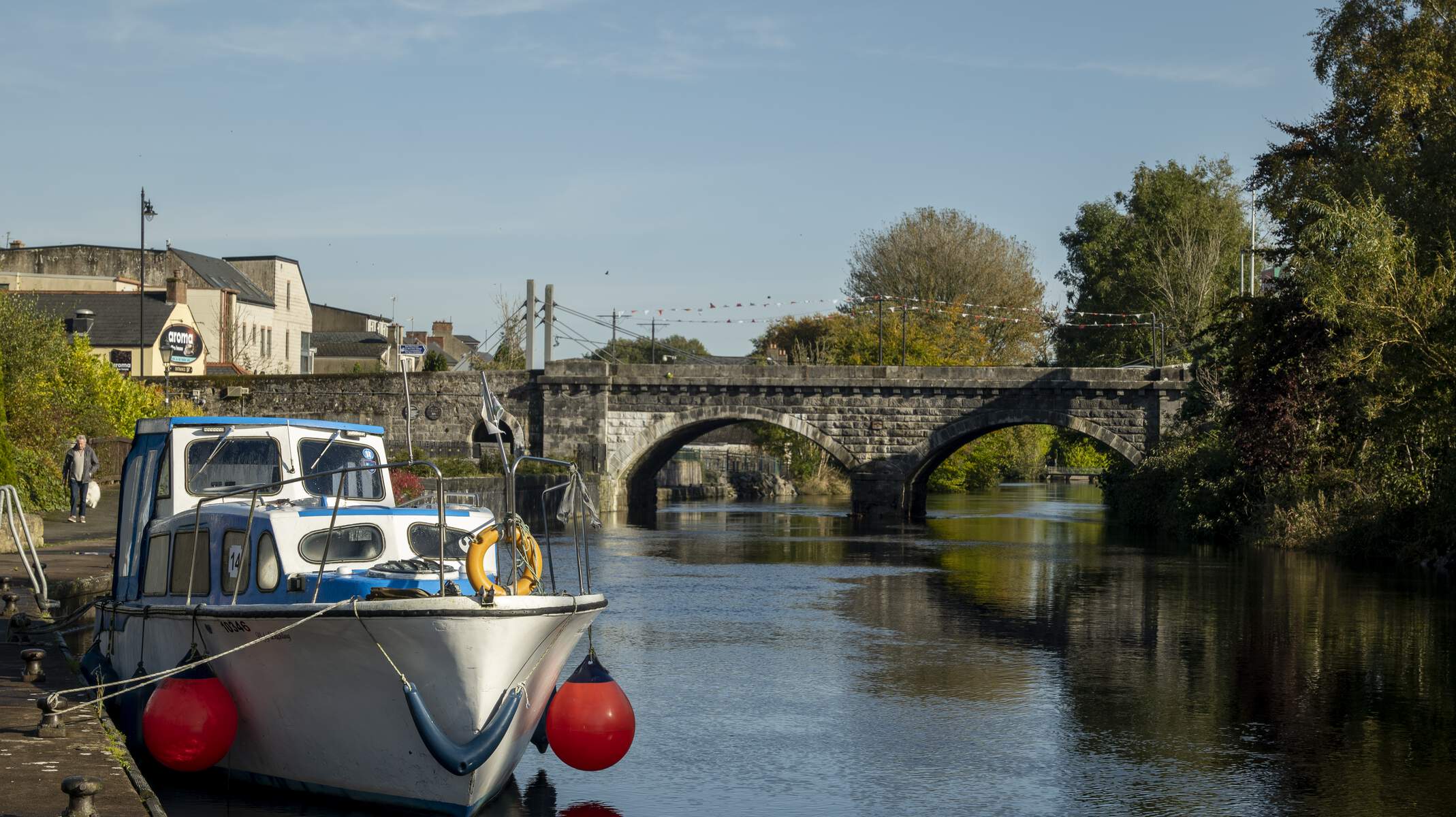
Crossing Sarsfield Bridge is an experience in itself. The five graceful arches create a rhythmic silhouette against the river, and the open balustrade offers unobstructed views of the water and the surrounding historic skyline. Look up to admire the period‑correct lamp standards that still illuminate the bridge after nearly two centuries.
On the Shannon Island side you will find the Shannon Rowing Club (founded 1866) and the Limerick Boat Club (established 1870). Both clubs have deep roots in the city’s rowing tradition and often host regattas that add a splash of colour to the riverbank.
At the northern end of the bridge, a memorial to the War of Independence honours former Limerick mayors George Clancy and Michael O’Callaghan, together with other locals who fell in 1921. The adjoining quays are named Clancy Strand and O’Callaghan Strand in their memory.
The bridge also serves as a natural viewpoint for photographers. Sunset casts a golden glow over the river, highlighting the arches and the silhouettes of nearby landmarks. For those interested in deeper context, the bridge forms part of a panoramic tableau that includes the Court House, St Mary’s Cathedral, and the imposing King John’s Castle – all within a short walk.
If you enjoy guided walks, the bridge is featured on several self‑guided tours. The GPSmyCity app offers a dedicated walking route that includes Sarsfield Bridge, the historic city centre and other key attractions. Download the app from the Apple App Store or the Google Play Store and explore Limerick offline.
Events & Seasonal Highlights
The bridge is a popular viewing point during the annual Limerick Regatta, which takes place each spring on the Shannon near the bridge. In 2026 the regatta hosted a round of Waterways Ireland’s Row for It League, attracting crews from clubs across the country. Spectators line the bridge’s walkway to watch the colourful racing action, making it an ideal spot for both sport lovers and casual onlookers.
Rowing & Water Sports
The bridge’s proximity to Shannon Island makes it a hub for river‑sport enthusiasts. The Shannon Rowing Club and Limerick Boat Club run regular training sessions and host annual regattas that start and finish just downstream of the bridge. These events are often part of the Waterways Ireland “Row for It League”, a national series that includes a Limerick leg each spring – the 2026 leg was held on 23 April as part of the Limerick Regatta.
Spectators can watch the colourful crews from the bridge’s walkway, providing a unique perspective of the race and the city’s skyline. In addition to rowing, the Shannon’s calm stretch near the bridge is used for kayaking and paddle‑boarding. Local outfitters offer short hire sessions that launch from the quays beside the bridge, providing a different perspective of the city’s skyline.
Nearby Attractions
A short stroll from Sarsfield Bridge leads to several other points of interest:
- Arthur’s Quay promenade – a riverside walk with cafés, street art and views of the bridge (see Arthur’s Quay).
- Limerick Museum – housed in a former customs house, showcasing the city’s social and industrial history.
- Hunt Museum – located in the historic Custom House, featuring fine art and decorative pieces.
- Three Bridges Walking Route – a circular walk that links Sarsfield Bridge with the newer Thomond Bridge and the historic Abbey Bridge.
These sites can easily be combined into a half‑day itinerary centred on the bridge.
Practical Information
| Item | Details |
|---|---|
| Address | Limerick, Ireland (see map) |
| Coordinates | 52.665514, -8.630275 |
| Opening hours | Open 24 hours – free to cross |
| Admission | Free |
| Nearest public transport | Bus 301 or 304 (stop named “Sarsfield Bridge”) |
| Walking access | 15‑20 minutes from O’Connell Street, heading southwest along the riverbank |
| Parking | City‑centre car park on O’Connell Street (approximately a 5‑minute walk) |
| Self‑guided tours | GPSmyCity walking tours for Limerick |
| Official website | https://evendo.com/locations/ireland/limerick/landmark/sarsfield-bridge |
Getting there – The bridge is easily reached on foot from Limerick’s city centre. From O’Connell Street, walk southwest toward the river, turn left at the riverbank and the bridge will appear ahead after about 15 minutes. Buses 301 and 304 run frequently from the city centre to a stop named “Sarsfield Bridge”; the walk from the stop to the bridge is only a few metres.
Accessibility – The bridge’s wide walkway accommodates pedestrians, cyclists and wheelchair users, though the historic balustrade can be uneven in places. No ticket is required, and there are no entry fees.
Photography tip – For the most dramatic shots, aim to cross the bridge during the golden hour (just before sunset). The light reflects off the water and accentuates the arches, while the city’s historic skyline forms a compelling backdrop.
Seasonal illumination – The original Victorian lamp standards are traditionally lit after dark, giving the bridge a subtle glow that highlights its arches at night. (Please verify the current lighting schedule.)
Sarsfield Bridge remains a testament to Limerick’s engineering ambition, its turbulent history and its ongoing vitality. Whether you are a history enthusiast, a photography lover, or simply a traveller seeking a pleasant riverside walk, the bridge offers a memorable slice of Irish heritage.