
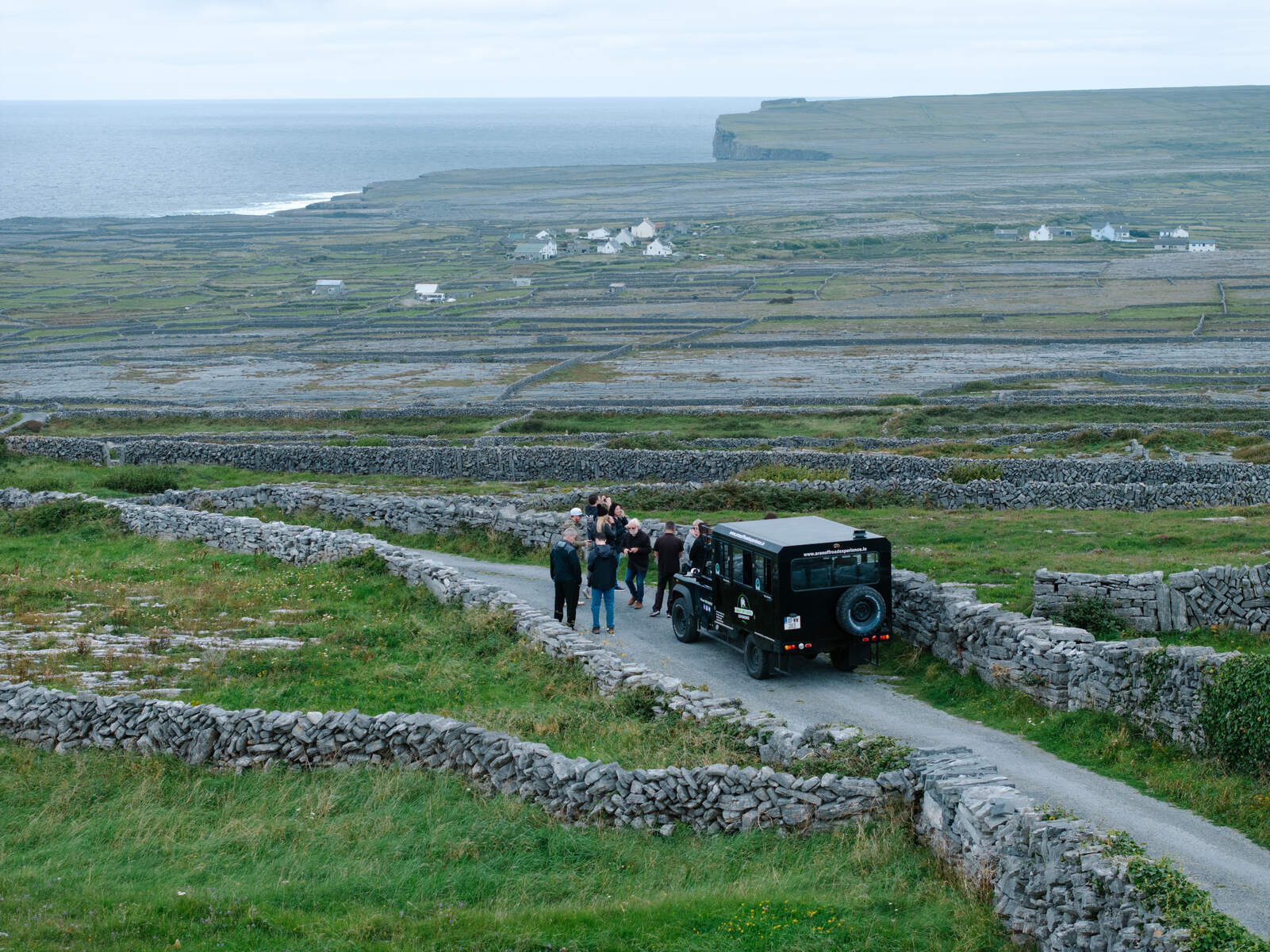
Overview
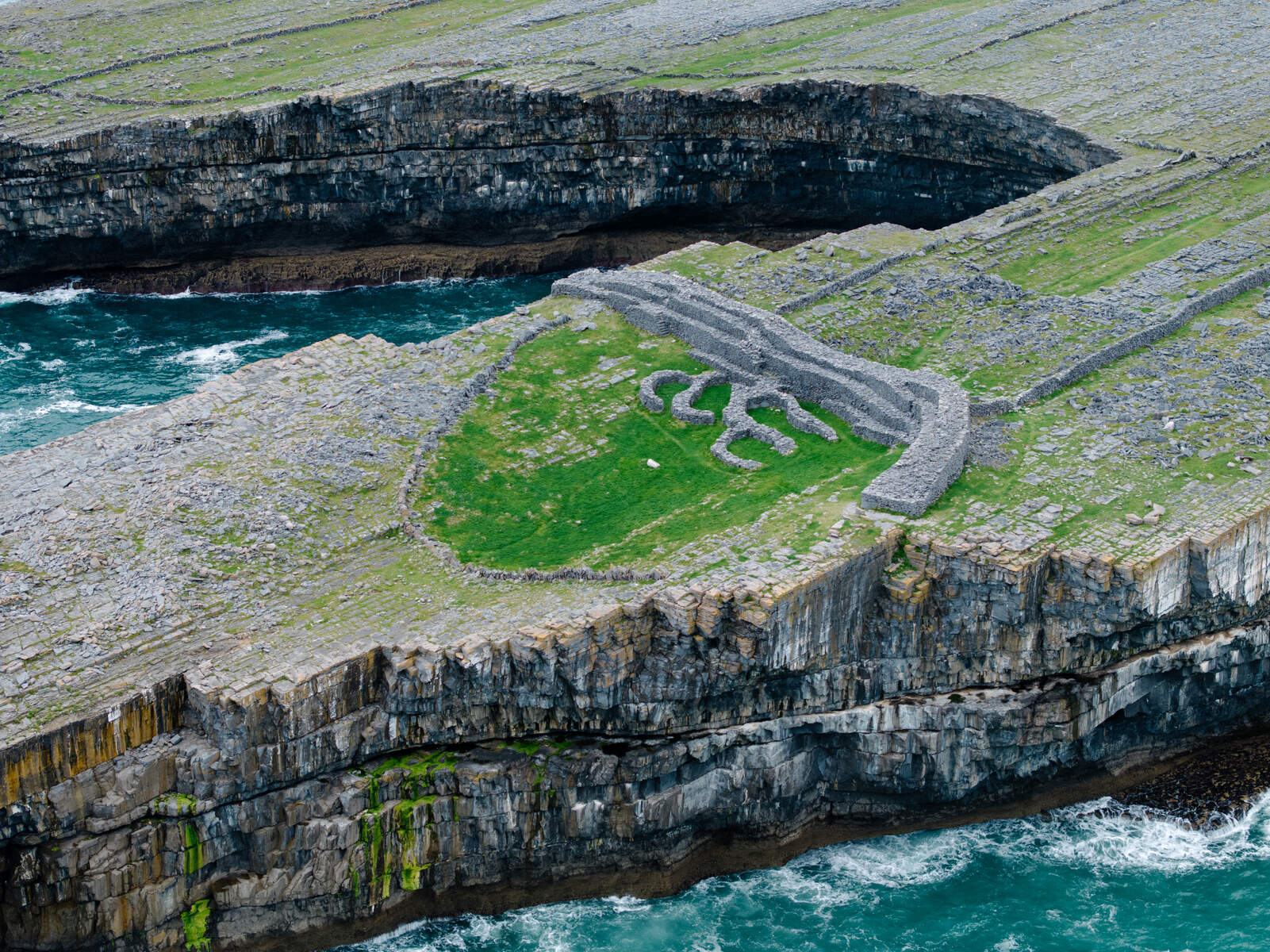
Na Seacht Teampaill, known in English as the Seven Churches, sits on the windswept western edge of Inis Mór, the largest of the Aran Islands off County Galway. Despite the name, the site comprises two standing stone churches, a beehive‑shaped clochán, two enclosed holy wells, a medieval cemetery and a scattering of early Christian crosses. The complex was one of the most important pilgrimage centres in the west of Ireland from the early medieval period and remains a powerful reminder of the island’s monastic heritage.
History
The monastic settlement was founded in the 7th or 8th century, traditionally attributed to Saint Brecan, a 5th‑century missionary who is said to have travelled from Kilbrecan in County Clare to the Aran Islands. Brecan’s foundation quickly grew to rival the famous east‑island monastery of St Enda, and for centuries the site attracted pilgrims seeking healing, forgiveness and the intercession of the saints buried there.
The larger church, Teampall Brecan, was built in several phases from the 8th to the 13th century. It measures roughly 5 m by 13 m and displays Romanesque doorways, a massive chancel arch and a wealth of carved stonework. An inscription on the west gable reads OR AR II CONOIN – “pray for the two canons”. The smaller Teampall an Phoill (the Church of the Hollow) dates from the 15th century and is thought to have served as a mortuary chapel.
In 1607 Pope Paul V granted a plenary indulgence to all who visited the churches of the island on particular holy days, underscoring the site’s importance as a pilgrimage destination.
The surrounding clochán, holy wells (Tobar an Spioraid Naoimh and Tobar Brecan) and the cemetery with its inscribed crosses – including the famous “VII ROMANI” slab – complete the picture of a thriving early Christian community. The site is still an active graveyard, containing both ancient saintly graves and modern local burials.
Heritage & Conservation
Na Seacht dTeampaill is a state‑owned National Monument in the care of the Office of Public Works (OPW) and is protected under the National Monuments Acts 1930‑2014. The site is unguided; visitors are asked to exercise care, especially on wet or winter days when the ground can become water‑logged and slippery. Stone steps and stiles give access to some parts of the complex, so sturdy footwear is recommended.
Key features of interest:
- Teampall Brecan (St Brecan’s Church) – the most impressive ruin, with a Romanesque doorway, lofty nave and chancel arch. The west wall bears the inscription OR AR II CONOIN.
- Teampall an Phoill (Church of the Hollow) – a modest 15th‑century chapel.
- Clochán – a beehive‑shaped stone hut offering a glimpse of monastic life.
- Holy Wells – Tobar an Spioraid Naoimh and Tobar Brecan, both now enclosed.
- Cemetery and Crosses – includes the “VII ROMANI” slab (interpreted as marking the graves of seven Roman pilgrims) and several high‑cross fragments dating to the 11th century, stylistically similar to those at Cill Éinne in County Clare.
- Penitential beds – stone platforms used by medieval penitents.
The site’s preservation is overseen by OPW, and visitors are reminded that the graveyard is still in use; respect for recent graves is required.
What to See & Do
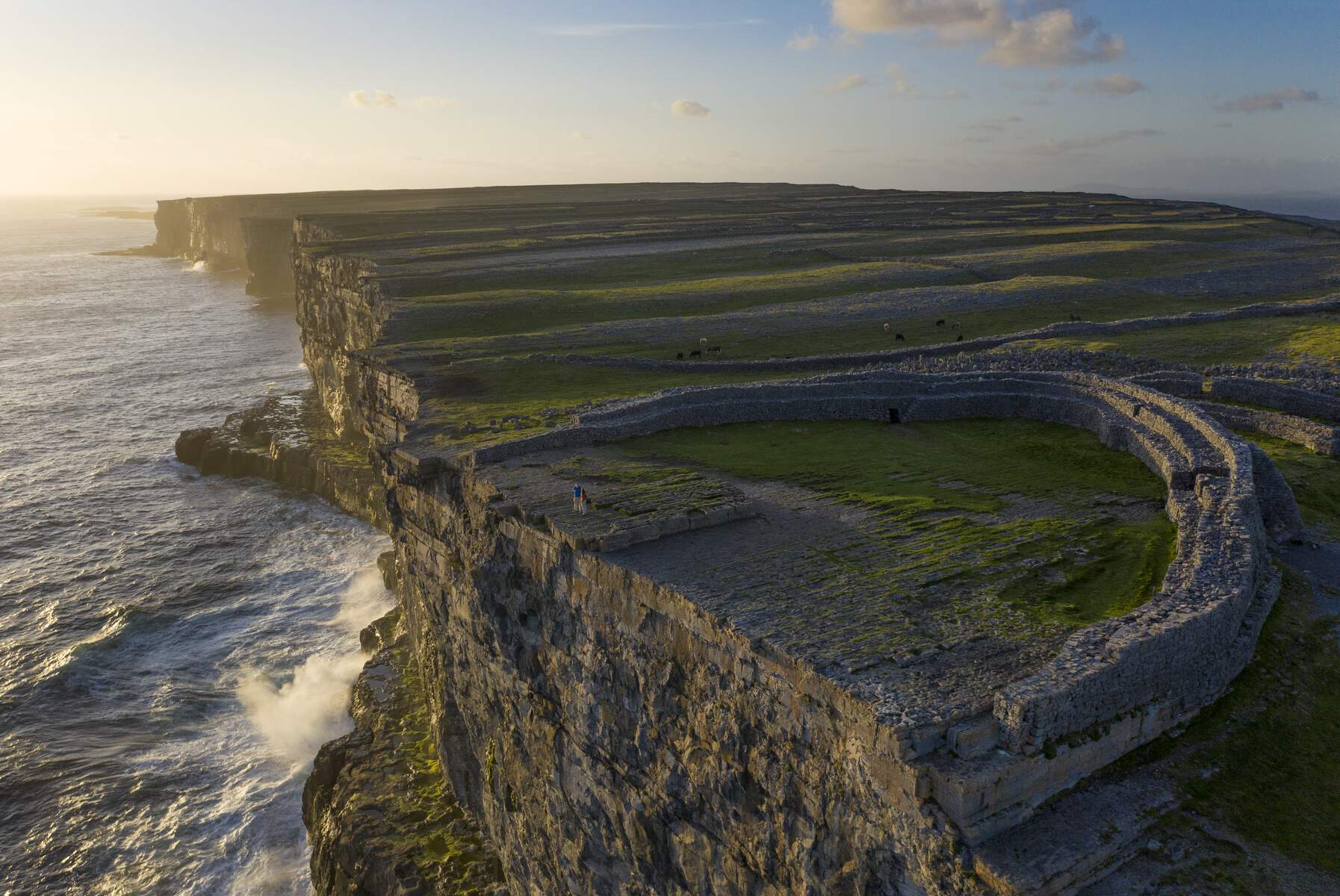
- Explore the ruins – Follow the marked paths to view the churches, clochán, wells and medieval graves.
- Photography – Early morning or late afternoon light brings out the texture of the stonework and the dramatic Atlantic backdrop.
- Picnic – The site is open countryside; bringing a packed lunch lets you enjoy the tranquil surroundings.
- Bird‑watching – The cliffs nearby host seabirds such as gulls and razorbills, especially in spring.
- Collect a tour map – A simple site map is available at the Kilronan visitor centre; it helps locate the penitential beds and cross fragments.
Practical Information
| Service | Details |
|---|---|
| Opening hours | Open 24 hrs daily |
| Admission | Free |
| Parking | Free lay‑by near the site |
| Accessibility | Uneven stone ground; no wheelchair access to interiors |
| Nearest village | Kilronan (3 km) |
| Address | Sruthán, Onaght, Inishmore, Co Galway |
| GPS | 53.14623, -9.77794 |
| Suggested visit time | 45 minutes – 1 hour |
| Facilities | No toilets or café on site; bring water and snacks |
| Contact | Heritage Ireland – Seven Churches page |
Getting there – Regular ferries run from Rossaveal (≈45 min) and Doolin (≈20 min) to Inis Mór. Once on the island, follow the main road northwest from Kilronan for roughly 9 km; the Seven Churches are sign‑posted and easy to spot from the road. Bicycles can be hired in Kilronan, and the ride to the ruins offers a pleasant coastal ride with occasional glimpses of sea‑birds and wild goats.
Safety & Visitor Tips
- The ground can be slippery when wet and the site is occasionally water‑logged in winter; wear sturdy shoes.
- Access to some areas involves stone steps and stiles – take care if you have limited mobility.
- The graveyard is still in use; show respect for recent graves.
- No official guide service is provided; the site is unguided, so a printed map or a smartphone map is useful.
- The area is exposed to the Atlantic wind; bring a wind‑proof jacket.
- Dogs are allowed on a leash but should not be taken into the graveyard.
Nearby Attractions
While exploring Na Seacht Teampaill, consider visiting other historic sites on Inis Mór such as Dún Aengus (≈2.4 km north), the prehistoric stone fort of Dún Eoghanachta, and the early Christian Clochan na Carraige. The island’s rugged landscape also provides opportunities for coastal walks, bird‑watching and sampling local seafood in Kilronan.
The Seven Churches remain a testament to the spiritual fervour that once pulsed through the Aran Islands, offering modern travellers a rare chance to walk among the stones that shaped early Irish Christianity.