Overview
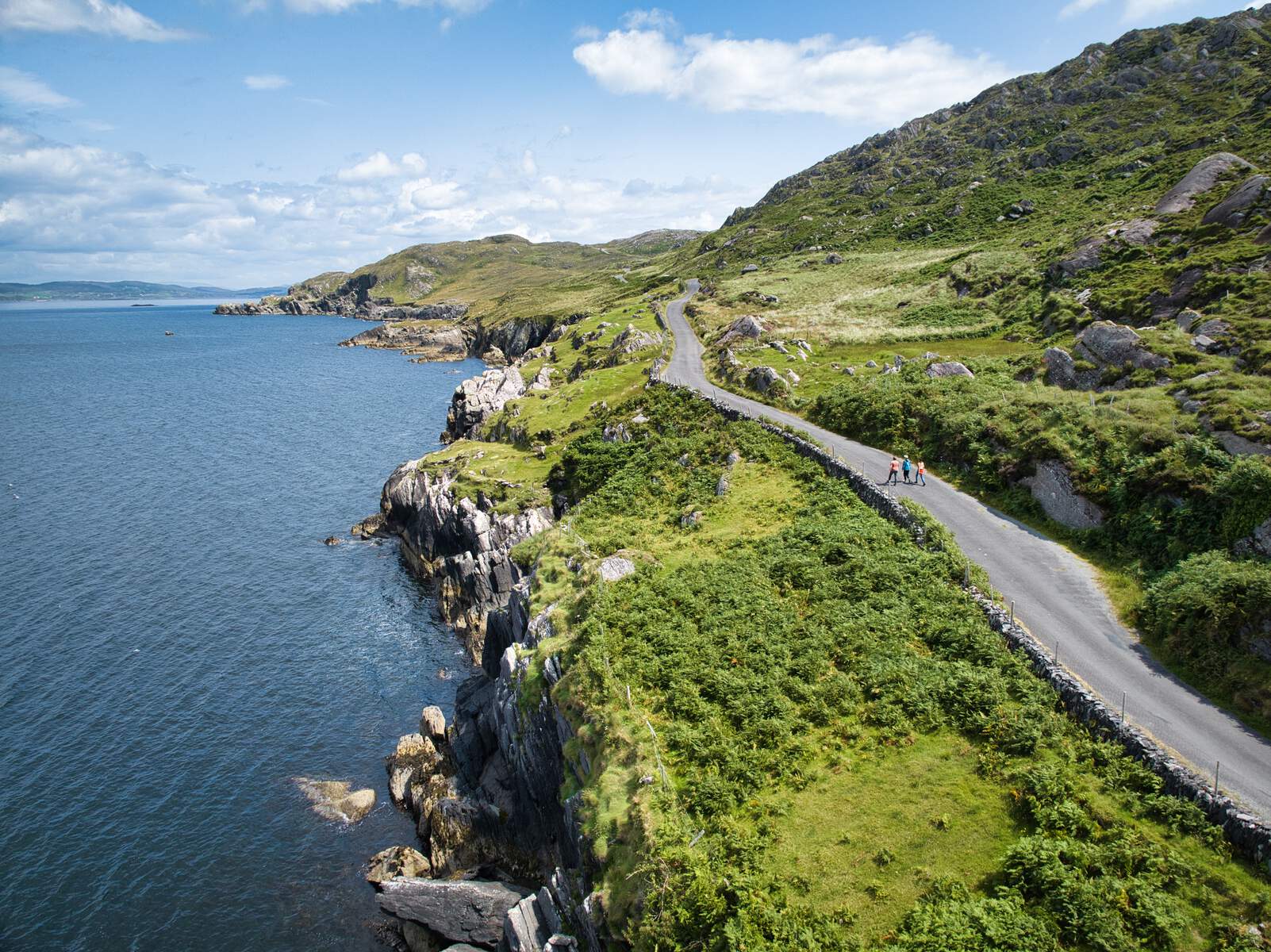
The Slieve Miskish Mountains sit at the extreme southwestern tip of the Beara Peninsula in County Cork. Unlike the higher Caha range to the north, these low sandstone hills rise gently from the Atlantic coast, their silhouettes dominating the town of Castletownbere and the historic mining village of Allihies. The Irish name Sliabh Mioscais translates as “the Mountains of Malice”, a reminder of the rugged character that has attracted poets, hikers and horse‑riders for generations.
Background
The range comprises only four named summits, each under 500 m:
| Peak | Height (m) |
|---|---|
| Knocknagallaun | 376 |
| Knockgour | 481 |
| Knockoura | 490 |
| Miskish Mountain | 386 |
All four peaks are easily accessible on foot and provide sweeping views over Bantry Bay, the Atlantic and the surrounding glens. In the 19th century the western slopes above Allihies were the heart of a thriving copper‑mining industry. The mines were abandoned in the early 20th century, but the stone shafts, engine houses and winding‑gear remain as atmospheric ruins that can be explored on the mountain trails.
Geology & Wildlife
The Slieve Miskish range is formed from Devonian sandstone, heavily sculpted by glacial erosion during the last Ice Age. The resulting craggy ridges and shallow corries create a mosaic of habitats. Birdwatchers can spot peregrine falcons, ravens and the occasional chough soaring above the cliffs, while the lower slopes support heather, gorse and wild thyme that bloom in late spring. In good weather the peaks offer clear sightlines to the islands of Bere and Dursey, making them popular spots for spotting marine wildlife such as dolphins and basking sharks from the shore.
What to See & Do
Walking and Hill‑walking
The Slieve Miskish area is a key section of the Beara Way, a 137‑mile circular walking route that loops the entire peninsula. Shorter day‑walks can target any of the four peaks; the ascent of Knockoura (490 m) is a popular choice for its panoramic outlook over the Wild Atlantic Way. The OSI Discovery Series Sheet 84 (1:50 000) provides detailed contour lines and is available from local shops or online.
Beara Bridleway – Ireland’s First Horse Trail
Etched into the flanks of the Miskish and Knockgour mountains, the Beara Bridleway is a 30.1 km linear horse‑riding trail that links the car park at Clonglaskin (west of Castletownbere) with the colourful village of Allihies and the coastal townland of Urhan near Eyeries. The route offers 23 km of rugged mountain scenery, sea‑views and optional detours to higher viewing points. It is graded moderate, suitable for riders with some experience, and dogs are not allowed.
| Feature | Detail |
|---|---|
| Length | 30.1 km |
| Grade | Moderate |
| Start point | Car park at Clonglaskin (grid ref V 630 448) |
| Nearest town | Castletownbere |
| Latitude / Longitude | 51.639955, -9.97992 |
| Map | Beara Bridleway Map (PDF) |
Cycling the Beara Way
The Beara Way is also sign‑posted for cyclists. A 30‑km stretch between Castletownbere and the village of Adrigole follows quiet country roads and includes a climb over the Healy Pass, offering spectacular sea‑views. The cycle route is rated moderate and is suitable for most riders with a good level of fitness. Bike‑rental facilities are available in Castletownbere and the nearby town of Glengarriff.
Mining Heritage
A short walk from Allihies leads to the Allihies Copper Mine Museum, housed in a former Methodist church. Exhibits explain the boom‑and‑bust cycle of copper extraction, the migration of miners to Montana, USA, and the impact of the industry on the local landscape. The surrounding hills still bear the scarred earth of old shafts and the occasional rusted engine house, perfect for photography enthusiasts. See also the dedicated page on the Allihies Copper Mines.
Scenic Drives
For motorists, the Healy Pass (part of the Caha range) offers a dramatic ascent with 360‑degree vistas of Bantry Bay and the Beara coastline. While not part of the Slieve Miskish range itself, the pass provides an excellent viewpoint before descending into the Miskish foothills.
Practical Information
- Access: The mountains are most easily reached from Castletownbere (bus links from Cork City and Killarney, or a 2‑hour drive from Cork). Parking is available in the town centre, at the Clonglaskin trailhead and at the Allihies car park (limited spaces in summer).
- Maps & Guides: In addition to the OSI Sheet 84, several printed walking guides are available on Trailhead Ireland, including the Beara & Sheep’s Head Peninsulas Collins Press guide (price €16.99).
- Contact: For up‑to‑date trail conditions or horse‑riding permits, contact Beara Tourism – Tel/Fax 027‑70054, email bearatourism1@gmail.com, website https://bearatourism.com.
- Admission: There is no entry fee for the mountains, the Beara Bridleway or the mining museum; donations are welcomed at the museum.
- Facilities: Castletownbere offers a range of amenities – cafés, restaurants, pubs, shops and accommodation – all within walking distance of the trailheads. Public toilets are available at the Castletownbere car park and at the Allihies visitor area.
- Seasonality: The bridleway and walking routes are open year‑round, though the higher sections can be boggy after heavy rain. The copper‑mine ruins are best viewed in dry weather for safe footing. Summer provides the clearest views, while spring brings wildflowers and increased bird activity.
- Safety: The terrain is uneven in places; sturdy walking boots are recommended. The Beara Bridleway is marked with way‑markers; however, mobile signal can be patchy, so carry a printed map.
- Family & Accessibility: The Knockgour and Knocknagallaun loops are gentle and suitable for families with children. Wheelchair access is limited to the lower trailheads; the higher summits require a reasonable level of fitness.
- Accommodation: A range of B&Bs, self‑catering cottages and guesthouses are available in Castletownbere, Allihies and nearby villages such as Eyeries and Adrigole. Many provide secure bike storage for cyclists.
For a deeper dive into the geology, history and outdoor activities of the Slieve Miskish Mountains, see the Wikipedia entry: Slieve Miskish Mountains.