
Overview
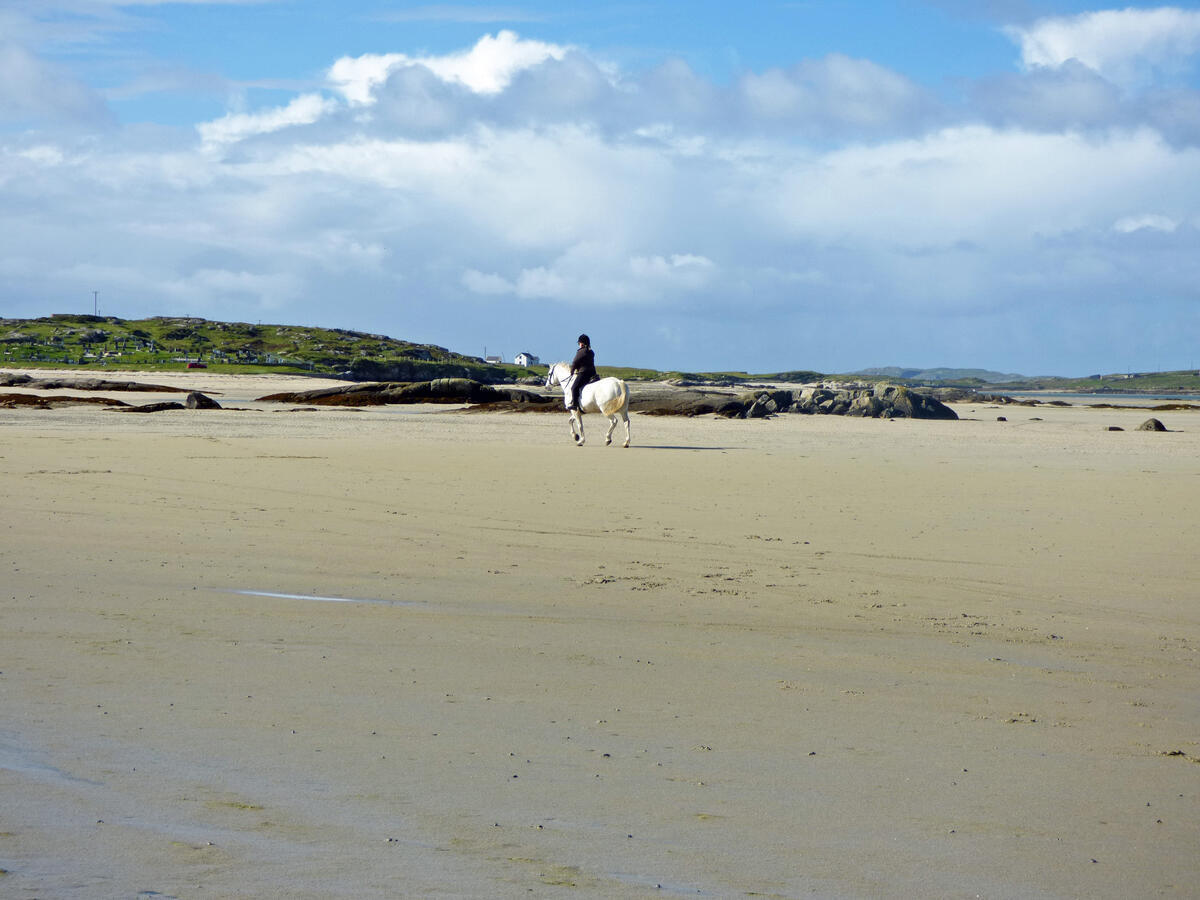
St Feichín’s Holy Well sits on a grassy shoreline at the western tip of Omey Island, a tidal island off the Connemara coast of County Galway. The well is marked by a low stone wall about three feet high and a large wooden cross at the spring’s head, where pilgrims leave coins, rosaries, medals and ribbons. The water is traditionally believed to aid eye problems, skin conditions and even infertility.
History
The well is dedicated to Saint Féchín (d. 665), a 7th‑century Irish saint who founded a monastic community on Omey Island after establishing the famous monastery at Fore in County Westmeath. Legend says that when a flood threatened the island, Féchín struck the ground with his staff, creating the spring that became the holy well and draining the waters away. Another tale tells of a leper whose skin fell off after washing in the well, turning into fish that still swim in the spring.
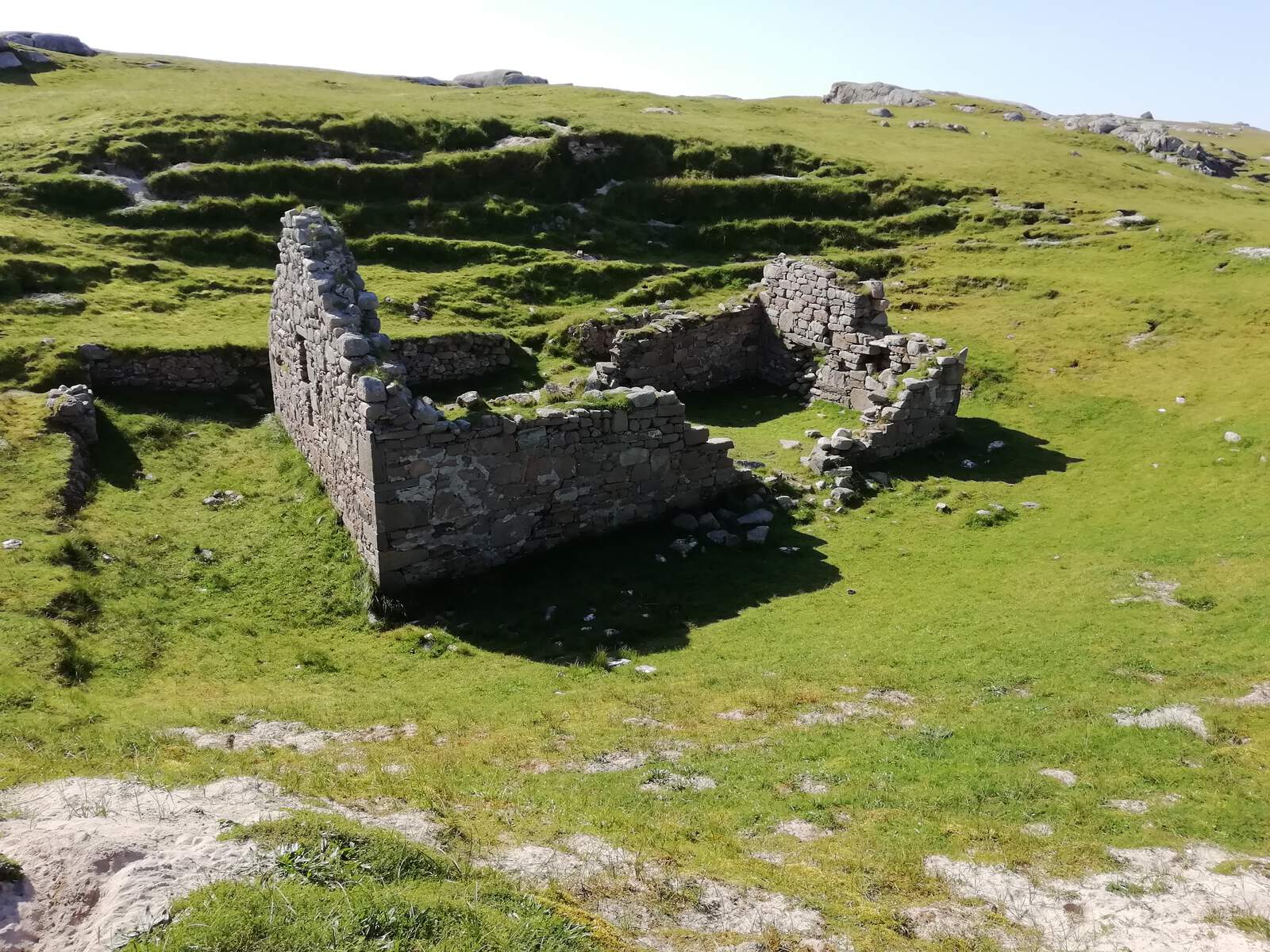
The site has remained a place of devotion for centuries. The principal day of pilgrimage is 20 January, the feast of St Féchín. Pilgrims perform “the rounds” – three circuits of the well while reciting prayers, dipping a cloth in the water to apply to ailing body parts, drinking a sip, and leaving an offering at the cross. Nearby lie the ruins of St Féchín’s church (Teampaill Féichín) and a historic cemetery that also serves as the main burial ground for the region, linked to the early‑Christian saint St Brendan.
What to See & Do
- The Well – Observe the neatly stacked stones, the weather‑worn wooden cross and the eclectic collection of offerings, which can include a dog’s collar.
- Pilgrimage Rituals – Join the traditional rounds on 20 January, or dip a finger in the water for a personal blessing at any time.
- Ruins and Cemetery – A short walk inland (subject to tide and field fences) leads to the remnants of the 7th‑century monastic church and a quiet graveyard.
- Coastal Walks – The beach‑side path offers sweeping Atlantic views, sight‑lines to the neighbouring High Island and the iconic Connemara landscape.
Getting There & Tides
- Access – Omey Island is reachable only at low tide. Check a reliable tide table (e.g. the Galway tides page on sailing.ie) before you set off; the safe crossing window is roughly two hours before and after low tide.
- Parking – Free parking is available at the island’s entrance near the road‑terminus in Claddaghduff. Spaces are limited on busy summer weekends, so arrive early.
- Crossing the Sand – Follow the marked direction poles across the firm sand bar. A 4×4 is helpful but not essential; a standard car can cross if you stay on the lighter‑coloured sand and keep moving.
- Walking vs Driving – If you prefer not to risk getting stuck, park on the mainland and walk the 12‑minute coastal route to the well.
Walking & Cycling Routes
- Omey Island Looped Walk – The 9‑mile loop (about 7 km of easy walking) starts at the car‑park, traverses the tidal causeway, and circles the island’s machair, dunes and historic sites. The route is suitable for families and offers opportunities to spot otters, swans and, on a clear day, dolphins.
- Connemara Greenway & Sky Road – The island is a convenient base for the partially completed Connemara Greenway and the scenic Sky Road Loop, both popular with cyclists.
- Horse‑Riding – The Point Pony Trekking Centre in Claddaghduff runs guided beach‑horse rides that cross the sand bar and explore the island’s shoreline.
Events & Activities
- Omey Races – Held in late July on the tidal flats at Omey Strand, this “other Galway Races” attracts up to 6,000 spectators for a day of horse racing on the beach.
- Omey Dash – An early‑August triathlon/duathlon that begins with a 0.75 km swim off Omey Strand, followed by a 24 km bike ride around the island and a 5 km run.
- Watersports – The Atlantic waters around Omey are popular for swimming, snorkelling, kite‑surfing and angling. Local operators in Claddaghduff offer equipment hire.
- Guided Walks – Private guided walking tours of Omey Island are available, providing deeper insight into the island’s early‑Christian history and natural heritage.
Further Reading
For up‑to‑date tide times, accommodation options and additional details, see the local tourism resources such as the Galway Tourism page on Omey Island and the Connemara.net guide.
St Feichín’s Holy Well offers a rare blend of natural beauty, early‑medieval history and enduring spiritual practice. Whether you are tracing the steps of ancient saints or simply seeking a quiet spot where land meets sea, the well invites contemplation and a touch of the miraculous.