
Overview
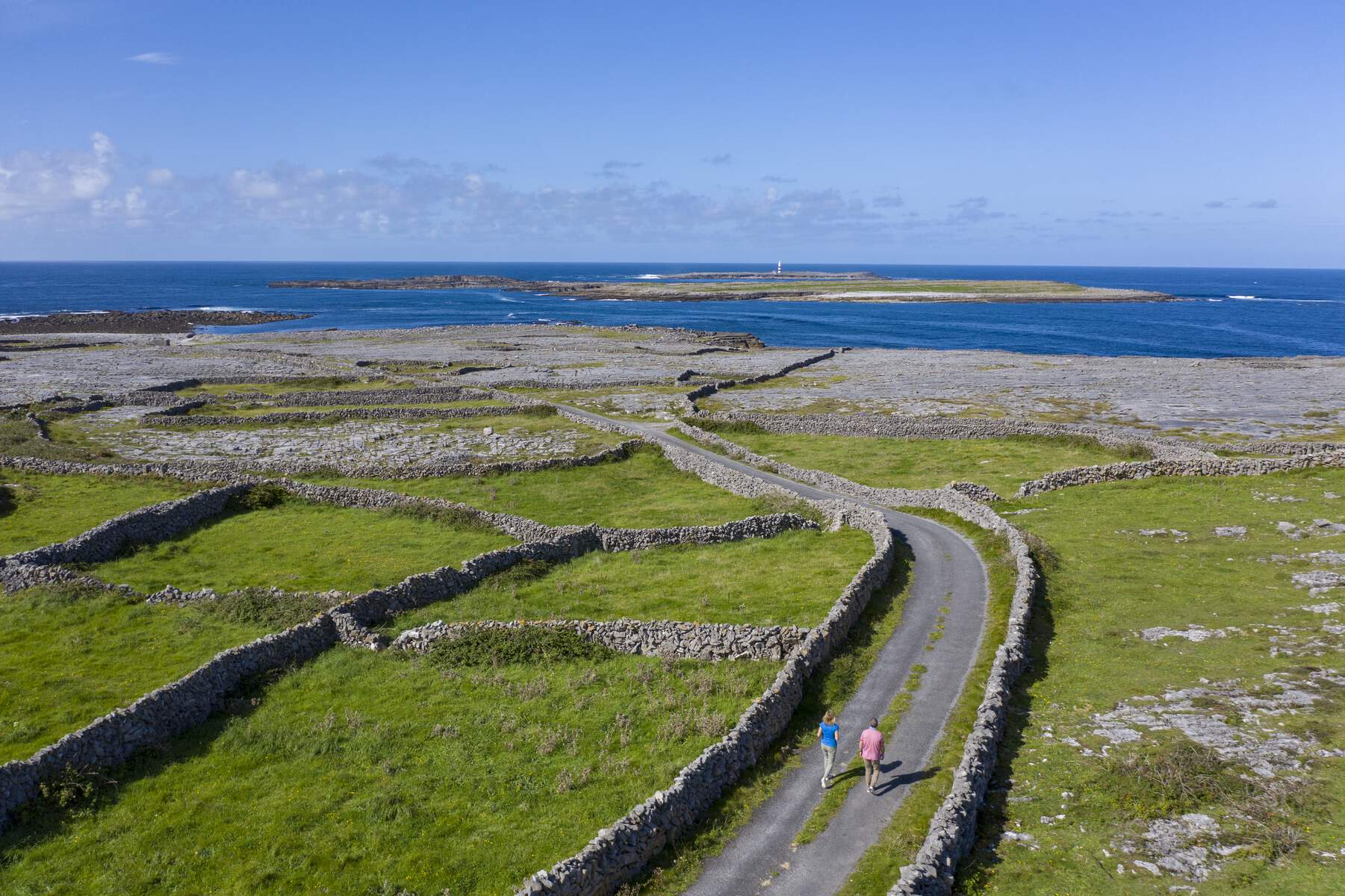
Perched on the western edge of Inishmaan, the middle of the Aran Islands, Synge’s Chair is a simple yet striking formation of flat stone that looks like a seat. Set against a sheer limestone cliff, the chair looks out over Gregory’s Sound, where the Atlantic surf crashes far below. The location is deliberately exposed yet often sheltered from the wind, giving visitors a quiet platform to soak in the raw beauty of the Atlantic coastline. The view stretches from the rugged cliffs of Inishmaan to the distant silhouettes of the other Aran islands, making it one of the most photographed spots in County Galway.
History
John Millington Synge (1871‑1909), a central figure of the Irish Literary Revival, spent several summers on Inishmaan between 1898 and 1902. He went to the island at the suggestion of W.B. Yeats, who urged him to “live there as if you were one of the people themselves”. During those years he learned Irish, collected folklore, and fell in love with the island’s stark landscape. Synge described the chair as “a place where I can sit for hours without hearing anything but the sea‑gulls’ cry,” a sentiment echoed in his later works such as Riders to the Sea and The Aran Islands and In Wicklow and West Kerry.
The stone seat became his favourite writing perch; he used it not only to draft verses but also as a setting for scenes in his unfinished play Deirdre of the Sorrows. After his death in 1909, admirers began leaving notes and flowers on the stone, turning the spot into an informal shrine to his literary legacy. Synge was a co‑founder of Dublin’s Abbey Theatre and his most famous play, The Playboy of the Western World, was inspired by stories he heard on the Aran Islands.
Literary Significance
Known in Irish as Cathaoir Synge, the chair is a pilgrimage site for lovers of Irish literature. Visitors often leave a handwritten note, a small token or a flower as a tribute, continuing a tradition that began shortly after Synge’s death. The site is mentioned in Synge’s own travelogue The Aran Islands and features in several of his plays, cementing its place in the cultural memory of the Irish Literary Revival.
What to See & Do
- The Chair itself – The flat stone, surrounded by smaller stones that form a low enclosure, invites you to sit and contemplate the same horizon that inspired Synge. Many visitors leave a small token or a handwritten note, continuing the tradition of literary homage.
- Panoramic Views – From the chair you can watch the surf of Gregory’s Sound pounding the rocks below, spot seabirds wheeling overhead, and, on clear days, glimpse the distant cliffs of Inishmore and the mainland.
- Clochán Trail – A short walk along the sign‑posted coastal path leads to a hidden clochán, a beehive‑shaped early Christian stone hut tucked behind a modest house. The clochán adds an extra layer of historic intrigue to the walk.
- Photography & Sketching – The interplay of light on the limestone, the endless blue of the Atlantic, and the solitary stone seat make for compelling photographs and sketches. The spot is listed among Ireland’s top photo locations by The Journal and is especially dramatic at sunrise and sunset.
- Literary Reflection – Bring a copy of one of Synge’s plays or poems and read a passage where the landscape features prominently. The silence of the cliffside amplifies the experience of his words.
Getting There & Practical Tips
Ferry – Inishmaan is served year‑round by Aran Island Ferries from Rossaveal (Ros a Mhíl). The crossing takes about 45 minutes. Check the timetable in advance, especially in the off‑season, as services are less frequent.
From the pier – Once you disembark, follow the main road west towards the village. Continue past the centre of the island, keeping an eye for the sign pointing to “Cathaoir Synge”. From the end of the sign‑posted lane the chair is a short, flat walk of about 2‑3 minutes (approximately 150 m). Earlier guides give a 2 km estimate from the village centre; the shorter walk refers to the final stretch from the lane.
Bike rentals – Rental bikes are available near the new pier during the summer months (≈ €10‑€15 per day). Cycling the island is a popular way to reach the chair; the ride from the pier takes about 15‑20 minutes.
Public transport on the island – Local minibus tours (e.g., Brídín Tours, phone 087 024 82637) can drop you close to the chair for a small fee (€15‑€20). Pre‑booking is recommended.
Parking – Free parking is available in the main village. From there, the sign‑posted lane leads west toward the chair.
Safety – The chair sits at the very edge of a sheer drop with no railings. Keep a safe distance from the cliff lip, especially at high tide or in wet weather. The path can be uneven; sturdy shoes are advisable. The site is suitable for families, but supervise children closely. Dogs are not recommended due to the exposed cliffs.
Facilities – There are no toilets, cafés or shelter on site. Bring water, snacks and any personal necessities.
Nearby Attractions
- Teach Synge (Synge’s Cottage) – The restored cottage where Synge stayed each summer is open to visitors in the summer months. It offers insight into his daily life and the island’s cultural heritage.
- Dún Conor (Dún Chonchúir) – The impressive stone ringfort perched on the island’s highest point provides sweeping views and a glimpse into early medieval life. It is reachable via the island’s network of walking trails.
- Carrownlisheen Wedge Tomb – Located on the eastern lowlands, this Neolithic gallery grave is linked to the legend of Diarmuid and Gráinne and is one of the best‑preserved wedge tombs in Ireland.
- The Flaggy Shore – A secluded beach on the western side of Inishmaan, ideal for a quiet walk after visiting the chair.
Photography & Seasonal Highlights
Photographers consistently rank Synge’s Chair among Ireland’s top photo spots. The best light is often found at sunrise, when the eastern sky casts a soft glow over the Atlantic, and at sunset, when the western horizon ignites with colour. Mid‑day can produce dramatic cloud formations that frame the stone seat. The site is accessible year‑round, but be prepared for strong Atlantic winds and sudden rain, especially in winter. Summer offers calmer conditions and the chance to combine a visit with the island’s traditional music sessions in the village pub.
Practical Information
Synge’s Chair is freely accessible year‑round; there is no admission fee and no formal opening hours. The site is reached by a short, sign‑posted walk from the end of the lane that leads out of the main village of Inishmaan. The walk takes roughly two minutes and is suitable for walkers and cyclists alike. The path is unpaved and follows the coastline, so a steady footing is advisable.
Coordinates: 53.084342, -9.612493
| Detail | Information |
|---|---|
| Location | Inishmaan, County Galway |
| Access | Ferry to Inishmaan, then walk or bike from the village (see above) |
| Admission | Free |
| Opening | Open all year, no specific hours |
| Facilities | None on site – bring water and personal necessities |
Visiting Synge’s Chair offers a rare combination of literary pilgrimage and natural spectacle. Whether you are a fan of the Abbey Theatre, a lover of rugged coastlines, or simply seeking a quiet spot to watch the Atlantic roll endlessly, the stone seat provides a moment of timeless reflection on the edge of Ireland’s western sea.