
Overview
Tintern Abbey sits on a gentle rise above the River Bannow, just a short drive from New Ross and a 35‑minute journey from Wexford town. The site is part of a Special Area of Conservation, meaning the surrounding woodlands, wetlands and limestone cliffs are protected for their biodiversity. The abbey’s dramatic silhouette—its ruined nave, chancel and 13th‑century cloister—has inspired poets, painters and travellers for more than eight centuries. Today, the ruins are managed by the Irish State and form a focal point for heritage walks, bird‑watching and quiet contemplation.
History
The story of Tintern Abbey begins with a dramatic vow. In the late 12th century, William Marshal, Earl of Pembroke, was caught in a violent storm while sailing around the Hook Peninsula. He promised God that, should he survive, he would found a monastery on the first safe shore he reached. The storm abated, the ship limped into Bannow Bay, and Marshal kept his word. Around 1200 he commissioned a Cistercian community, modelled on the famous mother house at Tintern in Wales. The new foundation was known as Tintern de Voto – “Tintern of the Vow”.
Cistercian monks arrived from Wales and began building in the austere, functional style that characterised the order: simple stone walls, a cruciform church, a cloister for communal prayer and work, and extensive agricultural granges that fed the community. By the early 13th century the abbey’s great church was being rebuilt in the Decorated Gothic style, a process that continued until the early 14th century. The west front, with its seven‑light window, and the lofty east window of the presbytery are the most recognisable features today.
The dissolution of the monasteries under Henry VIII reached Tintern in 1536. The abbey’s lands were granted to Sir Anthony Colclough, a soldier of the Tudor army. Over the next four centuries the Colclough family adapted the ruins for domestic use, converting the nave into a residence, the Lady Chapel into a kitchen, and adding a Georgian walled garden, a flour mill and a lime‑kiln. The estate remained in family hands until the early 20th century, when the last resident, Lucie Marie Biddulph Colclough, bequeathed the property to the Irish state.
From the 1980s onward, Cadw (the Welsh heritage body) and the Irish Office of Public Works carried out structural stabilisation, removed invasive ivy, and restored the iconic 13th‑century watergate arch. A 2011 conservation project reinstated a large Gothic window on the west wall, now a favourite photographic subject. The site attracts roughly 70 000 visitors a year, drawn by its layered history and the ever‑changing light that has fascinated artists from J.M.W. Turner to contemporary photographers.
What to See & Do
- The Ruined Church – Walk the length of the nave (about 228 ft) and admire the surviving arches, the ribbed vaulting and the remnants of the great east window. The stonework varies from purple‑hued Old Red Sandstone to buff and grey tones, giving the structure a chameleon‑like quality.
- Cloister and Chapter House – The cloister’s square plan is still evident, and the chapter house, where monks once debated the Rule of Saint Benedict, retains its original width. Look for the recessed book‑cubbies on the east side of the cloister, rare survivals from the early 14th century.
- Lady Chapel – Although the original chapel was converted into a kitchen by the Colcloughs, the ribbed and groined ceiling remains visible, offering a glimpse of the order’s devotion to simple elegance.
- The 16th‑Century Bridge – A three‑arch stone bridge spans the River Bannow just downstream of the abbey. Its 16 m length makes it a picturesque spot for photos, especially at sunrise.
- Colclough Walled Garden – A five‑minute walk brings you to a Georgian‑era walled garden restored to its 1838 layout. The garden features an ornamental section, a kitchen garden, a Victorian glasshouse, and a small river that winds through the beds. Paths are wheelchair‑friendly, and seasonal apple‑cider tastings are offered in summer.
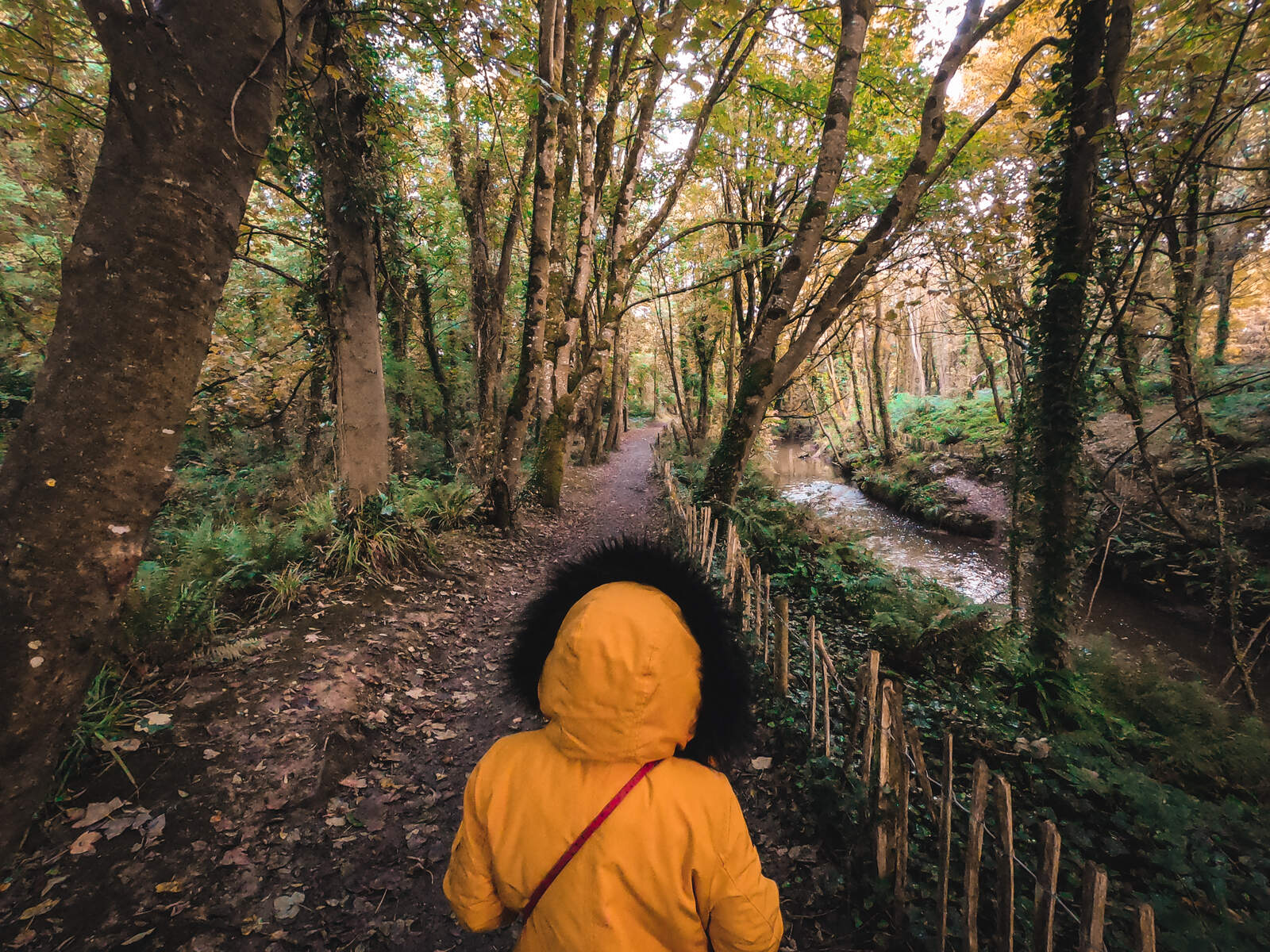
- Heritage Trails – Five marked trails radiate from the abbey: the 0.9 km Gardener’s Trail (quick garden stroll), the 2.4 km Demesne Trail along the Tintern River, the 3.5 km Foxboro Trail through woodland, the 5 km Buggy Trail, and the 7.2 km Bannow Bay Trail that links the abbey to the historic village of Saltmills.
- Guided Tours – During the summer months, a 45‑minute guided tour is available, covering the monastic layout, the Colclough legacy, and the natural history of the Special Area of Conservation.
Practical Information
Opening Hours – The abbey follows a seasonal timetable (see table below). Hours are extended in the peak summer months to accommodate longer daylight.
| Season | Opening Times |
|---|---|
| 15 Mar – 31 May | 10:00 – 17:00 |
| 1 Jun – 31 Aug | 10:00 – 17:30 |
| 1 Sep – 6 Nov | 10:00 – 17:00 |
Admission – Tickets are sold at the entrance desk and online via the official website. Prices are €5 for adults, €4 for seniors or groups, and €3 for children and students. Family discounts are offered for two adults plus up to three children.
Getting There – The abbey is accessed via the N25 road, then a short turn‑off onto the local road to Saltmills. Parking is available in a small car park beside the visitor centre; a limited number of spaces are reserved for disabled visitors. Public transport options are limited, so a car is the most convenient way to reach the site.
Facilities – A modest visitor centre provides restrooms, a small café serving tea, coffee and locally baked scones, and a gift shop stocked with books on Cistercian history and Irish craft items. The centre also houses a small exhibition on the Colclough family and the abbey’s archaeological investigations.
Accessibility – While the garden pathways are fully wheelchair‑accessible, the abbey’s stone‑covered ground is uneven and includes steps at the entrance to the cloister. Visitors with mobility challenges are advised to use the garden routes for a smoother experience.
Nearby Attractions – After exploring Tintern, consider a short drive to Duncannon Fort (15 min), the world‑renowned Hook Lighthouse (25 min), or the sandy beaches of Dollar Bay and Booley Bay. All are within a 30‑minute radius and make for a varied day‑trip on the Hook Peninsula.
Seasonal Highlights – Autumn brings a spectacular display of colour in the walled garden, while spring offers a burst of wildflowers and the return of migratory birds to the surrounding wetlands. Summer evenings are ideal for moon‑lit photography of the east window, a tradition noted by 19th‑century artists.
Contact – For the latest updates, ticket bookings or accessibility queries, visit the official site at https://www.theirishroadtrip.com/tintern-abbey/ or call the visitor centre on +353 83 306 4159 (the same number used for the Colclough Walled Garden).
Tintern Abbey is more than a ruin; it is a living narrative of medieval devotion, post‑dissolution adaptation, and modern conservation. Whether you are a history enthusiast, a photographer chasing the perfect light, or a family looking for a day of gentle walking and garden delight, the abbey offers a uniquely Irish experience that bridges centuries of faith, art and landscape.