
Overview
Tollymore Forest Park sits at the foot of the Mourne Mountains, just a five‑minute drive from the seaside town of Newcastle in County Down. Covering almost 630 hectares, the park blends dramatic river scenery, towering Himalayan cedars and a network of stone bridges with a surprisingly rich tapestry of history. It was the first state forest park established in Northern Ireland on 2 June 1955 and remains a favourite picnic and walking destination, even earning a place in The Sunday Times top twenty British picnic sites in 2000.
The Shimna River winds through the forest, providing a spawning ground for salmon and trout and creating a series of cascades, grottos and natural caves. Sixteen bridges cross the river, the oldest dating back to 1726, while a collection of Gothic gate arches, follies and a former barn‑church give the landscape a romantic, almost cinematic feel – a fact not lost on the Game of Thrones production team, which used the park for several key scenes.
History
The name Tollymore (Irish: Tulaigh Mhór) means “large hill or mound”, referring to the two hills – Slieve Neir and Slieve Snaran – that rise within the park’s boundary. The land changed hands many times: from the Magennis clan in the 15th century, to the Hamilton family in the 17th century, and finally to the Jocelyn (Roden) family before being sold to the Ministry of Agriculture in 1941. The Forest Service took over the estate and opened it to the public in 1955.
The park’s built heritage reflects the tastes of its aristocratic owners. Gothic gate arches at the entrance and exit were erected in the 1780s by James Hamilton, 2nd Earl of Clanbrassil. The Barbican Gate, the Grade B1‑listed gate lodge and the stone‑clad barn‑church (Clanbrassil Barn) date from the same period and were influenced by the designs of Thomas Wright of Durham. Other notable structures include the Hermitage – a small stone shelter with a Greek inscription dating to 1770 – and a series of stone bridges (Old Bridge 1726, Ivy Bridge 1780, Foley’s Bridge 1787, Parnell Bridge 1842). Restoration work in 2014 by the Mourne Heritage Trust refreshed fifteen of these historic features.
What to See & Do
Walking trails
Four official, colour‑coded trails start and finish at the main car park:
- Blue – Arboretum Path (0.7 km / 25 min) – A gentle, wheelchair‑accessible walk through one of Ireland’s oldest arboretums (established c. 1752). Highlights include a giant redwood struck by lightning, a cork tree with massive bark and a collection of exotic conifers.
- Red – River Trail (5.2 km / 1.5‑2 hrs) – Follows the Shimna River, crossing at Parnell’s Bridge, passing the Hermitage, the 10 m cascade and the ruins of the White Fort before looping back via the oldest bridge.
- Black – Mountain Trail (8.8 km / 3‑4 hrs) – A mixed‑terrain route through conifer and broad‑leaf woods, duck ponds and historic points of interest.
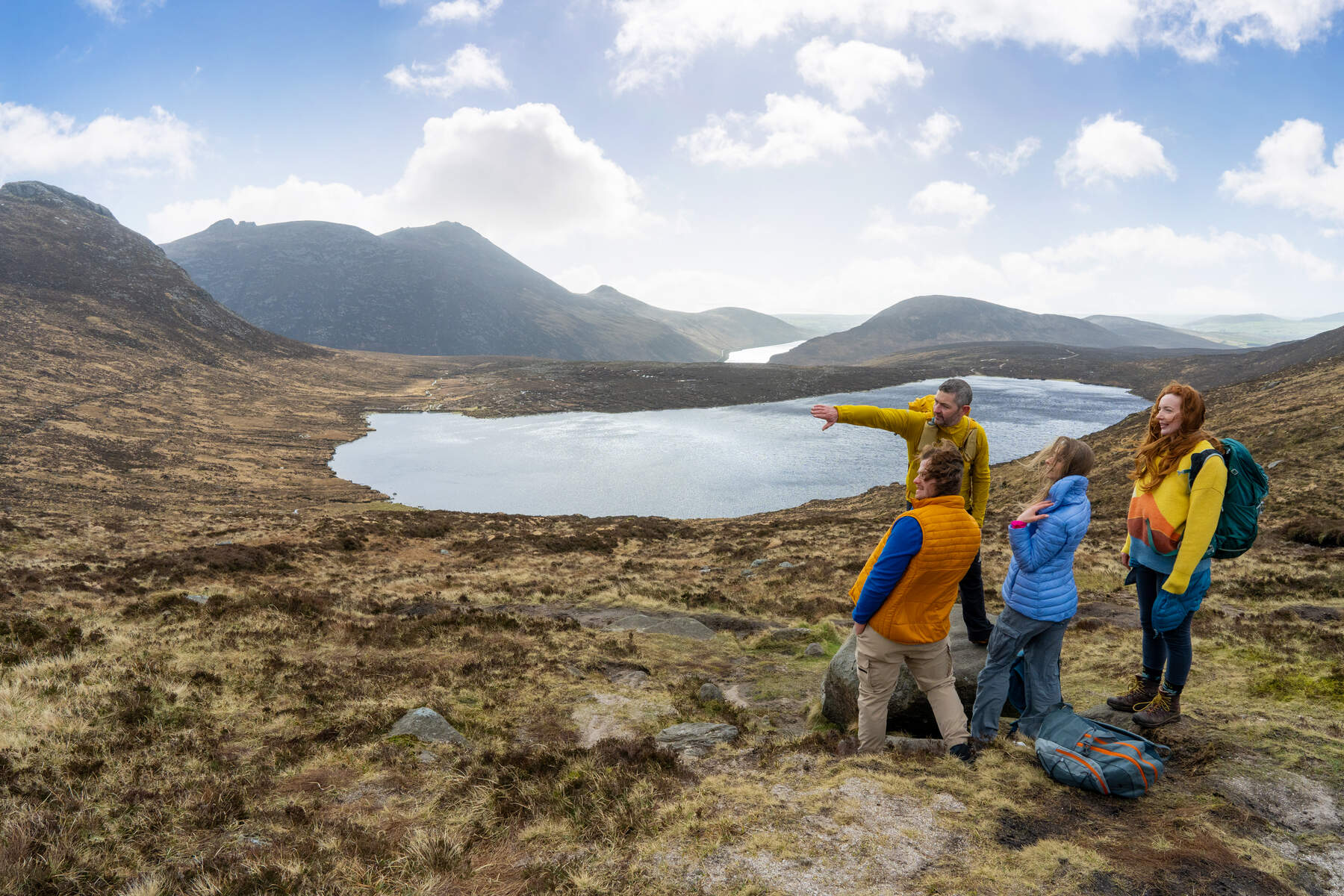
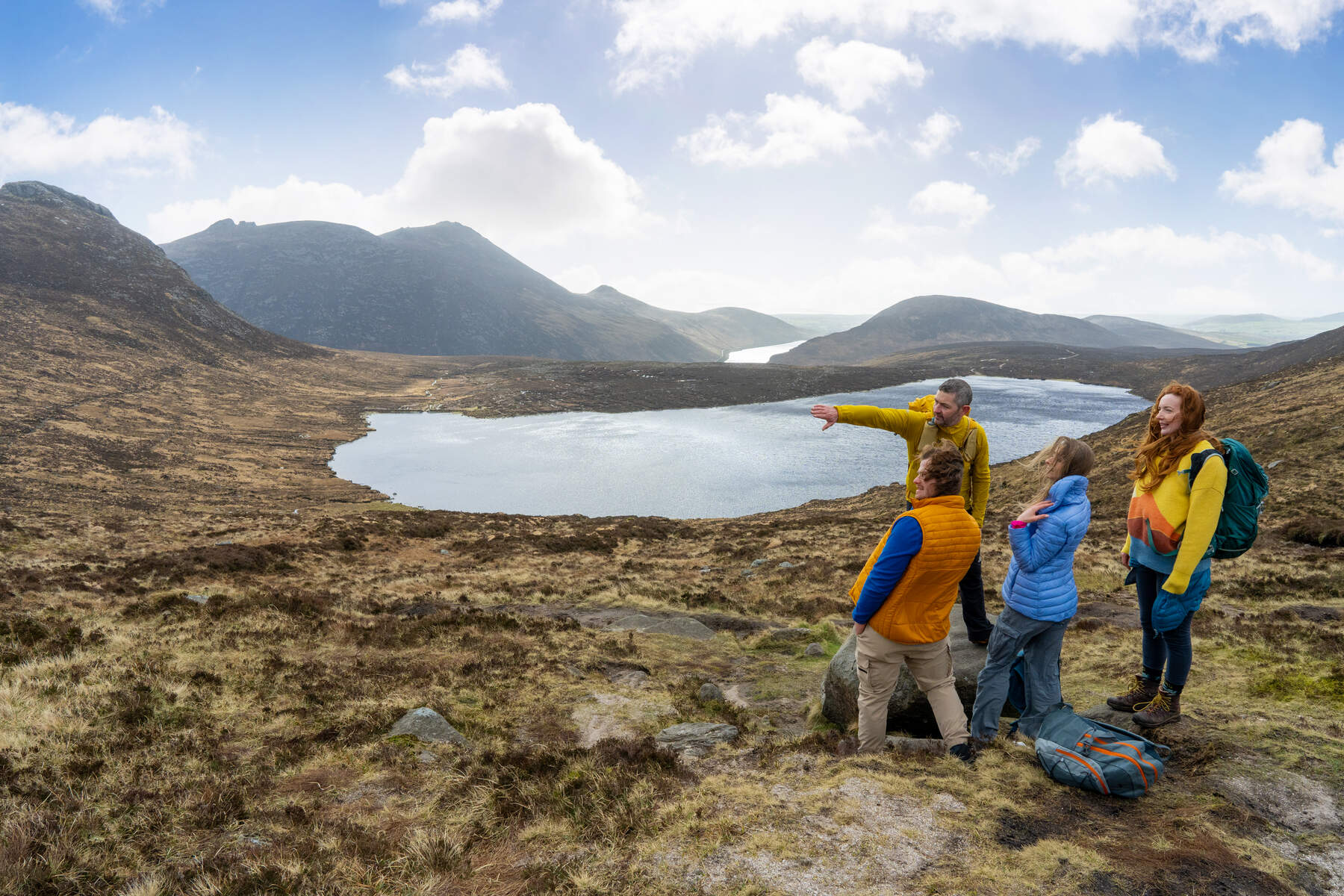
- Black 1 – The Drinns Trail (adds 4.8 km) – An optional loop that skirts the two hills known locally as The Drinns, offering elevated viewpoints over the Mournes. The Ulster Way also traverses the park, linking it to a wider network of long‑distance paths.
Wildlife and ecology
The park is a haven for wildlife. A herd of 120‑150 wild fallow deer roams the woods, while red squirrels, pine martens, otters, badgers and foxes are regularly sighted. The Shimna River supports kingfishers, dippers and a resident population of Mandarin ducks – the only place in Ireland where the species breeds regularly. Birdwatchers also enjoy the occasional great‑spotted woodpecker, a species that only returned to Ireland in the 2000s.
Historic follies and monuments
- Barbican Gate & Gothic arches – Grand 18th‑century entrances.
- Clanbrassil Barn – A former stable designed to look like a church, now housing toilets and an education room.
- Granite obelisk – Erected 1812‑1820 by the 2nd Earl of Roden.
- The Hermitage – Stone shelter with a Greek dedication to the Marquess of Monthermer.
- The King’s Grave – A megalithic cairn dating to 1000‑1500 BC.
- The White Fort – A large cashel with 3 m thick walls, visible from the River Trail.
Filming location
Tollymore’s atmospheric woodlands and stone bridges have featured in the Game of Thrones series and the film Dracula Untold, adding a pop‑culture draw for fans of fantasy television.
Practical Information
| Item | Details |
|---|---|
| Opening hours | Daily 10:00 – sunset |
| Admission / Parking | £5 per car, £2.50 per motorcycle, £13 per minibus, £35 per coach (charges displayed at the entrance). No charge for pedestrians. |
| Camping | Designated pitches with showers, toilets, chemical‑toilet disposal and fresh water. £23 per night with electricity, £20 without. |
| Facilities | Large car park, coffee van, toilets, baby‑changing facilities, picnic areas. |
| Accessibility | The Arboretum Path is suitable for strollers and wheelchairs; other trails are unpaved and may be uneven. |
| Getting there | The park is located on Bryansford Road, Tollymore Park, Newcastle, BT33 0PR. It is about 40 km south of Belfast and a short drive from the A2 coastal road. Public transport options are limited; most visitors arrive by car. |
| Website | Discover Northern Ireland – Tollymore Forest Park |
Parking and transport
On‑site parking is available for a fee (see table). The car park can accommodate cars, motorcycles, minibuses and coaches, making it suitable for group visits. There is no dedicated bus service to the park, so visitors usually drive from Belfast, Newcastle or other nearby towns.
Camping details
The campsite is open year‑round and can be booked in advance via the official campsite manager. Pitches include electric hook‑up, fresh water and waste disposal, making it a convenient base for multi‑day hikes in the Mournes.
Trail navigation
All trails are signposted with coloured arrows that match the map on the visitor centre notice board. The blue, red and black waymarkers guide walkers from the car park to the arboretum, river and mountain routes respectively. Maps and leaflets are available at the entrance.
Wildlife watching
Early morning or late afternoon offers the best chance to spot otters, kingfishers and the shy pine marten. The Red Squirrel Group runs occasional feeding stations near the arboretum; sightings have increased since the 2010s after a series of conservation efforts.
Nearby attractions
A short drive brings you to the seaside town of Newcastle (beach, restaurants) and the Mourne Mountains (further hiking, Slieve Donard). Castlewellan Forest Park and Murlough National Nature Reserve are also within 15 km, providing additional options for a full day of outdoor exploration.
Whether you are tracing the footsteps of 18th‑century aristocrats, hunting for a glimpse of a Mandarin duck, or simply enjoying a picnic beneath towering cedars, Tollymore Forest Park delivers a uniquely Irish blend of natural beauty and historic charm.