
Overview
Toureen Peakaun (sometimes written Toureen Peacaun) sits quietly in the Glen of Aherlow, about six kilometres north‑west of Cahir in County Tipperary. The site is a National Monument under the guardianship of the Office of Public Works (OPW) and consists of the ruins of a small Romanesque church, a holy well, a collection of early medieval cross‑slabs, a 9th‑century sandstone sundial and a modest stone enclosure that may have housed a saint’s cell. The whole monastic enclosure is set against a backdrop of rolling pasture and the distant Galtee Mountains, offering a rare glimpse into early Irish Christian life.
| Feature | Details |
|---|---|
| Founded | 7th century (monastic settlement by St Alban) |
| Church date | 12th century Romanesque |
| Key artefacts | Cross‑slab fragments, 9th‑century sundial, bullaun stone |
| Holy well | Dedicated to St Peacaun/Beacan |
| Coordinates | 52.4081667 N, 7.9920833 W |
| Access | Via farmyard and level‑crossing (caution advised) |
| Entry | Free, unguided |
History
The spiritual roots of Toureen stretch back to the later 7th century when St Alban chose the Glen of Aherlow as the site for a new monastery. Archaeological evidence, including radiocarbon dating of palisade timbers, confirms a settlement from that period. St Alban’s successor, St Beccan (also rendered St Peacaun), is traditionally linked to the holy well that still flows at the edge of the field.
Centuries later, in the 12th century, a modest rectangular stone church was erected within the enclosure. The building displays classic Romanesque features: low‑relief chevron decoration on the windows, a richly moulded architrave and pedimented doorways. During the 1940s the OPW carried out a partial excavation and reconstruction, inserting recovered architectural fragments—most notably the sandstone sundial and several cross‑slabs—directly into the surviving walls. The sundial, dating to the 9th century, is a circular sandstone disc with a near‑square face and a peg‑hole for the wooden gnomon, offering a tangible link to early medieval time‑keeping.
Excavations also uncovered 28 burials within the church floor, one of which bore a broken early medieval grave slab, underscoring the site’s long‑standing role as a place of prayer and interment. The surrounding enclosure contains a small stone cell (about 40 cm high, 2.5 m in diameter) with a bullaun stone featuring two hollows—features typical of early monastic habitations.
What to See & Do
The Church Ruins
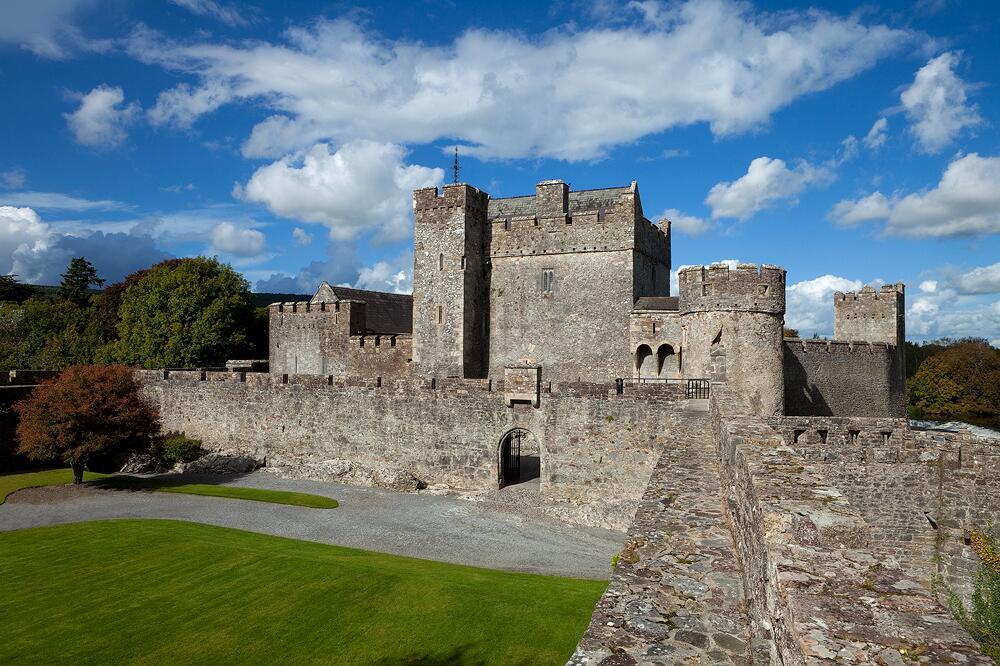
Walk around the partially reconstructed nave and admire the surviving Romanesque window arches, still decorated with chevron motifs. The inserted cross‑slabs display faint Latin cross outlines, while a few bear intricate interlace patterns that hint at the craftsmanship of early Irish stone carvers.
The 9th‑Century Sundial
Embedded in the south wall, the sandstone sundial is a rare surviving example of early Irish time‑keeping. Its peg‑hole once held a wooden gnomon, casting a shadow that marked the hours of daylight for the monastic community.
Holy Well & Bullaun Stone
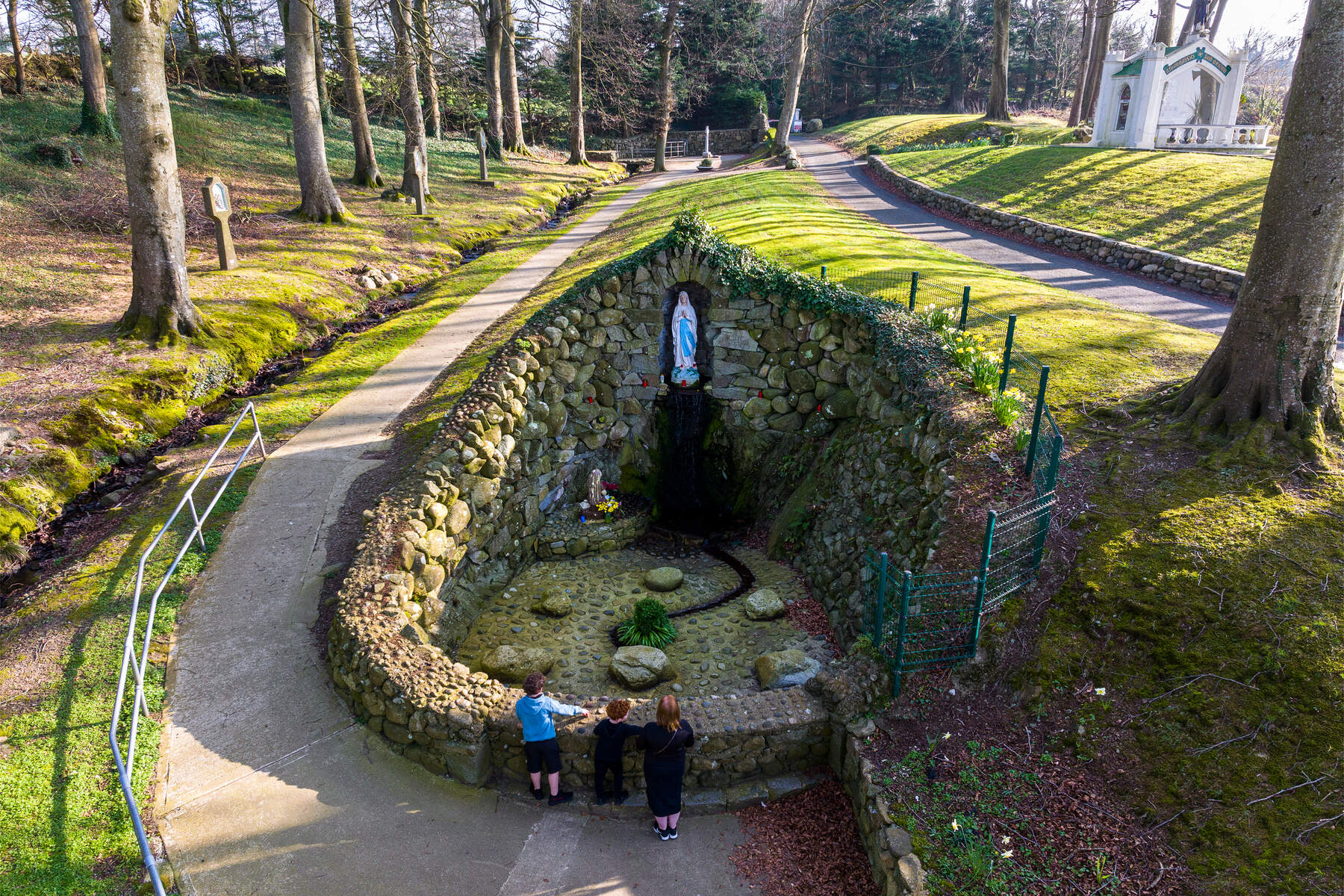
A short walk from the church leads to the holy well dedicated to St Peacaun. Pilgrims have visited the well for centuries, leaving small offerings of cloth or flowers. Nearby, the bullaun stone with its twin hollows was likely used for ritual washing or grinding of herbs.
The Stone Enclosure (St Peacaun’s Cell)
Just 50 metres northeast of the well lies a low stone enclosure that may have been the saint’s dwelling. Its modest size and the presence of the bullaun stone suggest a place of solitary contemplation.
Landscape & Views
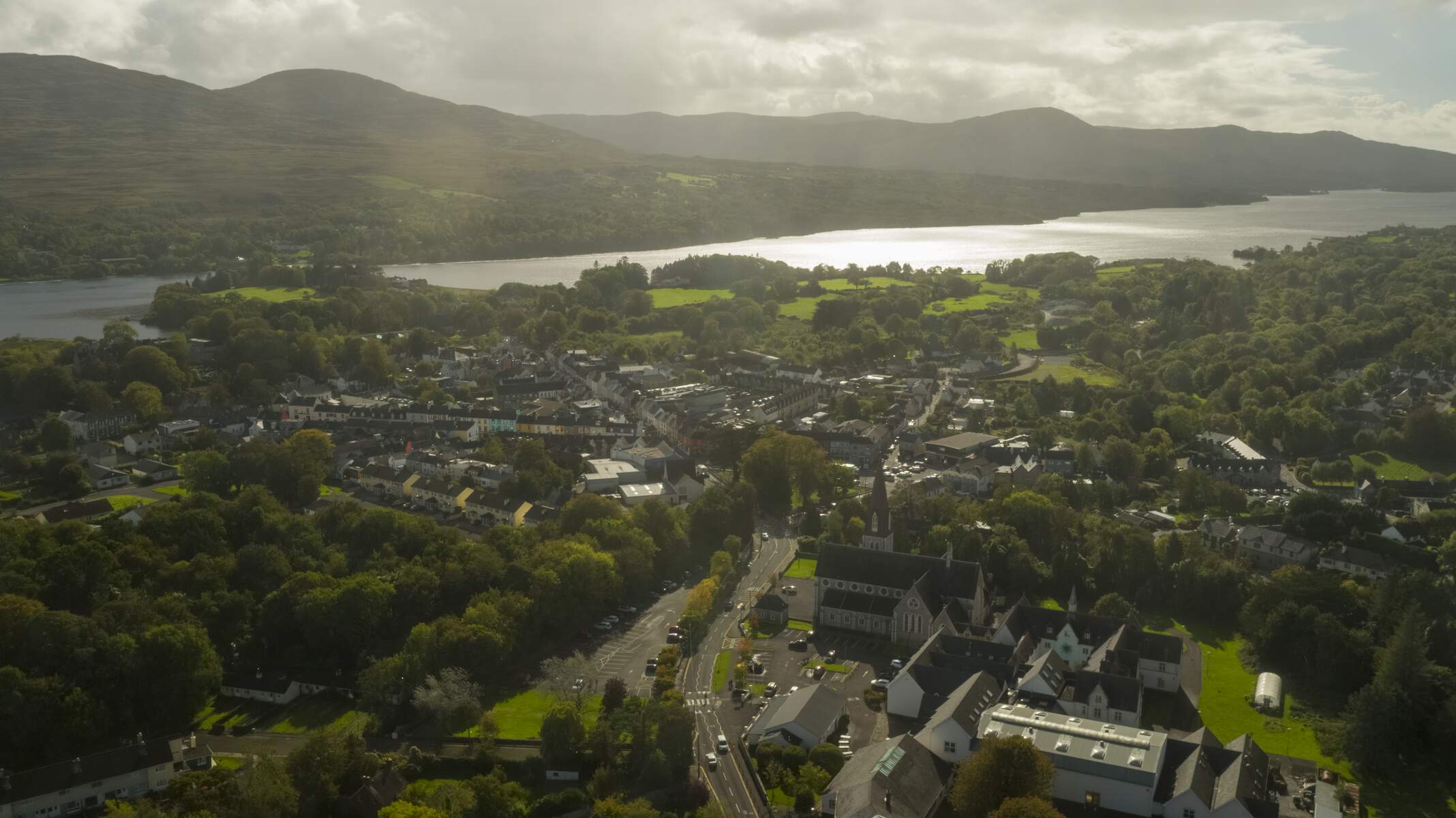
The site’s position in the Glen of Aherlow provides sweeping views of the surrounding farmland and the distant Galtee range. The quiet atmosphere makes it an ideal spot for a moment of reflection after a walk through the valley.
Practical Information
Toureen Peakaun is free to enter and open year‑round, but it is an unguided site. Access is gained by walking through a working farmyard and crossing a level‑crossing; visitors should exercise caution and respect the private landowner’s boundaries. The OPW explicitly states that it is not liable for any injuries or losses incurred on the premises, so a sensible level of care is advisable.
There are no formal visitor facilities on‑site—no ticket office, café or restroom—so plan accordingly. Parking is typically available in the farmyard’s lay‑by, though it is advisable to arrive early during the summer months when local agricultural activity can limit space.
For those interested in deeper research, the Historic Environment Viewer provides an interactive map of the monument: Historic Environment Viewer.
Because the site is a protected National Monument, any photography should be discreet and respectful of the sacred nature of the well and burial area. Littering is prohibited, and visitors are encouraged to stay on the established footpaths to preserve the fragile stonework.
Getting There
The most straightforward route is by car from Cahir: follow the R672 north‑west for about six kilometres, then look for signs to the farmyard at Toureen. Public transport does not serve the immediate area, so a private vehicle or a taxi from Cahir is recommended.
Nearby Attractions
While in the Glen of Aherlow, consider extending your day to visit the Rock of Cashel, Cahir Castle, or the Christ the King statue that crowns the valley. The holy well at Toureen pairs nicely with a short hike along the local trails that link the monastic site to the surrounding countryside.
Toureen Peakaun offers a rare combination of early medieval spirituality, modest Romanesque architecture and a tranquil rural setting. Whether you are a history enthusiast, a pilgrim, or simply a lover of quiet Irish landscapes, the site invites you to step back into a world where stone, water and sky converge in timeless reverence.