
Overview
Victor’s Way, often described as Ireland’s sole Indian sculpture park, sits on the rolling hills outside the village of Roundwood in County Wicklow. Spread across roughly 22 acres of open countryside and forest, the park offers a tranquil, contemplative environment where art and nature intertwine. Visitors wander among 33 black‑granite monoliths and three bronze figures, each ranging from five to fifteen feet in height, creating a landscape that feels both ancient and contemporary.
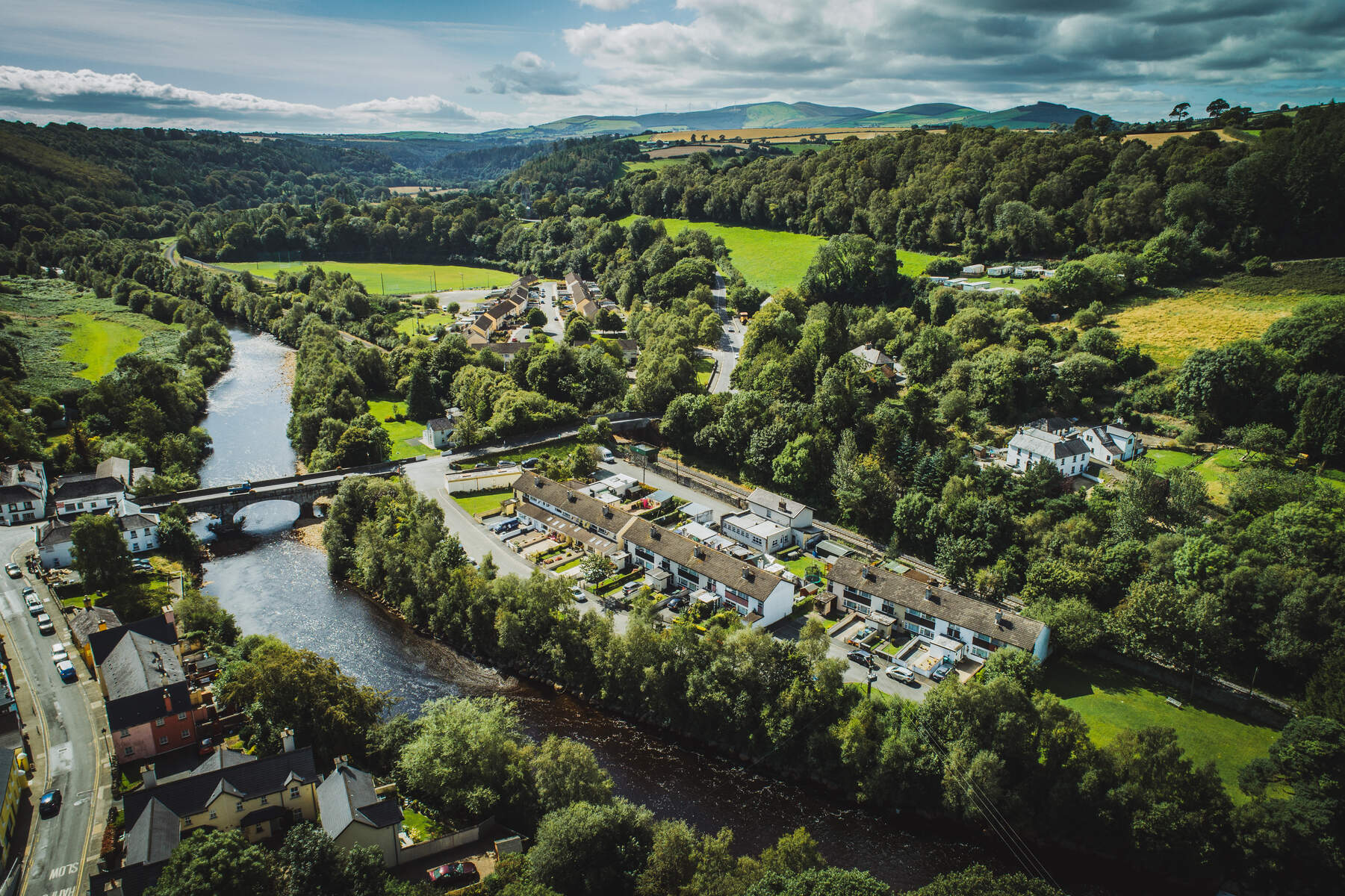
The park was conceived as a space for quiet reflection rather than a traditional tourist attraction. Its design encourages a leisurely, hour‑long stroll that allows guests to absorb the scale and texture of each piece while listening to the rustle of leaves and the distant hum of the Wicklow hills. At the end of the walk, a small photo exhibition details the journey of the sculptures from their Indian workshops to the Irish soil, and a craft shop offers handmade items that support the original Indian craftspeople.
History
Victor’s Way was the brainchild of Victor Langheld, a visionary who wanted to bring the spiritual and artistic traditions of India to the Irish landscape. The project began as a personal pilgrimage, with each sculpture commissioned from Indian artisans and then transported to Wicklow. The park officially opened to the public as a contemplative space for adults, inviting visitors to experience a dialogue between Eastern philosophy and Western scenery.
The sculptures themselves are carved from black granite sourced in India, a material chosen for its durability and its ability to absorb light, giving the pieces a solemn, almost meditative presence. The three bronze works add a contrasting warmth, their patina shifting with the changing Irish weather. Over the years, the park has hosted a modest number of exhibitions, the most recent being a photographic showcase that chronicles the creation and installation of each statue.
What to See & Do
The Sculptures
The heart of Victor’s Way lies in its collection of 33 granite monoliths and three bronze statues. Each piece is positioned to interact with the surrounding trees, pathways, and open sky. Some sculptures are abstract, inviting personal interpretation, while others hint at mythic forms that echo Indian deities and legends. The varying heights—from five‑foot pillars to towering fifteen‑foot figures—create a rhythm that guides visitors through the landscape.
Photo Exhibition
At the terminus of the walking route, a modest exhibition space displays a series of photographs documenting the sculptures’ creation in India, their journey across continents, and the hands that installed them in Wicklow. The images provide insight into the craftsmanship involved and deepen the visitor’s appreciation of the cultural bridge the park represents.
Craft Shop
Adjacent to the exhibition, a small craft shop offers a curated selection of Indian‑made items, ranging from hand‑woven textiles to carved wooden ornaments. Proceeds from the shop directly support the artisans who crafted the park’s sculptures, allowing visitors to take a piece of the park’s story home with them.
Practical Information
Victor’s Way is scheduled to remain open until 27 September 2025, after which the park will close permanently. The official website now states that the sculpture park has ended, confirming its permanent closure. As a result, no further admissions are being taken, and the site is no longer open to the public.
When the park was operational, there were no admission fees listed, and the experience was self‑guided, allowing visitors to explore at their own pace. The park’s remote setting meant that parking was available on‑site, and the surrounding area was accessible by footpaths that blended seamlessly with the natural terrain.
For those interested in the park’s legacy, the official website (https://victorsway.eu/) retains archival information, including details about the sculptures, the philosophical underpinnings of the space, and links to related cultural projects. The Visit Wicklow listing (https://visitwicklow.ie/listing/victors-way-indian-sculpture-park/) also provides a brief overview and notes the closure date.
While the physical site is no longer open, the story of Victor’s Way continues to inspire discussions about cross‑cultural artistic exchange and the role of contemplative spaces in modern tourism. Photographs and virtual tours available online offer a glimpse of the park’s serene atmosphere, ensuring that the spirit of the sculptures lives on beyond the gates.
Victor’s Way remains a unique chapter in Ireland’s cultural landscape—a testament to the power of art to bridge continents and invite quiet reflection amidst the Wicklow countryside.