
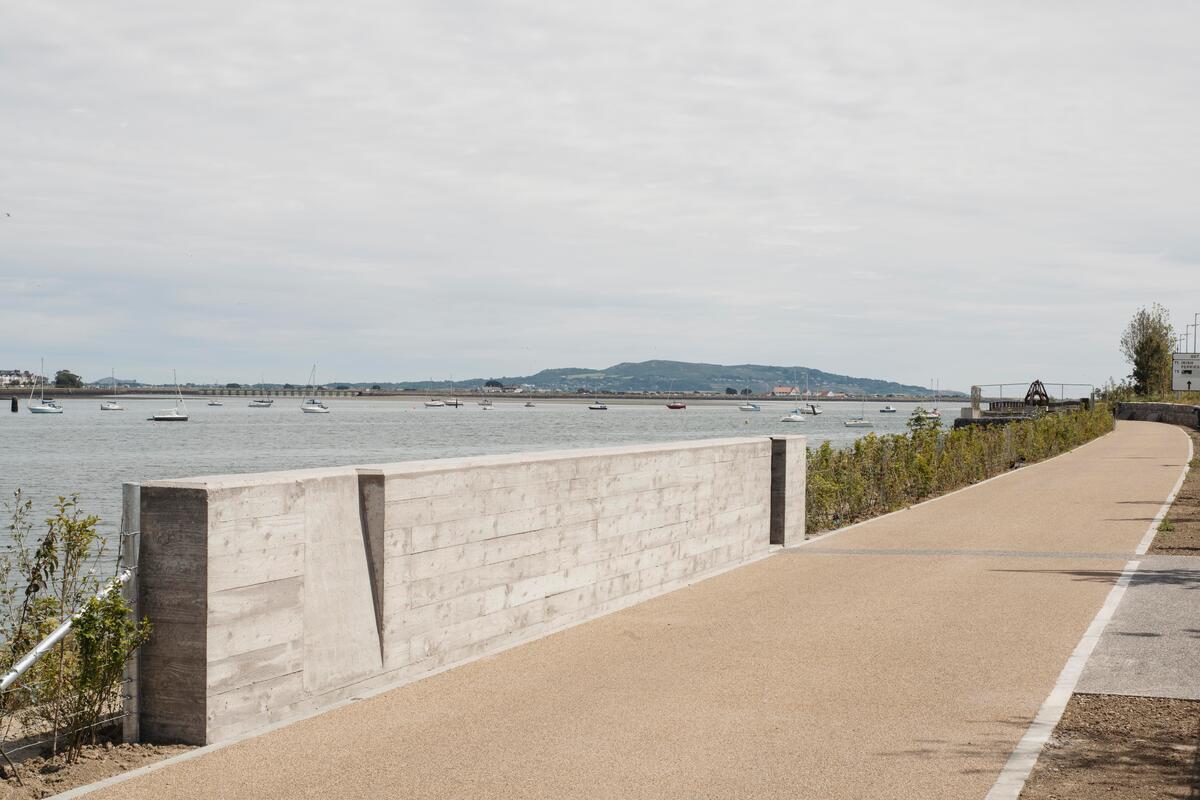
Overview
Wellington Quay stretches along the south bank of the River Liffey between Grattan Bridge and the iconic Ha’penny Bridge. Built of dressed ashlar granite between 1812 and 1815, the quay’s smooth stone promenade and distinctive bell‑profile coping give the riverfront an early‑Victorian feel. Today it forms the heart of Dublin’s lively Temple Bar district, blending historic façades with bustling cafés and easy riverside walks.
History
The quay was part of the Wide Street Commission’s early‑nineteenth‑century scheme to create a continuous, fire‑proof thoroughfare along the Liffey’s south side. Named after Arthur Wellesley, the first Duke of Wellington, it commemorates his 1815 victory at Waterloo. The granite wall, complete with cast‑iron ladders, vertical hand‑rails and mooring rings, showcases the technical skill of the period’s masons and engineers.
Dublin’s quays have been central to the city’s commercial life since the medieval era, but by the 1800s the Liffey’s shallow channel limited larger vessels. Wellington Quay’s construction helped modernise the waterfront, allowing lighter trade and improving sanitary drainage – the River Poddle still discharges through an elliptical‑headed culvert on the quay’s north face.
A tragic modern footnote occurred on 21 February 2004 when a Dublin Bus lost control near the Clarence Hotel on Wellington Quay, resulting in five fatalities. The incident led to a temporary closure of the south quays and remains a somber reminder of the area’s bustling traffic.
What to See & Do
- The Old Custom House (1707‑c.1814) – The red‑brick façade of this former customs office anchors the western end of the quay and offers a glimpse into Dublin’s mercantile past.
- Clarence Hotel – A landmark hotel that survived the 2004 bus crash and now houses a stylish bar and restaurant.
- Merchants’ Hall – An elegant 19th‑century building that once hosted the city’s trading guilds; its stonework complements the quay’s granite rhythm.
- Temple Bar – Wellington Quay forms part of the cultural quarter’s core, with street performers, art galleries and the famous O’Riordan’s Bar & Bistro serving traditional Irish fare and live music.
- Liffey Boardwalk – Opened in 2000, this pedestrian walkway runs the length of the quay, providing uninterrupted river views and easy access to the nearby Ha’penny Bridge.
- Cast‑iron ladders and mooring rings – Still in place, these historic features let visitors imagine the quay’s working past when cargo was loaded directly from the river.
- River Poddle culvert – Peek at the small elliptical opening on the north face of the quay; it marks the hidden course of Dublin’s ancient tributary.
Things to Do Nearby
Wellington Quay is an ideal launch‑pad for exploring other riverside attractions within walking distance:
- Arran Quay – A short stroll east brings you to this historic legal and commercial quay, home to the Irish Times headquarters and the iconic Ha’penny Bridge.
- Jameson Distillery Bow St. – About a 10‑minute walk, offering guided tours and tastings.
- Writers Museum – A 5‑minute walk, celebrating Dublin’s literary heritage.
- Dublin Castle and Trinity College – Both within a 5‑minute walk, perfect for a quick cultural detour.
Accessibility & Facilities
- Wheelchair access – The main promenade is level and wheelchair‑friendly; historic cast‑iron ladders are not ramped.
- Public Wi‑Fi – Free Wi‑Fi is available at the Wellington Hotel and several cafés along the quay.
- Restrooms – Public toilets can be accessed in the Wellington Hotel lobby and at the Temple Bar Visitor Centre.
- Parking – Limited on‑street parking on adjacent side streets; larger car parks are available at the Convention Centre Dublin and the Spencer Dock area.
Getting There
- Luas – Trinity (Red Line) and Jervis (Green Line) stops are a short walk away.
- Bus – Numerous Dublin Bus routes serve the South Quay.
- Pedestrian bridges – Grattan Bridge (west) and Ha’penny Bridge (east) provide quick river crossings to the north quays, where the Four Courts and the historic Custom House dominate the skyline.
- Evening walks – The Liffey Boardwalk is illuminated after dark, making a safe and atmospheric riverside stroll.
Practical Information
Wellington Quay is open to the public 24 hours a day and admission is free.
| Feature | Details |
|---|---|
| Opening hours | Open 24 h (free entry) |
| Nearest Luas stops | Trinity (Red), Jervis (Green) |
| Closest bridges | Grattan Bridge, Ha’penny Bridge |
| Accessibility | Level promenade; historic ladders not wheelchair‑accessible |
| Contact phone | +353 1 233 6600 |
| Website | https://www.buildingsofireland.ie/buildings-search/building/50020254/wellington-quay-dublin-2-dublin |
Whether you are tracing Dublin’s mercantile heritage, enjoying a pint in a historic pub, or simply watching the river traffic glide past, Wellington Quay offers a compact yet richly layered slice of the capital’s past and present.