Overview
West Clare Gaeltacht sits on the wild Atlantic fringe of County Clare, stretching from the Shannon Estuary in the south to the Loop Head Peninsula in the north. Though it lost official Gaeltacht status in 1956, the area is recognised as a Breac‑Ghaeltacht – a “broken Gaeltacht” where Irish is still heard in daily life, especially in villages such as Carrigaholt, Doonbeg, Kilkee and Kilrush. The community is championed by Coiste Forbartha na Gaeltachta Chontae an Chláir, which promotes Irish‑language events, classes and a revival of traditional speech.
History
The story of West Clare’s language begins with the 1925 Coimisiún na Gaeltachta recommendation that parts of the county be designated Gaeltacht. Under the Gaeltacht (Housing) Acts 1929‑2001, districts around Ennis, Ennistymon, Kilrush and Miltown Malbay were officially recognised. By 1956 the number of native speakers had fallen so low that the statutory Gaeltacht status was withdrawn.
A quiet resurgence followed. The Gaeltacht Development Committee reported that native speakers who had received the historic Scéim Labhairt na Gaeilge grants still lived in the area, and by 2012 the committee claimed 170 daily Irish speakers. Between 2012 and 2018 the committee published the Irish‑language journal In Ard an Tráthnóna Siar to document the revival. Language activists such as An Clár as Gaeilge now organise the annual festivals Féile na hInse and An Fhéile Scoldrámaíochta, encouraging local businesses to display Irish signage and offering weekly language classes.
In 2018 Foras na Gaeilge announced that Ennis would become one of the first five Líonraí Gaeilge (Irish Language Networks) outside the traditional Gaeltacht, cementing West Clare’s role in the modern Irish‑language landscape.
What to See & Do
- Attend a language festival – Féile na hInse (summer) showcases traditional music, storytelling and Irish‑language workshops. An Fhéile Scoldrámaíochta focuses on Irish‑language drama and youth participation. Both festivals are free.
- Join a weekly Irish class – Community centres in Carrigaholt, Doonbeg and Kilkee run beginner and intermediate courses, often taught by native speakers.
- Explore the villages on foot – Stroll through Carrigaholt’s historic pier, Doonbeg’s White Strand, or Kilkee’s Victorian promenade while noticing bilingual signage.
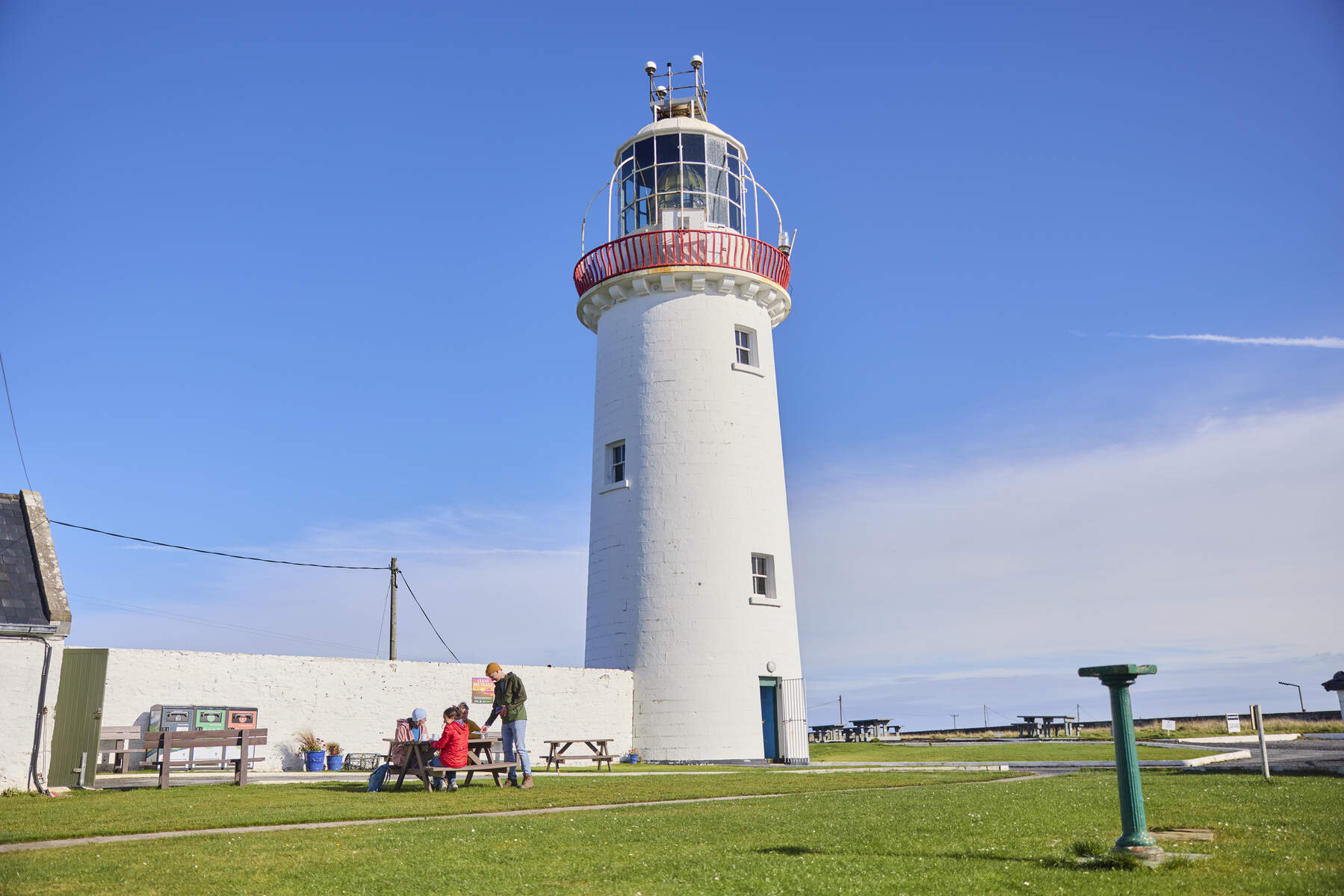
- Visit the Loop Head Lighthouse – The lighthouse offers panoramic Atlantic views; local guides often provide commentary in Irish. A 15 km Kilbaha Loop trail links coastal scenery with interpretive panels.
- Take a dolphin‑watching boat from Kilrush – Operators such as Dolphin Discovery Kilrush and Dolphinwatch Carrigaholt greet passengers in Irish, adding a linguistic flavour to the wildlife experience.
- Enjoy the five Blue Flag beaches – Kilkee, Spanish Point, Cappa Pier, White Strand (Miltown Malbay) and White Strand (Doonbeg) are free to access.
- Sample traditional music – Sessions in Doolin, Kilkee or Carrigaholt feature classic reels and Irish‑language song verses.
Language Resources
The Coiste Forbartha office provides up‑to‑date timetables for classes and festival dates. Information is posted on the Clare Echo website and on community‑centre notice‑boards in each village. Visitors interested in learning basic phrases can pick up a free phrase‑book from the visitor centre in Kilrush.
Practical Information
Getting there – The nearest international gateway is Shannon Airport (≈30 km north). From the airport, rent a car or take a Bus Éireann service to Ennis, then follow the R478 coastal road to the western villages. Irish Rail serves Ennis, with local bus routes onward to Kilkee and Kilrush.
Entry fees – Most cultural events, village walks and beach access are free. Guided tours such as the Loop Head Lighthouse visit, dolphin‑watching trips and the Scattery Island monastic tour have separate ticket prices listed on the operators’ websites.
Accessibility – The coastal drive and many village centres are wheelchair‑friendly, though some cliff‑top paths (e.g., the Kilbaha Loop) involve uneven terrain. The Loop Head Visitor Centre offers limited wheelchair access; contact the lighthouse office in advance.
Sustainability – West Clare participates in the Global Sustainable Tourism initiative (see https://visitclare.ie/sustainable/). Visitors are encouraged to use designated car parks, respect wildlife guidelines on dolphin tours, and support local businesses that source food and crafts locally.
Best time to visit – Summer (June‑August) hosts the language festivals and provides the warmest sea‑water for beach activities. Spring offers quieter walks and wildflowers, while autumn brings dramatic Atlantic light for photography.
Accommodation – A range of traditional B&Bs, holiday cottages and glamping sites are available throughout West Clare. Many display Irish‑language welcome signs and can arrange private Irish‑language tours on request.
Nearby Attractions
- Cliffs of Moher (/cliffs-of-moher/) – Just a short drive north, these iconic cliffs complement the coastal scenery of West Clare.
- Burren Way (/burren-way/) – Long‑distance walkers can join sections of this trail that pass through the limestone landscape bordering West Clare.
- Corcomroe Abbey (/corcomroe-abbey/) – A medieval Cistercian ruin near Kilfenora, offering insight into the region’s ecclesiastical history.
- Black Head – Lighthouse and Loop Walk (/black-head/) – A scenic loop with dramatic sea views and a historic lighthouse, ideal for a half‑day hike.
- Ballyvaughan (/ballyvaughan/) – A charming harbour village on the edge of the Burren, perfect for a lunch stop on the way back.
Useful Links
- Loop Head Lighthouse: https://www.cliffsofmoher.ie/your-visit/beyond-the-cliffs-places-to-see/loop-head-lighthouse/
- Dolphin Discovery Kilrush: https://visitclare.ie/attractions/dolphin-discovery-kilrush/
- Dolphinwatch Carrigaholt: https://visitclare.ie/attractions/dolphinwatch-carrigaholt/
- Scattery Island Tours: https://scatteryislandtours.com/
- West Clare language news: https://www.clareecho.ie/massive-numbers-speak-irish-clare/
West Clare Gaeltacht offers a rare blend of living Irish language, vibrant cultural festivals and some of Ireland’s most spectacular Atlantic scenery. Whether you come to practice Gaeilge, listen to traditional music, or simply soak in the rugged coastline, the region welcomes you with a warm Irish greeting – Fáilte romhat!