
Overview
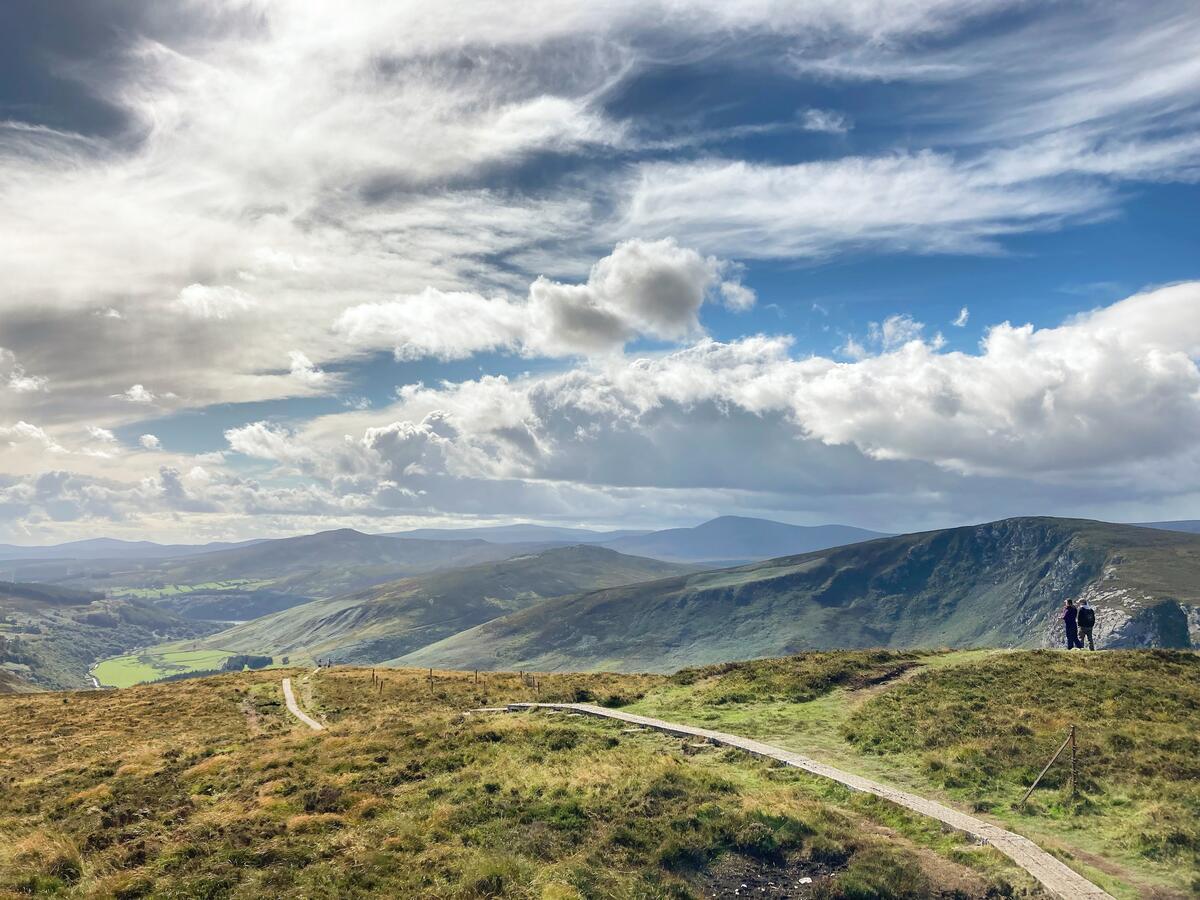
Whitefield Cemetery lies on the rolling countryside of south‑Wicklow, just a short walk from Saint Kevin’s Church in Killaveny, Tinahely. The site is a quiet, open‑air museum of local heritage, where weathered headstones and a modest dedication stone mark centuries of community life. Visitors are drawn by the peaceful atmosphere, the historic gravestones, and the compelling stories that tie this modest graveyard to wider Irish history.
History
The cemetery occupies the footprint of a penal‑era Catholic chapel, believed to have been cruciform in plan with two transepts and a nave. The original chapel was erected around 1700 during the Penal Laws, when Catholic worship had to be hidden. On 11 November 1798, in the aftermath of the Irish Rebellion, Yeoman soldiers set fire to the church, reducing it to ruins. A temporary wooden structure was raised on the site until the present St Kevin’s Church was finally erected in 1843.
Local tradition holds that the Fitzwilliam landowners later funded a more permanent rebuilding, but the stone of the original chapel never survived; only the surrounding burial ground remains. In the Jubilee year 2000 a carved limestone marker was erected on the site of the penal church, commemorating the centuries‑old history of worship on the hill.
A pivotal moment in the graveyard’s narrative occurred in 1850 when the parish priest, Fr Thomas Hore, addressed a crowd here, announcing his plan to lead a large Irish Catholic colony to Arkansas, USA. Over 1,200 parishioners eventually emigrated, a story chronicled in Jim Rees’s book A Farewell to Famine.
In recent years, the Whitefield Graveyard Group, led by Wicklow community archaeologist Yvonne Whitty, has undertaken a systematic survey of the site. By 2021 a complete record of headstones, stonemasons and inscriptions was compiled, documenting eight identified stone‑masons and more than 50 individual graves. A booklet and display panel are slated for installation in 2023. The project received funding from the Community Monuments Fund (2021‑2022) administered by the National Monuments Service.
The graveyard also features three pieces of Neolithic rock art, identified during the archaeological survey, linking the location to prehistoric activity. The site is part of a proposed “graveyard trail” that will connect Whitefield with Preban, Mullinacuff and Ballymaghroe, illustrating a timeline from Neolithic times through the early medieval period to the late 1700s.
Genealogical research
A downloadable PDF compiled by Heritage Wicklow contains transcribed inscriptions from the cemetery, offering a valuable resource for family‑history researchers. The index records names, dates and relationships, with the earliest surviving headstone dating to 1819 (Elizabeth Finn, died aged 53). The document lists over 50 individual stones, many of which record the Irish counties of origin for emigrants, military service, and tragic early deaths. The PDF can be accessed here.
What to See & Do
- Historic Headstones – Walk among gravestones dating back to the late 1700s. Many display distinctive local motifs and the work of eight identified stone‑masons.
- Dedication Stone – A stone erected in the Jubilee year 2000 commemorates the penal‑era church. A close‑up view is available here.
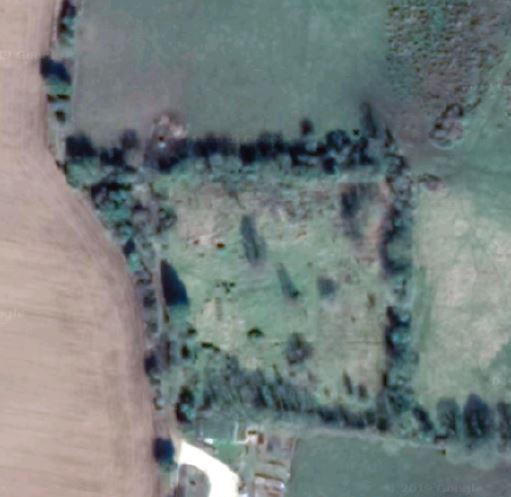
- Aerial Perspective – An aerial photograph showcases the layout of the burial ground and surrounding landscape. View it here.
- Open‑Air Art Gallery – The varied stone carvings and the three Neolithic rock‑art pieces turn the cemetery into an outdoor gallery of Irish sculptural tradition.

Walking and Trail Connections
The cemetery sits just off the R747, a short detour from the popular Wicklow Way that passes through the nearby village of Tinahely. Several way‑marked circular trails were opened in 2010, offering gentle walks that link the cemetery with the surrounding woodlands and the Derry River valley. The proposed “graveyard trail” extends the experience to neighbouring sites such as Preban, Mullinacuff and Ballymaghroe, allowing visitors to trace a chronological route from prehistoric rock art to 19th‑century emigration stories.
Conservation and Community Involvement
The Whitefield Graveyard Group organises occasional guided walks, especially during the summer months and around the anniversary of Fr Hore’s 1850 emigration speech. Volunteers, supported by the local FÁS team, carry out regular mowing, fence repair and stone‑cleaning to keep the site tidy. Recent funding from the Community Monuments Fund has enabled the creation of interpretive panels and a printed booklet, both expected on‑site in 2023.
Events & Community Activities
The Whitefield Graveyard Group organises occasional guided walks, especially during the summer months and around the anniversary of Fr Hore’s 1850 emigration speech. These walks provide deeper insight into the stone‑masons, the rock art, and the personal stories behind the gravestones. A new interpretive panel and printed booklet are expected on‑site in 2023, enhancing self‑guided visits.
Visiting Information
- Opening hours – The cemetery is open year‑round and free to enter. (Confirm seasonal restrictions if any.)
- Parking – Free parking is available on the rural lane beside Saint Kevin’s Church. The space is limited; arrive early in peak season.
- Access – The main pathways are suitable for most visitors, though some sections are uneven and may be challenging for wheelchair users or strollers.
- Public transport – Bus services run from Dublin to Tinahely (Bus Éireann route 133). From Tinahely, it is a 10‑minute walk north along the local road to the cemetery.
- Dog‑friendly – Dogs are permitted on a leash, provided they are kept under control and do not disturb the gravestones.
- Facilities – No on‑site facilities; the nearest café and restroom are in Tinahely village.
Getting There
From Dublin, take the M11 south to the exit for Baltinglass, then follow the R747 to Tinahely. Turn left onto the local road heading north; after about 1 km you will see a small lane on the right that leads directly to the cemetery and Saint Kevin’s Church. Signage for the cemetery is modest, so a GPS coordinate (52.80107, -6.44582) is useful.
Nearby Attractions
- Baltinglass Abbey – A short 15‑minute drive north brings you to the historic ruins of Baltinglass Abbey, a 12th‑century Cistercian monastery.
- Glendalough – The iconic monastic settlement and valley lie about 30 km south‑west and make an excellent half‑day excursion.
- Preban Graveyard – Part of the same “graveyard trail”, offering further insight into local burial customs.
Practical Information
Whitefield Cemetery is freely accessible to the public; there is no admission charge. Parking is available on the rural lane adjacent to Saint Kevin’s Church, and the site is reachable via the local road network from Tinahely. The cemetery is maintained by the local FAS team, with annual small‑scale maintenance to keep vegetation in check.
While the ground is uneven in places, the main pathways are navigable for most visitors. Those interested in deeper research can contact the Whitefield Graveyard Group through the Heritage Wicklow website or reach out to Yvonne Whitty, the community archaeologist based in Tinahely.
For a broader context, explore the neighbouring Preban Graveyard project, which follows a similar community‑driven model of preservation and interpretation: Preban Graveyard.
Whitefield Cemetery offers a rare glimpse into Wicklow’s layered past, from ancient stone art to the echoes of a 19th‑century diaspora. Its quiet setting invites reflection, while ongoing research ensures that each stone’s story is preserved for future generations.