
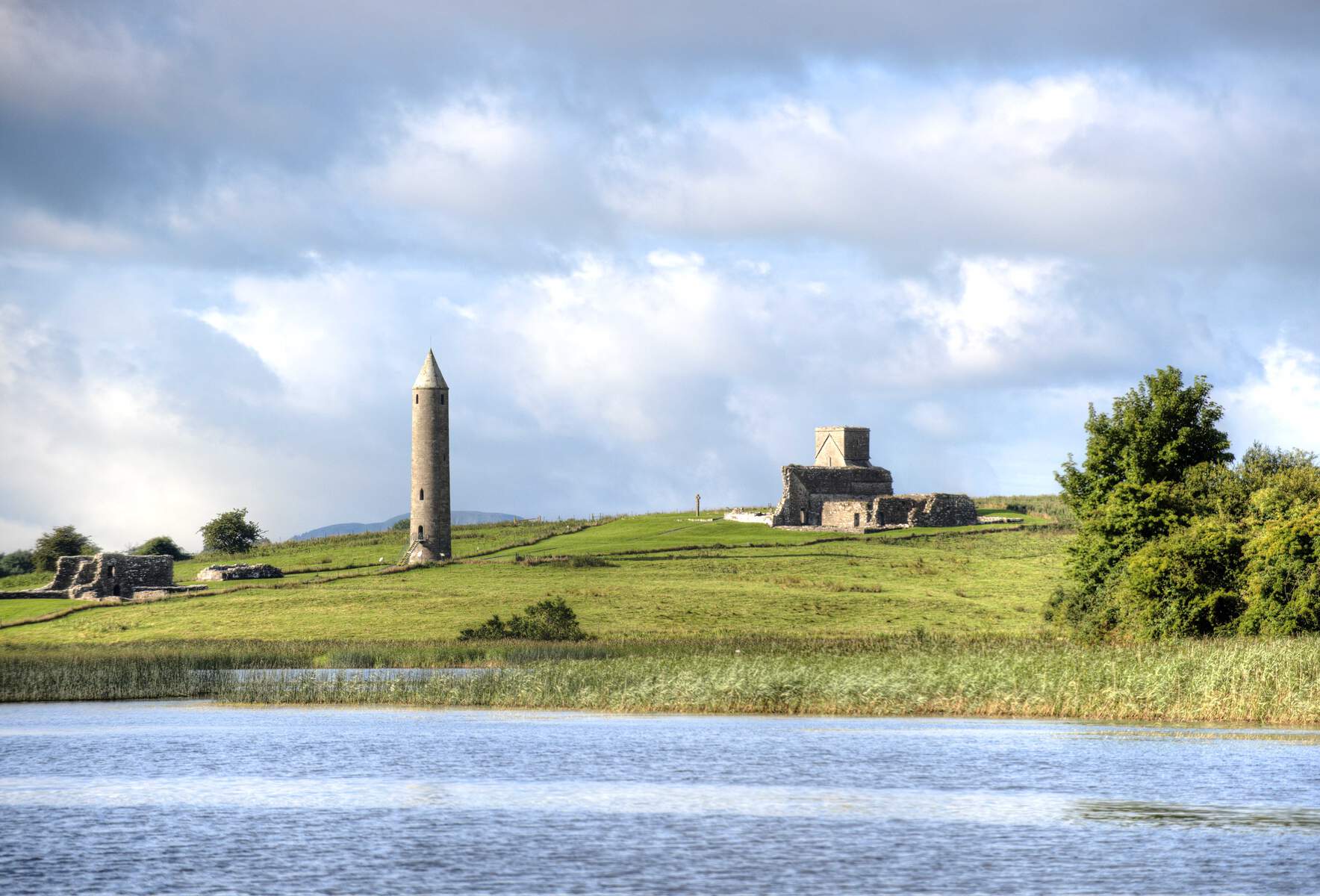
Overview
Brougher Mountain (Irish: Bruachar, meaning “edge” or “brink”) rises to 317 m on the border between County Fermanagh and County Tyrone. Its prominence of 212 m makes it a distinct Marilyn in the Tempo Hills. The summit is marked by a stone cairn, a trig point and a cluster of broadcasting masts that dominate the skyline.
The hill is built of Silurian slate with pockets of limestone, giving the slopes a rugged, varied texture of grassy ridges, rocky outcrops and occasional boggy patches near the base. From the top you can see Lough Erne, the drumlin countryside and, on a clear day, the distant Sperrin Mountains.
History
The name Bruachar may derive from the Irish Brú na hEaglaise – “hill of the church”, hinting at an early ecclesiastical presence. Archaeological surveys have uncovered ancient burial sites and historic woodlands, underscoring the mountain’s long‑standing cultural significance.
Transmitter heritage
The Brougher Mountain transmitting station went on air on 24 February 1964, initially broadcasting the BBC Television Service on VHF 405‑line channel B5. In July 1978 it became the last main UK transmitter to be upgraded to UHF colour. Today the site hosts six masts, the tallest standing 55 m high, and provides:
- Freeview – 7 multiplexes covering the South‑West Ulster region
- FM radio – BBC National Radio, BBC Radio Ulster, Downtown Radio and Q Radio (Tyrone & Fermanagh)
- DAB – BBC National and Bauer Northern Ireland ensembles
- Digital TV – BBC One, BBC Two, UTV, Channel 4 and TG4 via the current DVB‑T2 multiplexes
The transmitter’s reach spills over into the Republic of Ireland, serving parts of Cavan, Monaghan, Donegal, Leitrim, Roscommon and Sligo.
1971 land‑mine tragedy
On 9 February 1971 a Provisional IRA land‑mine exploded as five BBC workers were travelling up the mountain to repair the relay. All five men were killed. The incident is described in detail by the BBC, noting that the bomb was likely intended for a British Army patrol.
A new stone memorial was installed on the summit in 2021 to commemorate the victims. Families of the men still gather on anniversaries; one relative recalls a bagpipe lament, The Lakeland Hills, being played at the site each 9 February.
Geology
According to MountainViews, the hill sits on the Ballyreagh Conglomerate Formation, a mix of conglomerate, sandstone and occasional limestone. This geology creates the rugged texture and supports the mixed woodland that characterises the lower slopes.
What to See & Do
Summit highlights
- Stone cairn & trig point – ideal for a quick rest and panoramic photos.
- Views – sweep over Lough Erne, the drumlins and the Sperrin range.
- Transmitter complex – while the buildings are fenced off, the masts and satellite dishes are visible from the summit.
- Memorial – a modest stone plaque installed in 2021 marks the 1971 tragedy.
Walking routes
The most popular ascent is the Forestry Track (moderate). It starts from a small car park at the forest edge, follows a well‑maintained track through mixed woodland and opens onto the summit plateau.
- Distance: 5.5 km round‑trip
- Time: ~2.5 hours
- Difficulty: Moderate – suitable for walkers with basic fitness.
Alternative routes are listed on the Walkmates platform and on MountainViews, offering longer, less‑trodden options for experienced hill‑walkers.
Cycling
A number of mountain‑bike enthusiasts use the minor‑road approach described on MountainViews. The route follows the B107 from Fivemiletown, passes through quiet country lanes and reaches the access track just below the transmitter complex. The climb is steady but not technical, making it a rewarding ride for cyclists comfortable with short, steep ascents. Detailed user notes suggest parking before the gated compound and following the fence on the left side to avoid the satellite dishes.
Practical Information
- Access: Free entry. A modest parking area sits about 1 km from the trailhead on the forest edge. Speed‑limit signs (5 mph) appear near the lower houses; respect them.
- Gate: A gate marked “Keep closed at all times” guards the main compound. It is usually shut; park before the gate and walk the short track to the summit.
- Facilities: No visitor facilities on the mountain. The nearby village of Fintona (≈12 km) offers cafés, public toilets and a small shop.
- Public transport: Ulsterbus services run between Omagh and Enniskillen, stopping in Trillick. From there a short taxi or rideshare can take you to the trailhead. Direct bus service to the summit does not exist.
- Navigation: Summit shown on OSNI 1:50 000 Discoverer Sheet 17; Irish grid reference H349527. Listed on MountainViews (ID 935) and High Point Ireland (No 126).
- Safety: Stay clear of the fenced transmitter area. The terrain can become slippery after rain; a map or GPS device is advisable.
- Opening hours: Open year‑round, 24 hours.
- Best time to visit: Clear, calm days in late spring to early autumn give the best views over Lough Erne. Early morning can bring mist that adds atmosphere but may limit visibility.
- Nearby attractions: After descending, consider a short drive to Cuilcagh, the Binevenagh range, or the historic ruins at Aghalurcher.
Brougher Mountain offers a blend of natural beauty, technical history and accessible walking – a compact yet memorable slice of Northern Ireland’s border landscape.