

Overview
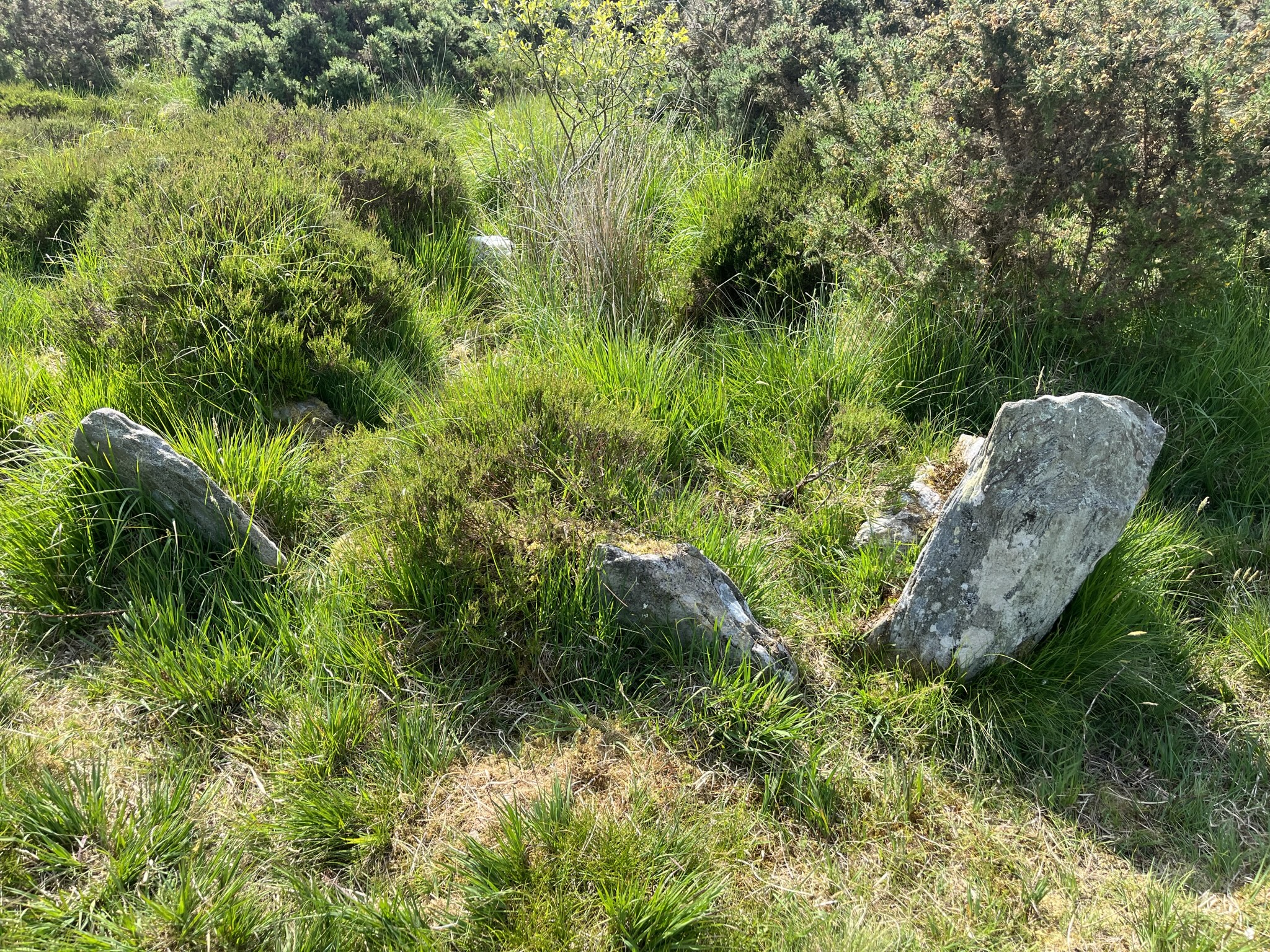
Canfie stone circle is one of the most striking megalithic monuments on Ireland’s Beara Peninsula. Located just a few kilometres west of the colourful fishing village of Ardgroom, the circle dates to roughly 1000 BC, placing it firmly in the Bronze Age. What sets Canfie apart from many other stone circles is the way each upright stone tapers toward a point, giving the ring a subtly aerodynamic silhouette that catches the light in a way that feels almost intentional. Local tradition holds that the alignment of the stones functioned as an ancient calendar, allowing prehistoric peoples to track seasonal changes and perhaps mark important communal events.
History & Context
The Beara Peninsula is a dense archaeological landscape, peppered with wedge tombs, ogham stones and a host of other stone circles. Canfie belongs to the Cork‑Kerry group of axial stone circles, a regional style characterised by an uneven number of stones that decrease in height from the two tallest “portal” stones to a lower “axial” stone positioned opposite the entrance, usually to the southwest. The tapering design of Canfie’s stones may have enhanced sight‑lines toward the horizon, reinforcing its role as a solar or lunar marker. Scholars agree that many of these circles served as astronomical observatories, community gathering points and ceremonial spaces.
What to See & Do
Visiting Canfie offers a compact yet immersive experience of Ireland’s prehistoric heritage. As you step onto the grassy field that hosts the circle, the stones rise in a gentle gradient, the tallest standing at just over two metres and the smallest leaning subtly toward the ground. The points of the stones create a visual rhythm that draws the eye outward, encouraging you to imagine how ancient observers might have used the site to gauge the sun’s path.
The Pulleen Loop Walk
The stone circle is most easily reached via the Ardgroom – Pulleen Loop, a 3.3 km (approximately 2 hours) easy‑grade circuit that forms part of the larger Beara Way and the Wild Atlantic Way. The trail is well‑waymarked with purple arrows and starts at the Cuas Quay car park in Ardgroom.
- Route highlights – After leaving the quay, the path follows a short tarred stretch before turning onto a grassy track. It passes a series of old stone walls, sheep‑folds and the ruins of farmsteads, leading to Dogs Point where a small beach and sea‑cave provide a perfect spot for a short break. Continuing along the coastline offers sweeping views over Kenmare Bay and the Kerry coastline. Near the end of the loop you’ll encounter the Coosmore sea‑cave system, only about 250 m from the trailhead, and then the trail returns inland to the stone circle.
- Dog policy – Dogs are not permitted on the loop (as per Discover Ireland guidance), helping to protect the farmland and wildlife.
- Difficulty & accessibility – The walk is graded as easy with an ascent of about 100 m. The ground is uneven in places, so it is not wheelchair‑friendly but suitable for most walkers with sturdy boots.
- Photography – Early morning or late‑afternoon light casts dramatic shadows on the tapering stones, while the coastal sections provide opportunities for seascape shots.
Because the site is on private land, the local farmer’s permission and the goodwill of his grazing sheep make the visit possible. You’ll notice the stones are set within a low, well‑maintained field, framed by low hedgerows and the distant blue of the Atlantic. The surrounding landscape—rolling hills, the glint of the sea, and the occasional sound of seabirds—adds a timeless quality that deepens the sense of stepping back into pre‑historic Ireland.
Practical Information
Canfie stone circle is free to visit and does not have a formal visitor centre, ticket office, or set opening hours; the site is effectively open year‑round. The most convenient way to reach it is via the Pulleen Loop, which is sign‑posted from the village of Ardgroom and from the trailhead at Cuas Quay.
| Item | Details |
|---|---|
| Access | Trailhead at Cuas Quay, Ardgroom (R571). Follow the blue‑arrow signs onto the tarred road, then turn left onto the grassy track that leads to the stone circle. |
| Distance | 3.3 km loop (≈2 hrs) – the wider Ardgroom Loop is sometimes described as 5 km, but the core Pulleen Loop is 3.3 km. |
| Difficulty | Easy (grade) – 100 m ascent. |
| Facilities | Parking at Cuas Quay; no on‑site amenities. The village of Ardgroom offers a café and a small shop. |
| Recommended gear | Walking boots, rain‑gear, water, and a camera. |
| Dogs | Not allowed on the loop. |
| Admission | Free |
| Opening | Open all year; no restricted hours. |
Getting There
Ardgroom lies on the Ring of Beara road (R571) and is served by local bus routes from Castletownbere and Bantry. The bus stops in the village centre; from there it is a short, pleasant stroll along the harbour to Cuas Quay. If you are driving, follow the R571 west from Castletownbere; the village signposts to Ardgroom and the loop trail are clearly visible. The drive from Castletownbere to the trailhead is about 14 km (under half an hour).
Wildlife & Photography
The coastal sections of the loop are good for spotting seabirds such as gulls and razorbills, and on clear days you may glimpse dolphins or even whales off the Kenmare Bay horizon. The stone circle itself offers striking photographic opportunities: the tapering stones cast long shadows at sunrise and sunset, and the backdrop of the Atlantic provides a dramatic contrast.
Why Visit?
Canfie stone circle provides a rare combination of archaeological significance, striking visual design and easy access. While many Irish stone circles are hidden on private estates or require a long hike, Canfie is comfortably integrated into a well‑marked coastal walk, allowing visitors to experience both the ancient monument and the breathtaking Beara seascape in a single outing. Whether you are a history enthusiast, a photography lover, or simply a traveller seeking a quiet spot to contemplate Ireland’s deep past, Canfie offers a memorable, free‑entry encounter with a monument that has stood for over three millennia.