
Overview
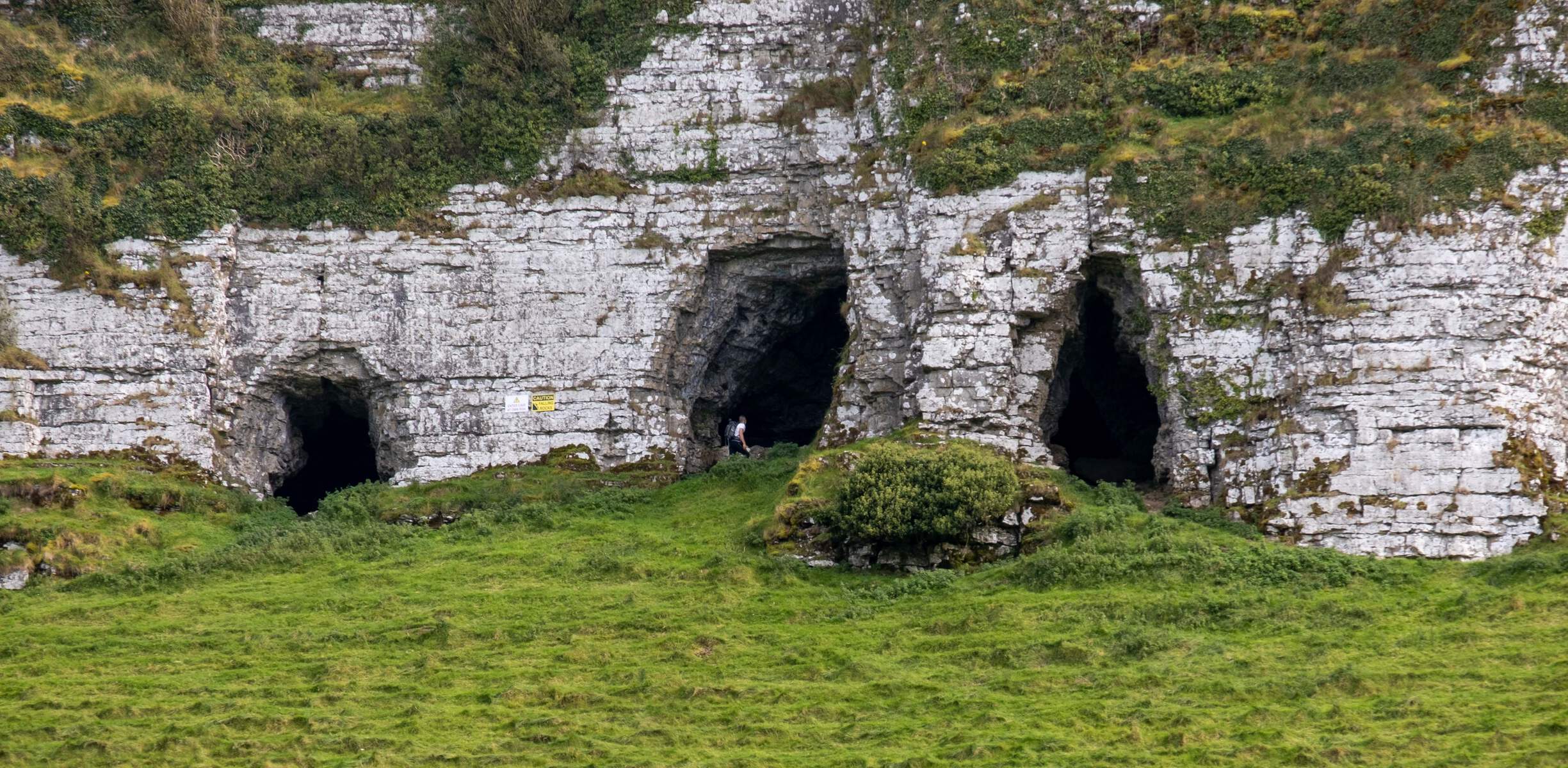
The Caves of Kesh – also known as the Keash Caves or Caves of Keshcorran – are a series of sixteen modest limestone chambers cut into the western slope of Keshcorran Hill, part of the Bricklieve Mountains in County Sligo. The caves sit about halfway up the hill, just above the village of Keash. A short but steep footpath climbs roughly 650 m in around 20 minutes, ending at a purpose‑built car‑park (coordinates 54.0585647, ‑8.453601). From the largest opening, popularly called Cormac’s Cave, the view sweeps across the lake‑dotted lowlands of southern Sligo, east Mayo and Roscommon, reaching as far as Croagh Patrick and Lough Corrib on a clear day.
Getting There
The caves are a convenient day‑trip from Sligo town (about 25‑30 minutes by car). From Sligo, follow the N4 south‑west, then take the R295 towards Ballymote and continue to the village of Keash. The turn‑off to the car‑park is clearly sign‑posted. There is no public transport to the site – a private car is required.
Visitor Centre & Facilities
A small visitor centre sits beside the Fox’s Den pub in Keash village, offering maps, brief historical panels and a place to purchase a hot drink before you set off. Parking is free: the purpose‑built lot holds roughly twenty cars; a second lay‑by beside the parish hall provides additional spaces, and if both are full you can park across the road from the church in the village.
What to bring – A torch (the interiors can be very dark), a waterproof jacket (the caves stay cool and damp), sturdy hiking boots with good grip, water and, in summer, sun protection. The trail is steep and can become slippery after rain, so good footwear is essential.
History & Background
Archaeology
Early‑20th‑century excavations led by Robert Francis Scharff, R. J. Ussher and Robert Lloyd Praeger uncovered an extraordinary assemblage of Ice‑Age fauna – brown bear, arctic lemming, Irish elk, grey wolf and reindeer – some dated to around 10 000 BC. Human activity is evident from the Neolithic through the early medieval period: five Neolithic teeth, a male humerus, bone needles, a bone comb, a stone celt, an iron saw, bronze pins and a stone axe of adze type have all been recovered. Later work by Tatjana Kytmannow identified a Neolithic/Bronze‑Age cairn on the summit, likely part of a wider ritual complex that includes nearby passage‑tomb sites such as Carrowkeel and Knocknarea. Some scholars suggest the caves were used for excarnation – leaving bodies to decompose before the bones were collected for burial in the cairns.
Mythology & Folklore
Medieval tales connect the caves to Cormac Mac Airt, the legendary High King, who was said to have been born at a well at the hill’s foot and reared by a she‑wolf that dwelt in Cormac’s Cave. Fionn mac Cumhaill appears in several stories – a smithy of the Tuatha Dé Danann, a capture by the fairy race, and a rescue of Diarmuid and Gráinne – and is also said to have received enchanted weapons within the chambers. The “Hags of Winter” legend tells how three fairy sisters bound the Fianna in the dark passages until Goll mac Morna slew two of them. A later local tale records a hermit who lived in Cave E – the ‘Hermit’s Bedroom’; he was trapped during a snowstorm and died of exposure.
What to See & Do
- Explore the chambers – All sixteen caves are visible from the trail. The most accessible are the first and largest (Cormac’s Cave) and the “Hermit’s Bedroom”. Inside, quartz crystals sparkle on the white cherty limestone walls, and occasional stalagmite‑covered floors reveal fox or badger burrows.
- Panoramic viewpoints – From the cave mouths you can admire the rolling fields of Sligo, the distant silhouette of Benbulben, and on exceptionally clear days the glint of Lough Mask and Lough Corrib. The summit cairn offers a 360° panorama of Benbulben, the Atlantic and the distant Carrowkeel passage‑tomb complex.
- Geological insight – Informal signage at the trailhead explains the breccia layers, glacial boulder‑beds and the post‑glacial karst formation that created the chambers.
- Archaeological interpretation – Signage highlights the significance of the Ice‑Age animal bones, human teeth and artefacts recovered during the 1901‑1903 and 1929‑1930 digs.
- Folklore immersion – Bring a copy of the Book of Leinster or the Duanaire Finn to read the legends while standing in the cool, damp interiors.
- Wildlife – Bats are occasionally seen roosting in the deeper chambers during the summer months.
- Photography – The contrast between the dark interiors and the bright Sligo landscape provides striking compositions, especially at sunrise or sunset.
Practical Information
- Access: Start from the purpose‑built car‑park at the trailhead (54.0585647, ‑8.453601). The lot holds roughly twenty cars; an additional space beside the parish hall in Keash village offers extra capacity.
- Parking: Free.
- Walk: A steep, well‑marked footpath climbs about 650 m in 20 minutes to the cave entrances.
- Facilities: A short, sheltered bench halfway up the ascent provides a place to rest. The visitor centre in Keash village offers restrooms and a small café.
- Season: Open year‑round but closed during the lambing season (typically late March to early May). The interior remains cool and damp, so waterproof footwear and warm layers are advisable.
- Safety: The terrain can be slippery after rain; stay on the marked path and watch your step near the boulder‑beds. No dogs are allowed on the off‑road sections.
Nearby Attractions
The Caves of Kesh sit within a rich archaeological landscape. A short drive brings you to the Carrowkeel passage‑tomb complex, the iconic Benbulben mountain and the Benbulben Forest Walk. Further afield, the megalithic cemetery at Carrowmore offers another glimpse into Sligo’s prehistoric past.
Enjoy a journey that blends natural geology, ancient archaeology and the timeless magic of Irish myth on the slopes of Keshcorran Hill.