Overview
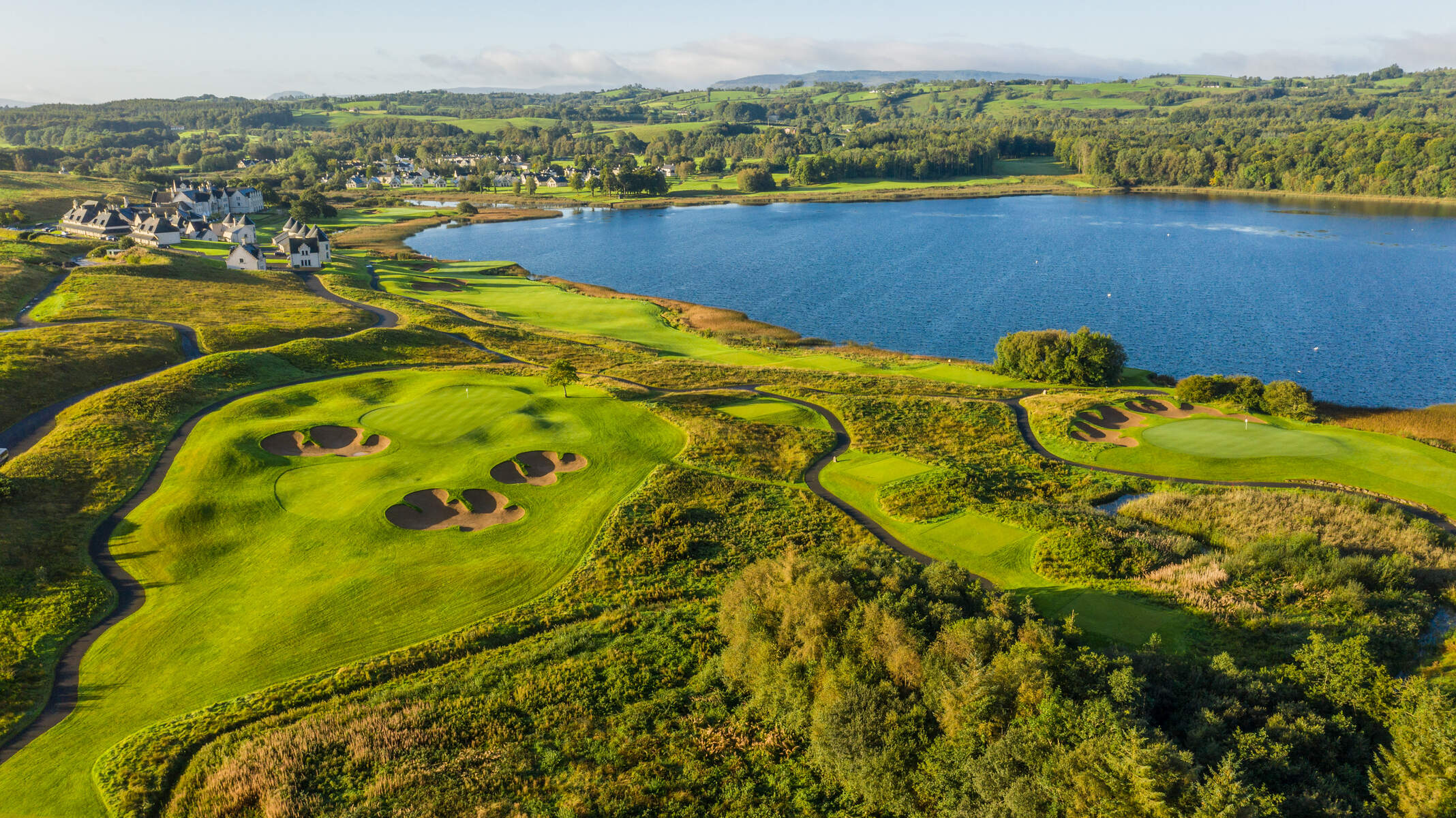
Crom Estate, a National Trust‑managed 2,000‑acre demesne on the banks of Upper Lough Erne, is one of Northern Ireland’s premier conservation sites. The estate protects the largest remaining block of native oak woodland in the region, a mosaic of reed‑fringed lakes, wild‑flower meadows and ancient yew groves. Visitors can wander more than 10.5 km of recently upgraded woodland trails that weave through centuries‑old trees, past the dramatic ruins of Old Crom Castle and out to panoramic viewpoints over the lough. Seasonal highlights include a carpet of blue‑eyed grass – a plant found only in Fermanagh – and the famed conjoined yew pair, each over 800 years old and counted among Britain’s greatest trees.
History
The landscape of Crom is a palimpsest of human activity dating back to the early 17th century. Scottish planter Michael Balfour erected Old Crom Castle in 1611; the tower house survived two Jacobite sieges in 1689 before an accidental fire in 1764 reduced it to the romantic ruin seen today. In the 19th century, the estate’s appearance was deliberately shaped by landscape designer W.S. Gilpin, who introduced sweeping vistas, formal gardens and the iconic yew trees that dominate the woodland today. Nearby stands the more elaborate 19th‑century Tudor‑style Crom Castle, a private residence that has served as a filming location for period dramas but remains closed to the public. During World War II the estate was requisitioned as a base for hundreds of US troops, a chapter explored on guided walks that recount the wartime legacy.
What to See & Do
- Ancient Yew Trees – The conjoined male and female yews form a single trunk with a combined circumference of 377 ft (115 m). Their massive girth and age make them a focal point for any walk.
- Old Crom Castle Ruins – Set amid the woods, the stone remnants offer a tangible link to the plantation era and provide atmospheric backdrops for photography.
- Lakeside Trail – A 6.4 km easy loop that follows the shoreline, passes the boathouse, White Bridge and the historic walled garden. The route is suitable for cyclists and takes roughly two hours on foot.
- Bird Hide – Located on the shores of Derrymacrow Lough, the raised platform includes a ramp for wheelchair users, binoculars and identification guides. It is an excellent spot to watch herons, waders and the occasional otter.
- Wildlife Watching – The estate supports eight native bat species, pine martens, red squirrels, otters and a rich bird community. Spring brings a burst of wildflowers, while autumn colours the oak canopy in gold and amber.
- Water Activities – Boats and canoes can be hired to explore the quiet inlets of Upper Lough Erne, offering a different perspective on the estate’s shoreline.
- Guided Walks – Seasonal programmes include talks on the estate’s WWII history, bat monitoring and botanical walks focusing on rare flora such as blue‑eyed grass.
- Facilities – A historic walled garden houses a tea‑room and café, while a gift shop offers locally made crafts. Picnic areas are scattered throughout the parkland, and glamping pods and cottages provide overnight options for those wishing to extend their stay.
Practical Information
Crom Estate is open year‑round; however, opening times can vary, especially after the damage caused by Storm Eowyn in January 2025. Visitors should check the official website for the latest hours and any route alterations before setting out.
Getting there – The estate is 15 mi north‑west of Enniskillen. Ulsterbus runs services from Belfast to Enniskillen (approximately 1.5 h). From Enniskillen, a private car or taxi is the most reliable way to reach the estate, as public transport beyond the town is infrequent. Driving from Belfast via the A4/A5 takes roughly two hours; from Dublin, the journey via the M1 and A4 is about 3.5 hours.
Parking – Free on‑site parking is available for cars, coaches, minibuses and motorbikes. Disabled parking spaces are provided close to the main entrance.
Admission – Entry to the trails and most attractions is free; however, certain activities such as boat hire, guided walks or glamping accommodation carry separate charges. Pricing details are listed on the National Trust website.
Accessibility – The bird hide includes a wheelchair‑friendly ramp and viewing slot. While many of the woodland paths are compacted, some sections involve uneven ground typical of natural forest trails. The estate’s main visitor centre, toilets and café are fully accessible.
Facilities – Restrooms, baby‑changing rooms, free Wi‑Fi, a gift shop, and a picnic area are available. Dogs are welcome by arrangement, making it a suitable destination for families travelling with pets.
Contact – For the most current information, call +44 (0) 28 6773 8118 or visit the National Trust page at https://www.nationaltrust.org.uk/visit/northern-ireland/crom.
Nearby attractions – While exploring Crom, consider a short drive to Clough Oughter Castle (16.6 km), Castle Coole Estate (20.6 km) or the early‑Christian site of Devenish Island (25.2 km) for additional cultural experiences.
Crom Estate’s blend of ancient woodland, historic ruins and thriving wildlife makes it a compelling destination for walkers, nature lovers and history enthusiasts alike. Whether you’re tracing the roots of a 800‑year‑old yew or watching otters glide across the lough, the estate offers a uniquely Irish outdoor experience that rewards repeated visits throughout the seasons.