
Overview
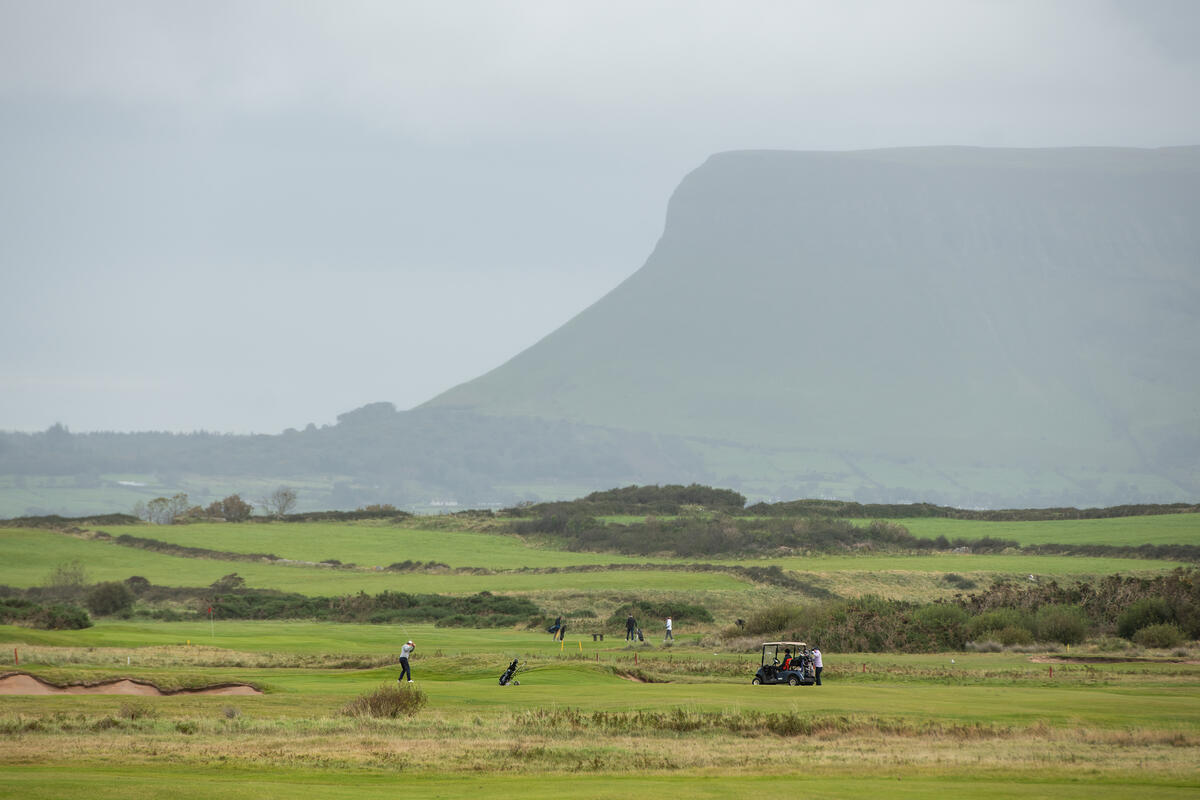
Cummeen Strand lies on the western edge of Drumcliff Bay, forming part of the larger Sligo Bay estuary in County Sligo. From the Sligo‑to‑Strandhill road the beach opens up as a broad, golden sandplain backed by shifting white dunes, low‑lying wetlands and the dramatic rise of Benbulben. The view stretches to the distant Coney Island, while the orange glow of Sligo town at night makes the strand look like a massive ship anchored in the bay. The site is designated both a Special Area of Conservation (SAC) and a Special Protection Area (SPA) because of its internationally important coastal habitats and bird populations.
History & Background
The name Cummeen comes from the Irish Sliabh an Choimín – “mountain of the little hollow” – a reminder of the upland landscape that once covered the area. In the 19 century the Ormsby family owned the estate that included Cummeen and the nearby Strandhill seat. A more dramatic episode is linked to William Dorrin, owner of Coney Island in the 1820s. Dorrin drowned in the fast‑rising tide in March 1823, and fourteen stout cut‑stone pillars were erected in his memory to mark a safe crossing across the tidal flats. The pillars still bisect the strand, guiding walkers when the tide is out.
Cummeen also lives in Irish literature. W. B. Yeats referenced the “old brown thorn‑trees” that break above the strand in Red Hanrahan’s Song, and his brother Jack B. Yeats celebrated the light on Coney Island in his book Sligo.
Conservation Designations
Cummeen Strand is protected under the EU Habitats Directive as a Special Area of Conservation (SAC) (site code 000627) and a Special Protection Area (SPA) for its breeding and overwintering bird populations. Management is overseen by the National Parks and Wildlife Service, which monitors dune health, water quality and the rare plant communities that thrive here.
Wildlife and Habitat
The mosaic of habitats supports a rich assemblage of flora and fauna:
| Habitat | Notable Species |
|---|---|
| Shifting dunes (Ammophila arenaria) | Rare coastal plants, breeding waders |
| Fixed grey dunes | Juniper (Juniperus communis) formations |
| Mud‑flats & sand‑flats (low tide) | Light‑bellied Brent Goose, Oystercatcher, Redshank |
| Tufa‑forming springs | Narrow‑mouthed whorl snail (Vertigo angustior) |
| Marine zone | Harbour seal, Sea Lamprey, River Lamprey |
Winter brings large numbers of Brent Geese from the Canadian Arctic, making the strand a prime bird‑watching spot. Seals frequently bask on the sandbanks, and the occasional lamprey can be seen in the tidal channels.
Walking & Cycling
Tidal Walk to Coney Island
At low tide the stone pillars guide a flat, 1.5 km trek across the sandflats to Coney Island. The island offers a quiet picnic spot and remnants of 19th‑century habitation. Check tide tables before setting out – the crossing is unsafe once the water begins to rise.
Coastal Cycle Route
The paved Sligo‑to‑Strandhill road is a favourite segment of the Wild Atlantic Way cycling network. Secure bike racks are provided at the Cummeen car‑park, and the relatively traffic‑free stretch offers spectacular views of Benbulben and the dunes.
Birdwatching Highlights
Cummeen’s position on the migratory corridor means it sees a succession of species throughout the year. In addition to the Brent Goose, observers can spot:
- Golden Plover and Lapwing in spring breeding displays.
- Sanderling and Turnstone feeding on the exposed sandflats during summer low tides.
- Bar-tailed Godwit and Curlew passing through in autumn migration. A pair of binoculars and a tide‑aware schedule will reward visitors with some of Ireland’s most spectacular wader spectacles.
Landscape and Photography
The fourteen stone pillars create a rhythmic line across the beach, especially striking at sunrise or sunset when the sand glows amber. From the roadside, the view of Coney Island framed by the pillars is a favourite subject for painters and photographers. Benbulben’s silhouette on the horizon adds a dramatic backdrop.
Public Transport
Bus – The primary service is Bus Éireann route S2 (Strandhill ↔ Rosses Point). The Strandhill stop is a short, well‑signposted walk (≈ 2 km) to the Cummeen car‑park and the start of the pillar line. Route S1 (Cartron ↔ Cairns) also passes near Strandhill, offering additional frequency during peak season.
Train – The nearest railway station is Sligo (MacDiarmada), 6 km north of the strand. From the station, local bus services (S2) or a taxi can complete the journey.
Cycling – The coastal road between Sligo and Strandhill is popular with cyclists; secure bike racks are available at the Cummeen car‑park.
Getting There
- By car: Turn off the Sligo‑to‑Strandhill road onto the Cummeen car‑park (free, limited spaces). The car‑park is a short, well‑marked walk to the beach and the stone‑pillar line.
- Public transport: See the “Public Transport” section above for the latest bus routes and nearest stop.
- Alternative Island Access: Small boats depart from Rosses Point (≈ 5 km north) for a short crossing to Coney Island when tides are unsuitable for walking.
Practical Information
- Access: Free car‑park with limited spaces; wheelchair access is limited due to sand terrain.
- Tide Times: Consult the Irish Marine Institute tide tables; the safe crossing to Coney Island is only possible at low tide (approximately 2 hours before and after low water).
- Facilities: No permanent amenities on the strand; bring water, snacks and a blanket. Public toilets are available in Strandhill village, 2 km away.
- Safety: The sand can become soft and water can rise quickly. Stay on the pillar path, keep an eye on the horizon, and never attempt the walk alone if you are unfamiliar with the area.
- Dog Friendly: (Please confirm any seasonal or seasonal restrictions.)
- Best Times to Visit: Sunrise for photography, winter for birdwatching, summer for a quiet beach walk and a picnic on Coney Island.
Nearby Beaches & Headlands
- Aughris Beach – a wide sandy stretch backed by dunes, ideal for surfing and long walks.
- Aughris Head – offers dramatic cliff walks and seabird colonies.
- Coney Island – a small island reachable at low tide, with historic ruins and picnic spots.
- Strandhill – a lively seaside village with cafés, surf schools and a promenade.
- Benbulben Forest Walk – a network of trails around the iconic mountain.
- Ballygilgan Nature Reserve – another important bird‑watching site on the Sligo coast.
- Culleenamore Strand – a nearby tidal beach popular with surfers.
Enjoy Cummeen Strand’s blend of natural beauty, historic intrigue and literary heritage – a true jewel of Sligo Bay.