Overview
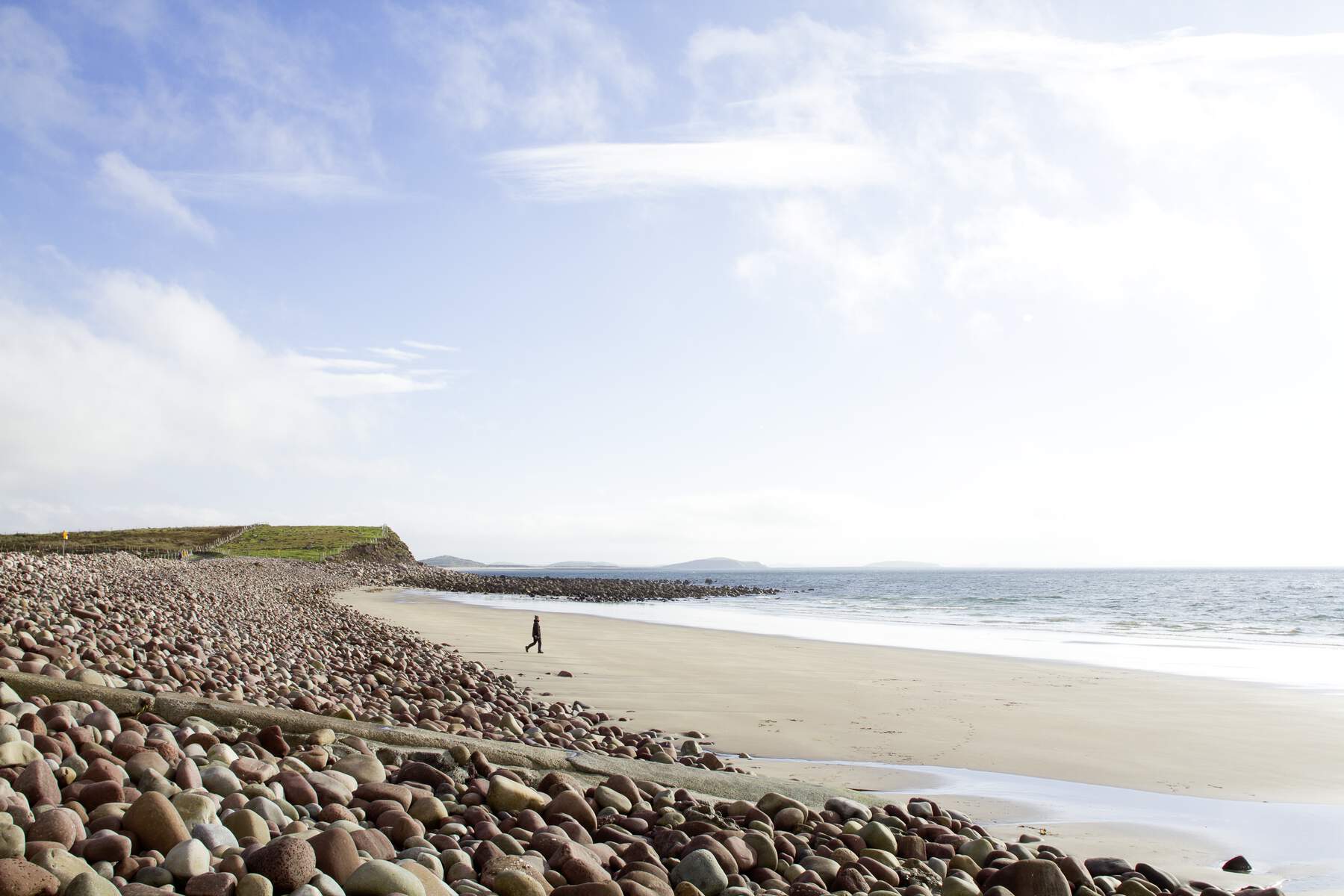
The Curraun (or Corraun) Peninsula lies on the west coast of County Mayo, forming the natural gateway between the Irish mainland and Achill Island. At its narrowest the peninsula is only about 800 m wide, yet 99 % of its perimeter is washed by the Atlantic, giving it the feel of an island of its own. The 2016 census recorded a modest population of 726, spread across the Gaeltacht villages of Tornragee, Polranny, Belfarsad, Currane (Corraun) and Dogh Beg. Irish is spoken daily by roughly 12 % of residents, adding a linguistic flavour to the landscape.
For more on the surrounding area see Achill Sound and Corraun Peninsula.
History & Heritage
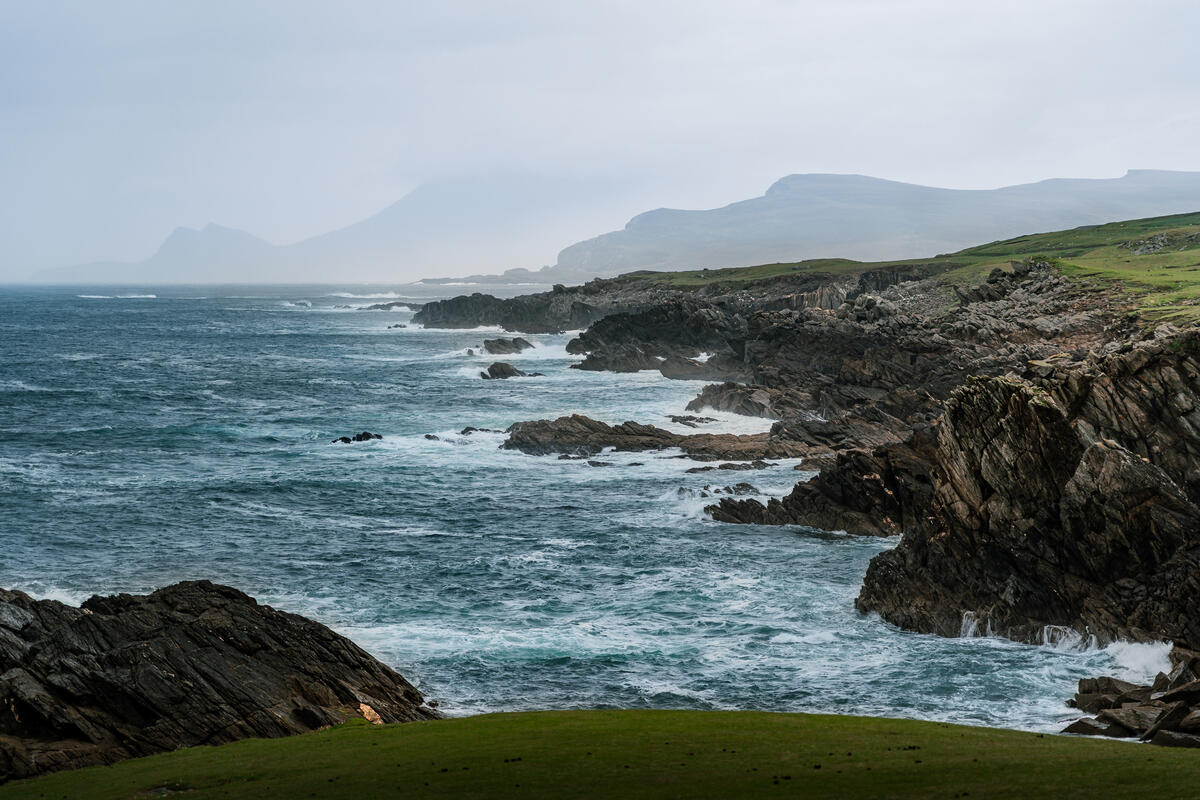
The peninsula’s story is woven from ancient, medieval and modern threads. Archaeological surveys reveal megalithic tombs, promontory forts and stone circles that hint at settlement dating back 5 000 years. Along the coast, the 15th‑century Kildavnet Tower – often called Granuaile’s Castle – links the area to the legendary pirate queen Grace O’Malley, whose family ruled the surrounding waters in the 1500s.
In the 19th century the Protestant Rev. Edward Nangle founded the Achill Mission (known locally as “the Colony”) at Dugort, establishing schools, an orphanage, a small hospital and a hotel. The mission’s newspaper, the Achill Missionary Herald, circulated widely until the colony’s decline in the 1880s. Nearby, a Franciscan monastery was built in Bunnacurry in 1852, its ruins still visible today.
The peninsula also produced a colourful cast of characters. James Lynchehaun, born in Polranny, became the inspiration for J. M. Synge’s play The Playboy of the Western World after his infamous 1894 attack on the Valley House. Captain Charles Boycott, whose name entered the English language, once leased land at Keem Bay before moving to Corrymore House and meeting Michael Davitt, founder of the Irish Land League.
What to See & Do
Walking & Hill‑Walking
Curraun’s two dominant peaks – Polranny Hill (452 m) and Curraun Hill (524 m) – dominate the skyline and provide some of the most rewarding vistas on the Wild Atlantic Way. From the summit of Curraun Hill you can see across Clew Bay to Croagh Patrick, the Connemara mountains and the distant Mullet Peninsula. The valley between the hills cradles a network of small lakes – Loughaun, Knockacorraun, Cullydoo and Cullylea – and a forested area that is criss‑crossed by marked trails. The Great Western Greenway, a 42‑km traffic‑free path that runs along the north side of the peninsula, offers an easy, family‑friendly way to experience the scenery, while more ambitious walkers can tackle the 13.5 km, 4‑hour‑45‑minute Curraun Hike (as described by Barry’s Guided Tours) which climbs roughly 700 m.
Cycling the Atlantic Drive
The Atlantic Drive’s Loop 1 – Curraun – is a 20 km low‑gradient circuit ideal for cyclists of all abilities. Starting at Achill Sound, cross the Michael Davitt Bridge, then follow the R319 through Polranny, Tonragee and Owenduff before reaching Mulranny. The road hugs the cliff edge, delivering spectacular views of Clew Bay’s 365 islands, the golden strand of Mulranny and the distant peaks of Connemara. Lay‑bys at the Spanish Armada memorial and the former copper‑mine village of Currane provide perfect picnic spots.
Cultural Highlights
- Kildavnet Tower (Granuaile’s Castle) – a 16th‑century tower house perched above the Sound, offering insight into the O’Malley clan’s maritime power.
- Fr Griffin Park – the community sports field in Curraun overlooking Croagh Patrick, Achillbeg and Clare Island; a good place to watch local rugby, Gaelic football or soccer matches.
- Valley House – now a hostel, bar and restaurant, this historic building was the site of the 1894 attack on Agnes McDonnell and later became a cultural hub with a woodland faerie trail.
- Mulranny Village – the peninsula’s vibrant gateway, awarded the 2011 EDEN European Destination of Excellence for sustainable tourism. The village hosts a range of accommodation, eateries and the Mulranny Park Hotel.
Wildlife & Natural World
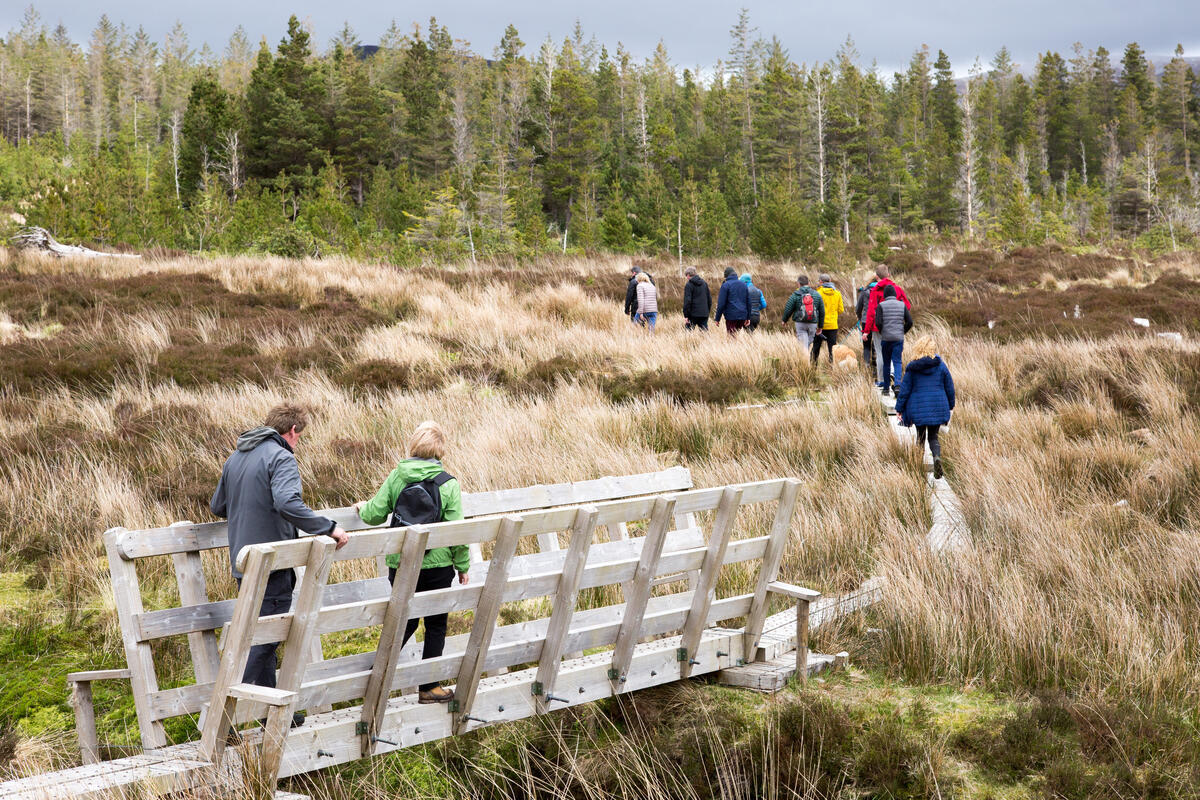
The peninsula’s blanket bogs, machair grasslands and mixed woodlands support a diverse fauna. Birdwatchers can spot chough, golden plover, peregrine falcon and, on rare occasions, the Irish hare. The lakes and streams host brown trout, and sea‑angling from the coast yields cod, ling, blue shark and even the occasional porbeagle.
Nearby Attractions
While exploring Curraun Peninsula, consider a short drive to these neighbouring highlights:
- Achill Sound and Corraun Peninsula – the gateway settlement with cafés, a harbour and easy access to the peninsula’s trailheads.
- Ballycroy (Wild Nephin) National Park – a vast area of pristine bogland and forest, ideal for longer hikes and wildlife spotting.
- Keem Bay – a stunning white‑sand beach on Achill Island, reachable via a short coastal walk from the peninsula.
Practical Information
| Item | Details |
|---|---|
| Access | Drive to Achill Sound (N59) and cross the Michael Davitt Bridge. The bridge links the mainland to Achill Island and the Curraun Peninsula. |
| Public Transport | Regular bus services run from Westport, Galway and Dublin to Achill Sound; from there local taxis or bike hire can take you onto the peninsula. |
| Walking Access | Most of the upland is common ownership, meaning there are no fences or gate fees. Trails are marked on Ordnance Survey Map No. 30. |
| Cycling | The Great Western Greenway and Atlantic Drive loops are open to cyclists year‑round; bike hire is available in Mulranny and Westport. |
| Parking | Free roadside parking is available at most lay‑bys along the R319 and at the Greenway trailhead near Mulranny. |
| Facilities | Public toilets at Mulranny village and at the Greenway trailhead. Refreshments and accommodation are concentrated in Mulranny and nearby villages. |
| Dog‑friendly | Dogs are welcome on the Greenway and most walking routes, but keep them on a lead in the boggy sections and respect livestock. |
| Nearest Airport | Ireland West Airport Knock (approximately 60 km north) provides domestic and limited international flights. |
| Safety | The terrain can be boggy and weather changes quickly; carry a map, tell someone your route, and wear sturdy footwear for hill‑walking. |
Getting Around
- By Car – The most flexible option; the R319 loops around the peninsula and connects to the N59 at both ends. The road is narrow in places and livestock may be present, so drive cautiously.
- By Bike – The Greenway offers a traffic‑free surface, while the Atlantic Drive provides a more adventurous ride with occasional steep climbs.
- On Foot – The valley between Polranny and Curraun hills is best explored on foot; a short 2‑3 km walk from the road leads into the heart of the landscape.
Highlights for Different Interests
- History Buffs – Explore Kildavnet Tower, the ruins of the Franciscan monastery at Bunnacurry, and the story of the Achill Mission at Dugort.
- Nature Lovers – Walk the corrie lakes, watch seabirds from the cliffs, and try sea‑angling for a chance at a record‑size shark.
- Active Travelers – Combine the Greenway walk with a hill‑walk up Curraun Hill, then finish with a cycle along the Atlantic Drive.
- Families – The flat sections of the Greenway are perfect for children, and the beach at Mulranny offers safe swimming in a Blue‑Flag‑rated bay.
Seasonal Notes
Spring brings a burst of colour to the machair grasslands – wild thyme, daisies and lady’s‑strawbed carpet the dunes. Summer offers the warmest sea temperatures for swimming at Mulranny and Keel Bay, while autumn paints the hills in gold and amber, ideal for photography. Winter weather can be dramatic, with high Atlantic swells and mist‑shrouded cliffs, creating a moody backdrop for experienced walkers.