
Overview
Queen’s Island sits on the north‑eastern fringe of Belfast city centre, tucked between the Victoria Channel and the River Lagan. Once a bustling shipyard, the island has been transformed into the Titanic Quarter – a vibrant waterfront district that blends industrial heritage with modern leisure, culture and outdoor space. Visitors can trace the evolution from a modest 18th‑century shipyard to the home of Harland & Wolff’s legendary twin gantry cranes, Samson and Goliath, and then step into the world‑class Titanic Belfast experience.
History
The island’s story begins in the late 1700s when William Ritchie arrived from Ayrshire with a crew of ten and launched the 300‑ton Hibernian in 1792. The site, originally called Dargan’s Island after engineer William Dargan, was renamed Queen’s Island after Queen Victoria’s 1849 visit. In 1861 the partnership of Edward James Harland and Gustav Wolff formalised as Harland & Wolff, rapidly expanding the yard from 1.5 acres to 80 acres and employing up to 10 000 workers.
The late 19th‑century Harland & Wolff headquarters and barrel‑vaulted drawing offices still stand today as a B+‑listed building. It was within these offices that the plans for the Olympic‑class liners – Olympic, Titanic and Britannic – were drafted. In 1911 the yard’s slipways were re‑engineered and the massive Arrol Gantry was erected to accommodate the new hulls. The gantry remained in use until the 1960s.
World War II saw the island survive a heavy blitz, and the post‑war period brought a gradual decline. The 1970s introduced the iconic twin gantry cranes, Samson (1974) and Goliath (1969), which now dominate the skyline. After a period of industrial contraction, the early 2000s marked a renaissance: the derelict land was reclaimed, rebranded as the Titanic Quarter, and the state‑of‑the‑art Titanic Belfast visitor centre opened in 2012.
What to See & Do
- Twin Gantry Cranes – Samson and Goliath are a photographer’s favourite. Their sheer scale (each over 100 m tall) offers a dramatic backdrop for city‑scape shots.
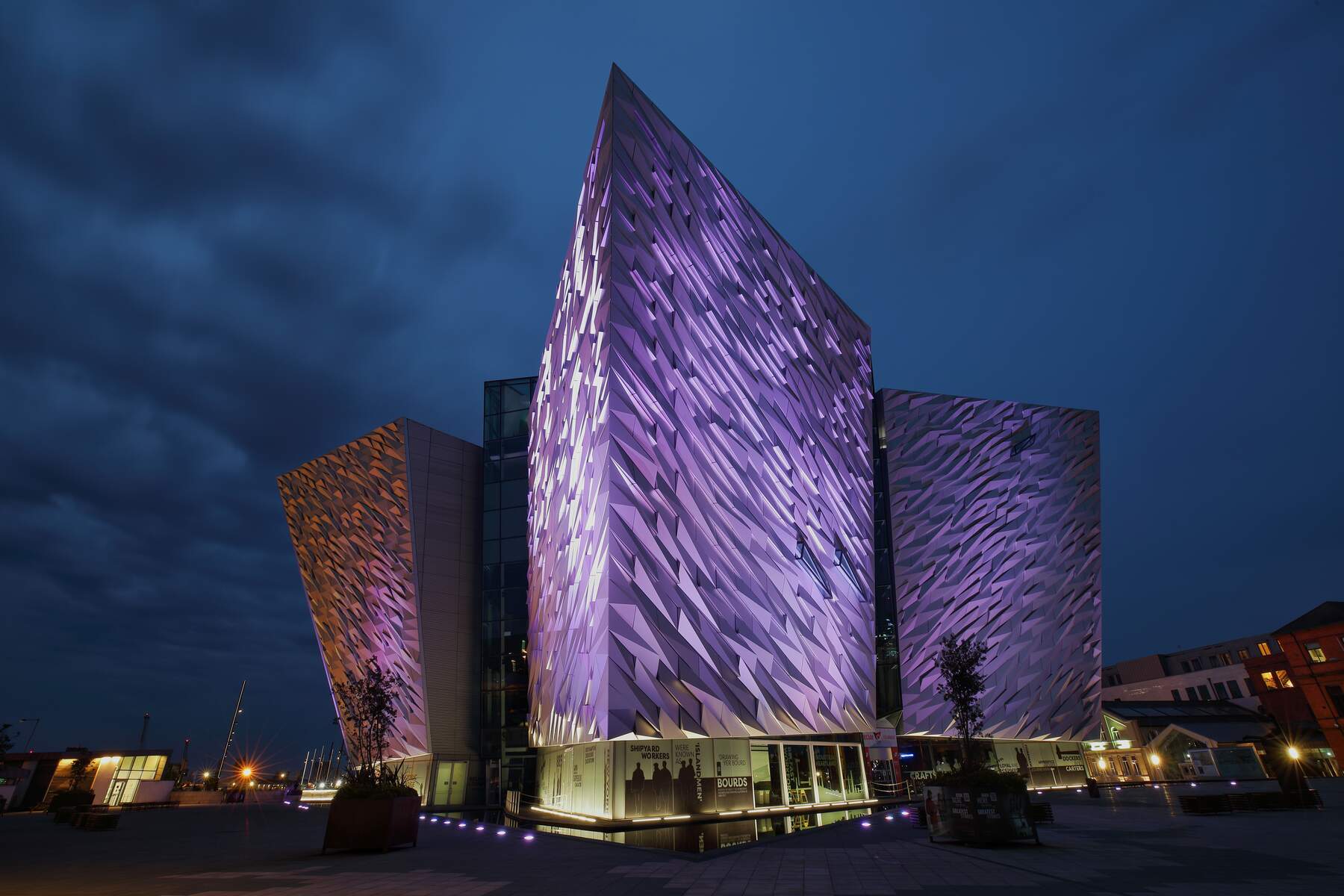
- Titanic Belfast – The award‑winning museum occupies the former plater’s shed site. It houses nine interactive galleries, a Discovery Tour of the drawing offices, and access to the historic SS Nomadic, the last remaining White Star Line tender.
- Public Art Trail – Follow the River Lagan to encounter the Big Fish (Salmon of Knowledge), a 10‑metre mosaic sculpture depicting Belfast’s folklore, and the soaring Beacon of Hope metal artwork in Thanksgiving Square.
- Walking & Cycling Routes – The Lagan towpath, accessible near Shaw’s Bridge, provides a hard‑surface promenade ideal for walkers, cyclists and wheelchair users. Popular loops include the Belfast city centre loop (5.4 km) and the Victoria Park loop (3.4 km).
- Historic Landmarks – A short stroll brings you to Belfast City Hall, the Albert Memorial Clock, and the historic Shaw’s Bridge (stone bridge dating from 1709). All are within easy reach of the island’s waterfront.
- Leisure & Entertainment – The SSE Arena, Odyssey Pavilion and Titanic Studios host concerts, film productions and major events, adding a contemporary buzz to the historic setting.
Nearby attractions
While you’re on Queen’s Island, consider a quick walk to other waterfront highlights:
- Belfast Harbour – The historic port area offers boat tours, waterfront dining and views of the city’s maritime activity.
- Belfast Botanic Gardens – A short tram ride away, the gardens provide a green escape with glasshouses and the iconic Palm House.
- Titanic Quarter’s restaurants and bars – From casual cafés to fine‑dining venues, the quarter’s culinary scene is perfect for a post‑visit meal.
Practical Information
Getting there – Queen’s Island is a 30‑minute walk from Belfast city centre. The Glider B‑line tram stops at Titanic Quarter and SSE Arena, providing a quick public‑transport link. For drivers, the island is a 5‑minute car journey from Belfast City Airport and 30 minutes from Belfast International Airport. Parking is available at the SSE Arena car park (pay‑and‑display).
Opening hours – The island itself is open year‑round. Titanic Belfast operates seasonally:
| Season | Weekday Hours | Weekend Hours |
|---|---|---|
| Jan‑Mar | 10:00‑17:00 | 10:00‑17:00 |
| Apr‑May | 09:00‑18:00 | 09:00‑18:00 |
| Jun‑Aug | 08:30‑19:00 (Mon‑Thu) | 08:30‑20:00 (Fri‑Sat) |
| Sep | 08:30‑18:00 | 08:30‑18:00 |
| Oct‑Nov | 10:00‑17:00 (Mon‑Thu) | 10:00‑18:00 (Fri‑Sat) |
| Dec (1‑23) | 10:00‑17:00 | 10:00‑17:00 |
| Dec 24‑26 | Closed |
Admission fees (Titanic Belfast – the main visitor attraction on the island):
| Ticket type | Price (GBP) |
|---|---|
| Adult (standard) | 19.00 |
| Child (5‑16) | 8.50 |
| Child (under 5) | Free |
| Student / Senior | 15.50 |
| Family Pass (2 adults + 2 children) | 46.50 |
| Life Saver (1‑hour fast‑track) | 11.50 (adult) / 8.50 (child) |
| White Star Premium Pass | 30.00 (adult) / 20.00 (child) |
Facilities – Restrooms, a café, and the Bistro 401 restaurant are located within Titanic Belfast. The nearby Gatekeepers Lodge and a French van at Minnowburn offer refreshments for walkers along the towpath.
Accessibility – The Titanic Belfast building provides step‑free access, lifts and tactile flooring. The Lagan towpath near Shaw’s Bridge is paved and suitable for wheelchair users. Public transport (Glider) is fully accessible.
Nearby accommodation – A range of hotels and serviced apartments line the Titanic Quarter, from boutique stays in the restored drawing offices to larger chains near the SSE Arena.
Seasonal highlights – Summer sees outdoor concerts at the SSE Arena and film‑making events at Titanic Studios. Winter brings extended opening hours (10:00‑18:00) from 27 December to 31 December, perfect for a festive cultural outing.
Safety & etiquette – The twin cranes are active industrial structures; stay behind safety barriers and respect signage. Photography is permitted in most outdoor areas, but flash may be restricted near the museum’s exhibition spaces.
With its blend of industrial grandeur, interactive history and riverfront leisure, Queen’s Island offers a uniquely Belfast experience that appeals to families, history buffs and anyone keen to feel the pulse of the city’s maritime legacy.