
Overview
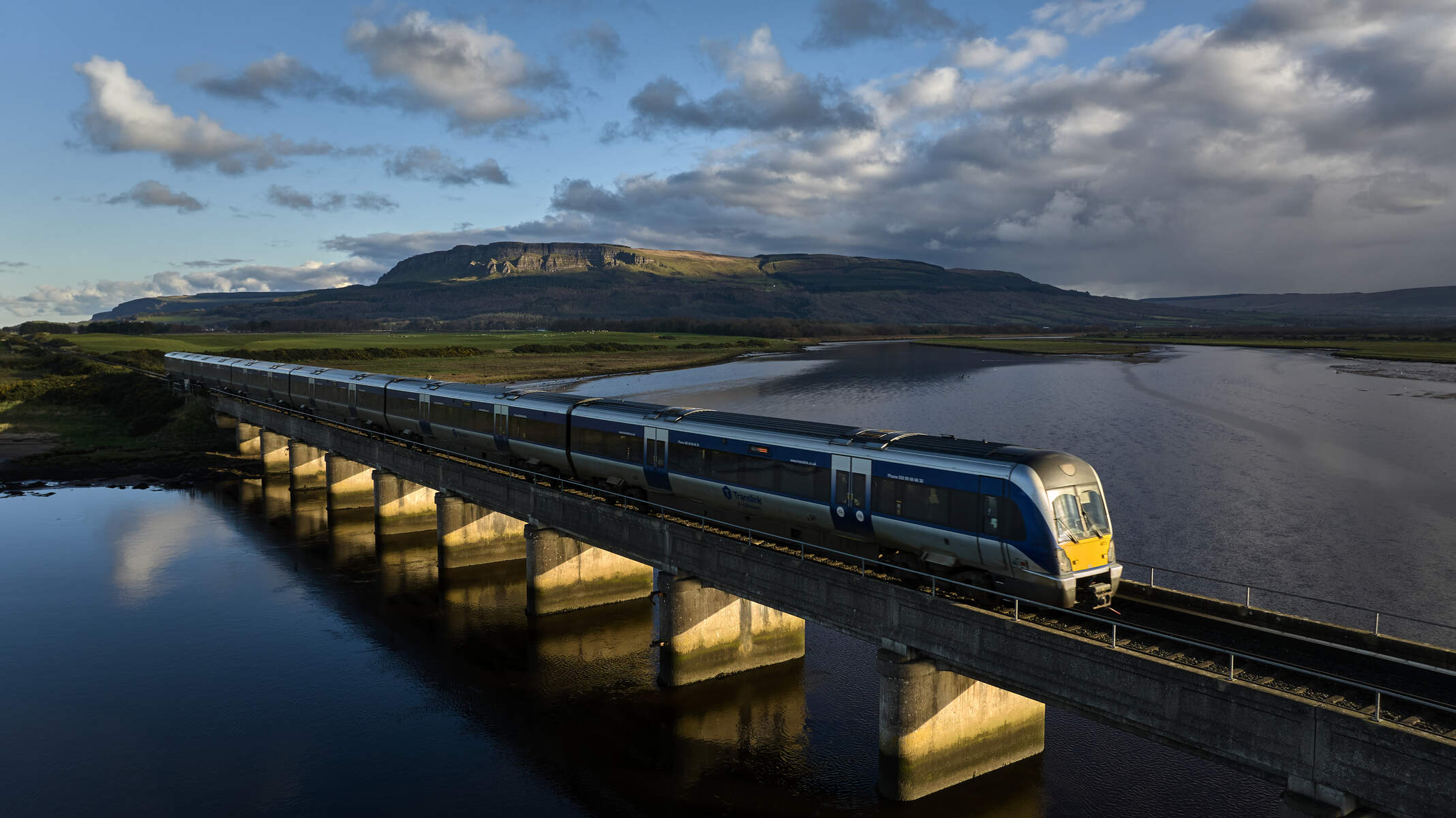
The Dublin‑Cork railway line is the backbone of Ireland’s inter‑city rail network, stretching roughly 266 km (165 mi) between Dublin Heuston and Cork Kent. In 2018 more than 3.4 million passengers travelled the route, rising to about 3.66 million in 2019 and recovering strongly after the pandemic. Trains run hourly in both directions, with a non‑stop morning service that covers the distance in just 2 h 15 min. The line is operated by Iarnród Éireann (Irish Rail) and offers a comfortable, scenic alternative to the M8 motorway.
History
The line was authorised by an 1844 Act of Parliament for the Great Southern and Western Railway (GS&WR). Construction progressed in stages:
- 1846 – The first Dublin‑Carlow service ran in August, marking the opening of the initial eastern section.
- 1847‑1848 – The track reached Portarlington and then Limerick Junction.
- 18 October 1849 – The final stretch into Cork city centre, including the iconic Cork railway tunnel, was completed, enabling the first through‑train between Dublin and Cork.
The route formed the core of the GS&WR’s “Premier Line” for more than a century, later surviving the 1924 merger into Great Southern Railways and the 1945 nationalisation into Córas Iompair Éireann (CIÉ). Modernisation programmes introduced continuous welded rail (1977), centralised traffic control and, in 2006, 67 new Mark 4 coaches that now dominate the intercity service.
Passenger Numbers & Impact
- 2019 – 3.66 million passengers (pre‑COVID peak).
- 2022‑2023 – Numbers rebounded, contributing to Irish Rail’s record 50.7 million journeys in 2024.
- The line carries the highest revenue of any Irish intercity route and supports a modest freight flow (under 1 % of national goods movement), vital for agricultural and manufacturing exports.
Recent Developments & Future Plans
€91.5 million Investment (2021‑2024)
The Department of Transport approved a €91.5 million upgrade – often quoted as part of a €94.5 million heavy‑rail package – to:
- Replace track and ballast on key sections (e.g., Awbeg River bridge, Portlaoise‑Limerick Junction relaying).
- Upgrade signalling and drainage to allow speeds of up to 160 km/h (100 mph) on the fast tracks.
- Future‑proof the corridor for 200 km/h operation once new rolling stock and signalling (ETCS) are in place.
- Create roughly 150 construction jobs (2022‑2023) and 55 further jobs in 2024.
Speed & Electrification
The upgrades are expected to shave 8‑10 minutes off the Dublin‑Cork journey, moving the typical travel time toward the two‑hour target set by Irish Rail. Longer‑term plans under the DART+ South‑West programme envisage electrifying the two fast tracks in the 2030s, paving the way for faster, greener services and integration with a proposed all‑island high‑speed corridor linking Dublin, Cork and Belfast.
Safety Record
A notable incident occurred on 1 August 1980 near Buttevant (County Cork). An express service derailed after encountering a mis‑set siding, resulting in 18 fatalities and over 70 injuries. The accident prompted a series of safety reforms, including stricter signalling protocols and the introduction of more robust point‑locking systems. Since then, the line has operated without a comparable incident.
Scenic Highlights
Travelers often remark on the varied landscapes:
- The Golden Vale – Lush dairy‑farming country across Laois and Tipperary, with rolling limestone hills.
- River Lee Valley – Approaching Cork, the line follows the Lee, offering views of river bridges and the surrounding countryside.
- River crossings – Notable viaducts over the Awbeg (near Charleville) and the Blackwater (at Mallow) showcase 19th‑century engineering.
While the route is primarily flat, a sustained 1 in 80 gradient near Limerick Junction and a steeper 1 in 60 section further south add a subtle sense of motion for rail enthusiasts.
What to See & Do
Traveling the Dublin‑Cork line is an experience in itself. The modern 8‑car Mark 4 sets provide spacious seating, free Wi‑Fi, and a café car where you can enjoy a coffee while watching the landscape roll by. Highlights along the route include:
- The Curragh of Kildare – sweeping plains famous for horse breeding and the Irish Derby racecourse.
- Newbridge – home to the world‑renowned Newbridge Silverware factory.
- Portlaoise – a gateway to the Slieve Bloom Mountains.
- Limerick Junction – where the line meets the western corridor to Galway and the south‑west to Kerry.
- Mallow – a historic market town before the final approach to Cork.
Both Dublin Heuston and Cork Kent stations are architectural landmarks. Heuston, originally Kingsbridge Station, still bears the GS&WR coat of arms, while Cork Kent’s façade reflects early‑20th‑century design. From either terminus you can easily connect to local commuter services, city tram (Luas) lines, or onward rail routes to Waterford, Limerick and the west.
Connecting Transport
- Dublin Airport – From Heuston, a short DART ride to Connolly gives a direct link to the airport’s rail shuttle.
- Cork Airport – Regular Bus Éireann services run from Cork Kent to the airport (approximately 20 minutes).
- Luas & Bus – A €1.40 single ticket (or €2.70 return) adds access to Dublin’s Luas Red Line and city bus routes, purchasable when buying your rail ticket.
- Phoenix Park Tunnel – Links Heuston to Connolly, enabling through‑services to the north‑side of Dublin and occasional special trains for Gaelic games.
Practical Information
Timetable & Frequency
| Direction | Monday‑Saturday | Sunday |
|---|---|---|
| Dublin → Cork | 14 departures, hourly on the hour | 10 departures |
| Cork → Dublin | 15 departures, hourly at 25 past the hour (extra 21:00 service) | 10 departures |
A dedicated non‑stop service departs Cork at 06:15 and arrives in Dublin at 08:30, ideal for business travellers or early‑day explorers.
Fares
| Ticket Type | Dublin‑Cork (Heuston‑Kent) |
|---|---|
| Adult Single (Standard) | €13.55 |
| Adult Single (Off‑Peak) | €11.20 |
| Adult Day Return | €21.75 |
| Adult Day Return (Off‑Peak) | €15.30 |
| Adult Open Return | €23.80 |
| Adult Weekly | €78.90 |
| Adult Monthly | €263.00 |
| Young Adult / Student Single | €6.75 |
| Young Adult / Student Day Return | €10.90 |
| Family Day Return | €30.00 |
| Child (5‑18) Single* | €6.75 (half‑price) |
*Children under 5 travel free in standard class when accompanied by a paying adult.
Tickets can be purchased up to 90 days in advance via the Irish Rail Journey Planner, the mobile app, ticket vending machines, or as QR‑code tickets on a smartphone. Seat‑only reservations are optional but recommended for peak times. Onboard catering is available from the café car; free Wi‑Fi is provided throughout the Mark 4 sets.
Booking & Contact
- Website: https://www.irishrail.ie/en-ie/rail-fares-and-tickets/fares-info/dublin-cork
- Customer service: +353 1 856 0045 (Irish Rail main contact line).
Accessibility
Limited wheelchair‑accessible spaces are available on each train; advance reservation is advised to guarantee a spot. Heuston and Cork Kent stations have step‑free access, lifts and tactile paving. Detailed assistance information is available via the “Wheelchair Information” link on the Irish Rail website.
Recent & Ongoing Upgrades
The line has benefitted from a series of infrastructure projects aimed at raising line speed and reliability:
- Awbeg River bridge renewal (2011) – replaced a deteriorating bridge near Charleville.
- Kildare Route Project (2010‑2011) – expanded the Cherry Orchard‑Hazelhatch section to four tracks, allowing faster “fast” and “slow” lines.
- Limerick Junction re‑signalling (2011) – lifted speed limits to 130 km/h.
- Sallins‑Cherryville realignment (completed 2016) – removed tight curves, raising speeds to 160 km/h.
- Portlaoise‑Limerick Junction relaying (2016) – upgraded track to support 160 km/h.
- Cork Line Rehabilitation Project (2021‑2024) – €91.5 million works to replace track, clean ballast and improve drainage, cutting journey times by 8‑10 minutes and preparing the line for future 200 km/h operation.
Future plans include electrifying the two fast tracks as part of the DART+ South West project, with full line electrification slated for a later phase. A high‑speed rail study announced in 2020 envisions a Belfast‑Dublin‑Cork corridor that could cut journey times to under two hours.
References
- Irish Rail official website (checked 2026‑03‑30)
- Grokipedia entry on Dublin‑Cork railway line (2025 data)
- Department of Transport press release, 14 December 2021
- Cork Beo article on €91.5 m investment, 14 December 2021
- Medium article on the 1980 Buttevant derailment
- International Railway Safety Council report on formation remediation (2023)