
Overview
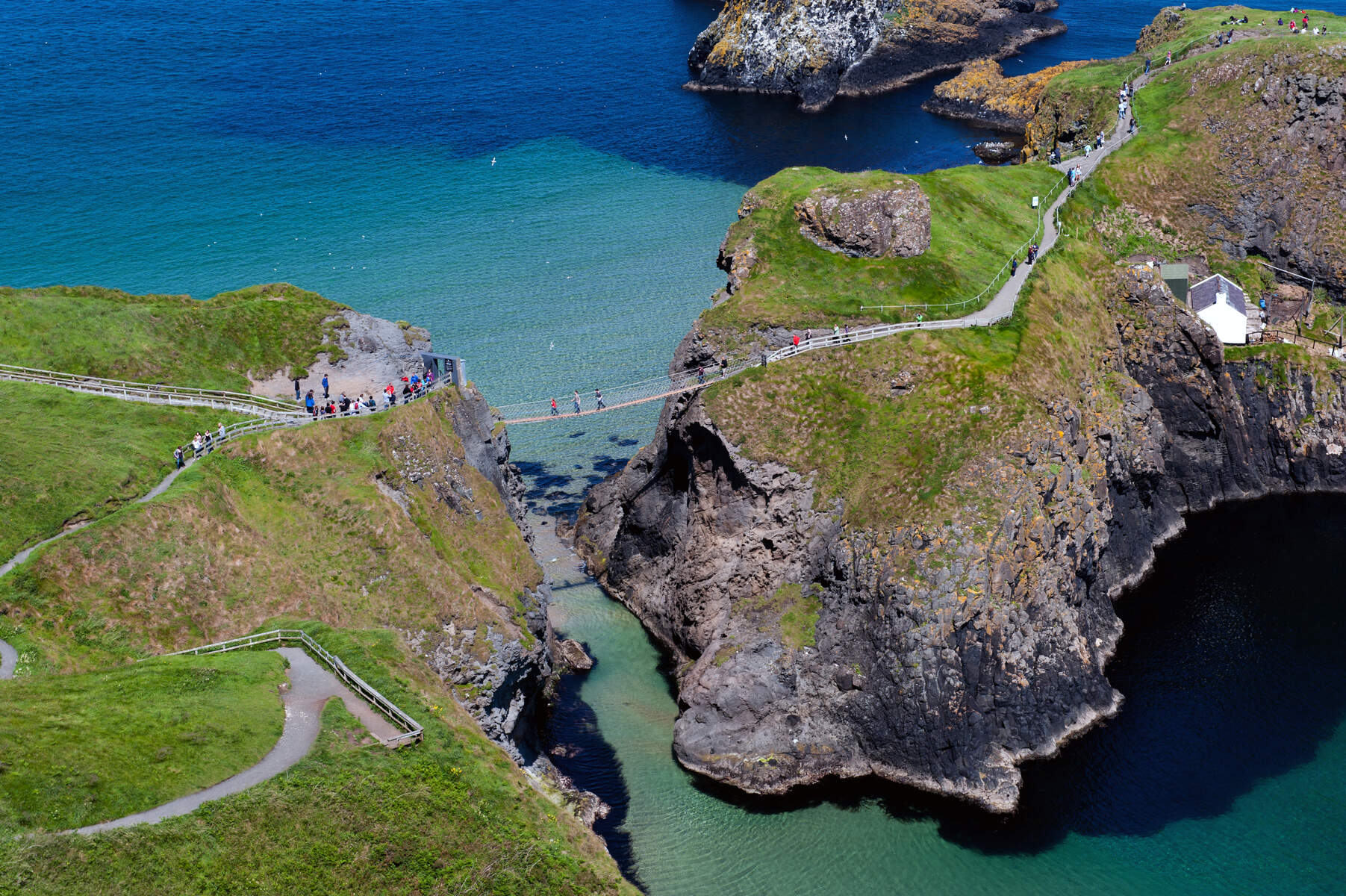
Inishkeeragh (also written Inishkerragh or Iniskerragh) lies a mile south of Arran and three miles off the Donegal coast near Burtonport. The island covers just 0.23 km², has a 2.2 km coastline and is a low‑lying plain where 47 % of the ground is cloaked in trees. Though no permanent residents remain, the remnants of stone cottages, a historic footbridge, and striking natural scenery make it a rewarding spot for walkers, cyclists and history lovers. The neighbouring Arranmore Island is also reachable by boat and offers a complementary island experience.
History / Background
Island community
The name Inis Caorach hints at a pastoral past. Up until the 1950s families lived in modest stone houses clustered behind a sea‑wall that protected them from the Atlantic. Men fished for herring, women tended cows and hens, and the community relied on close neighbourly support. When the island was depopulated the houses fell into ruin, leaving roofless shells that still echo daily life of a bygone era.
Pre‑Christian monuments
At the southern tip of the island, the footbridge gives access to a stone cairn – the oldest known monument on Boa Island and its surrounding isles. Though its exact age is not recorded, the cairn likely dates to the Iron Age or earlier and would have served as a territorial marker or ritual focal point for early inhabitants. The island also hosts eleven raths (ringforts) scattered across its fields.
Plantation and later sites (mainland nearby)
- Castle Caldwell – a 17th‑century Ulster Plantation castle built by Francis Blennerhasett. The ruin sits within a forest park that also contains a ruined chapel and an overgrown graveyard.
- Tully Castle – a fortified house erected for Sir John Hume, attacked and burned in 1641. A restored farmhouse now houses a visitor centre that tells the castle’s violent story.
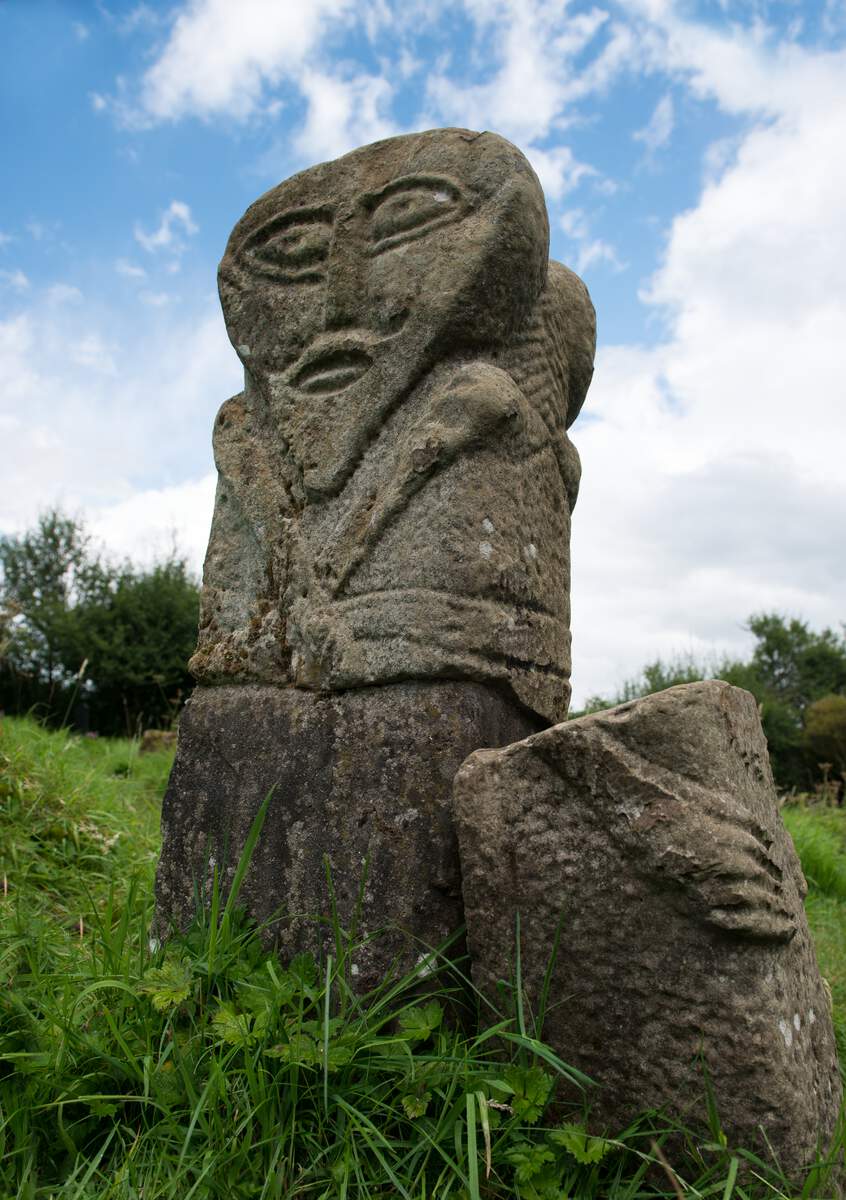
- Janus Stones (Caldragh Cemetery) – two roughly 70 cm high Iron Age stone figures, double‑faced, thought to represent a Celtic fertility deity.
What to See & Do
| Attraction | Type | Highlights |
|---|---|---|
| Inishkeeragh Bridge & Cairn | Historic | Walk across the modest footbridge to the prehistoric cairn; climb for close‑up stonework and Atlantic views. |
| Island Walking Trails | Outdoor | Easy loops such as Rossergole Point Walk, the Cliffs of Magho loop and a circuit around Tully Castle; all well‑marked on Komoot. |
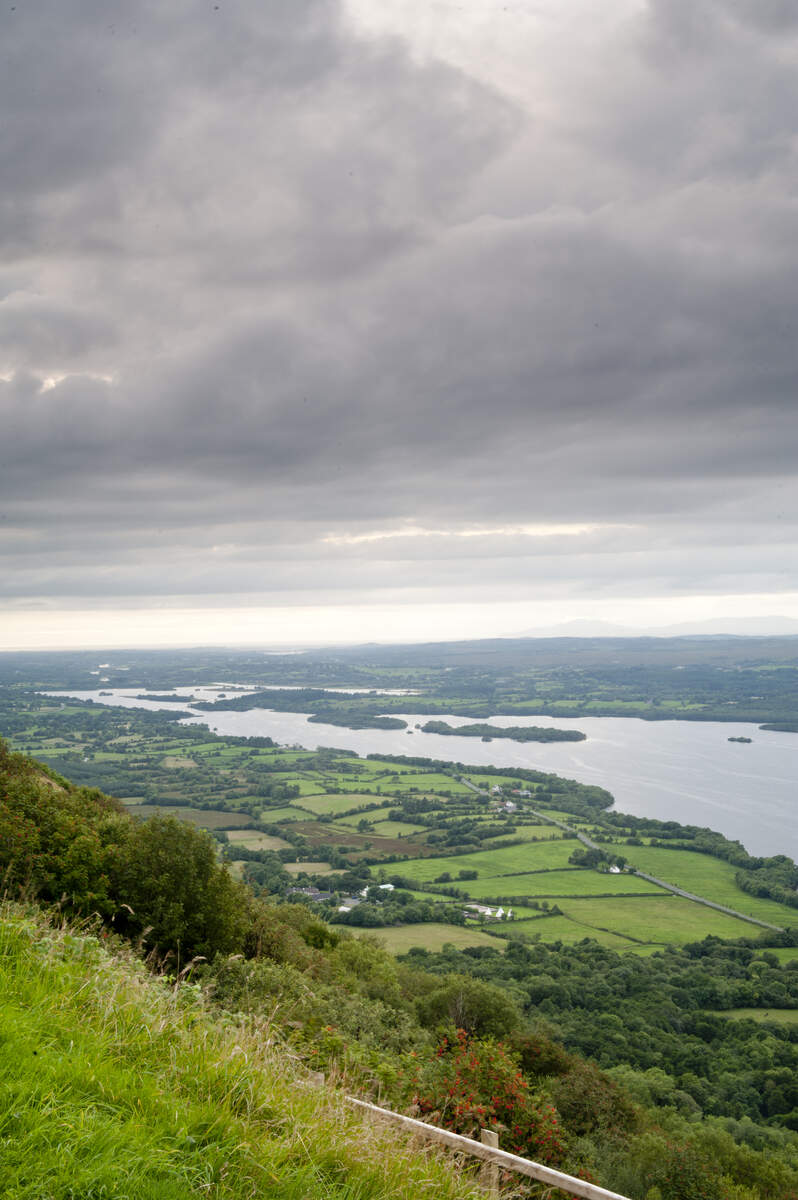
| Cliffs of Magho | Viewpoint | Panoramic vistas over Lough Erne, the Atlantic and the Blue Stack Mountains; picnic benches and information board. |
| Castle Caldwell Ruins | Historic | 17th‑century plantation castle, ruined chapel and graveyard within a forest park (free access). |
| Tully Castle Ruins | Historic | Fortified house with a visitor centre in a restored farmhouse; foot‑only access. |
| Janus Stones (Caldragh Cemetery) | Monument | Rare double‑faced Iron Age figures among modern graves. |
| Carrick Lough | Natural | 9‑acre lake popular with anglers (pike, perch, bream, roach) and ideal for lakeside picnics. |
| Birdwatching & Sea Angling | Outdoor | Gull, tern and wader spotting; sea‑fishing from the shore. |
Outdoor Activities
- Hiking – Easy, well‑marked loops suitable for all abilities; the flat terrain makes the island accessible for families and, on certain routes, wheelchair users.
- Cycling – Komoot lists several road‑cycling routes that incorporate the bridge and coastal tracks.
- Angling – Fresh‑water fishing at Carrick Lough and sea‑angling from the island’s shoreline.
- Birdwatching – The low elevation and Atlantic exposure attract a variety of seabirds.
Getting There
- Boat services – Regular summer boat trips operate from the harbour at Burtonport to Inishkeeragh. Services are seasonal and may vary; check the local timetable before travelling.
- Parking – Free parking is available in Burtonport near the ferry slipway. Visitors should arrive early in peak season as spaces can fill quickly.
- Footbridge – The historic footbridge is the only pedestrian link onto the island and is open year‑round.
- Accessibility – The main bridge and the flat southern paths are suitable for most visitors, though some of the higher cliff routes are uneven and not wheelchair‑friendly.
Wildlife & Nature
The island’s mix of woodland, cliffs and freshwater lake supports a range of wildlife. Seabirds such as gulls, terns and occasional puffins can be seen from the cliffs, while the lake attracts water‑fowl and occasional otters. In spring and summer, the island’s trees are in full leaf, providing shade for picnickers and a backdrop for photography.