Overview
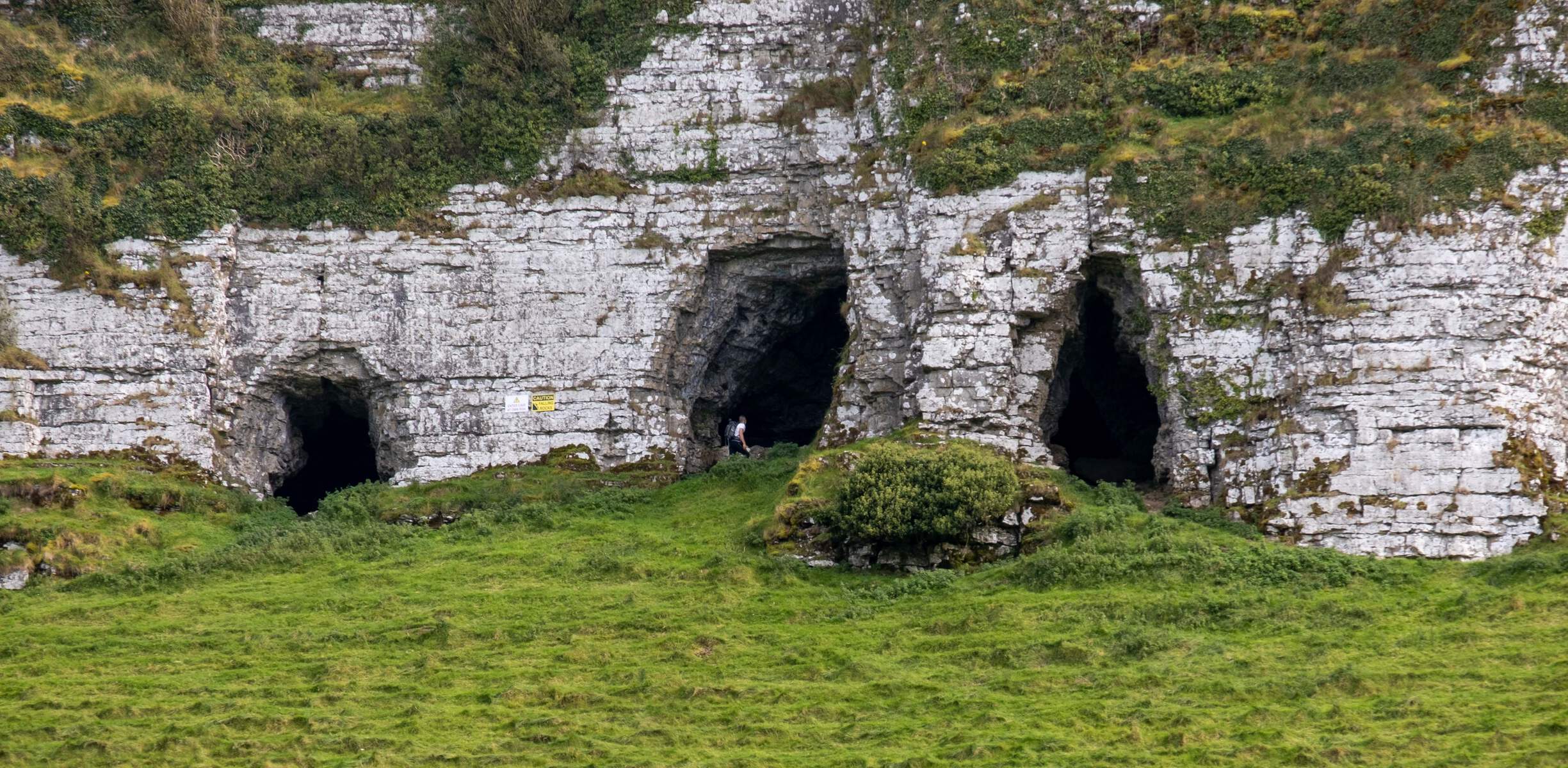
Keshcorran (locally Keash Hill) rises to about 360 m on the western edge of the Bricklieve Mountains, overlooking the Plain of Corann in south‑east County Sligo. The limestone cliff is punctuated by sixteen caves – labelled A to P – whose dark openings contrast starkly with the white rock. The caves form the heart of a wider archaeological landscape that includes a Neolithic passage‑tomb cairn (the “Pinnacle”), numerous hut sites, court tombs and a massive walled enclosure, creating a ritual complex that was active from the Mesolithic through the Iron Age.
History & Background
Archaeological investigations, most notably by Tatjana Kytmannow, have revealed a continuous record of over 12 000 years of activity. Ice‑age fauna such as brown bear, Arctic lemming, Irish elk, grey wolf and red deer have been recovered alongside human artefacts ranging from a polished Neolithic stone axe to a Bronze‑age spearhead, early‑medieval comb fragments and Viking‑style bone combs. Human teeth dating from the Iron Age to the early medieval period suggest the caves were used for ritual deposition, possibly linked to Lughnasa celebrations.
The caves are woven into Irish myth. The Dindshenchas recount the tale of Deirdre‑the‑sow and the harper Corann, whose music pacified a monstrous sow that became the hill itself. Medieval sources tie the largest chamber – Cormac’s Cave – to High King Cormac Mac Airt, who, according to legend, was born at a well at the hill’s foot and raised by a she‑wolf. The Tuatha Dé Danann’s smith Lon Mac Liomhtha is said to have forged his first iron sword within a cave, and Fionn Mac Cumhaill once entered the depths in search of that forge. A trio of winter hags, the “Hags of Winter”, are said to have bound the Fianna in the caves before being slain by Goll mac Morna. These stories give the site an otherworldly aura that still draws visitors.
Geology
The caves are a classic example of karst limestone formed in Carboniferous rock. Atmospheric weathering creates vertical shafts that run perpendicular to the cliff face, while glacial boulder‑beds at several mouths record the last ice‑age cover. Quartz crystals are common, and occasional stalagmite floors have been burrowed by foxes and badgers. The landscape is part of the broader Bricklieve karst uplands that also host the famous Carrowkeel passage‑tomb complex.
What to See & Do
- Coffey Cave (Cave J) – the most accessible entrance, often the starting point for walkers.
- Cave E – “Hermit’s Bedroom” – a narrow 19th‑century hermit’s refuge.
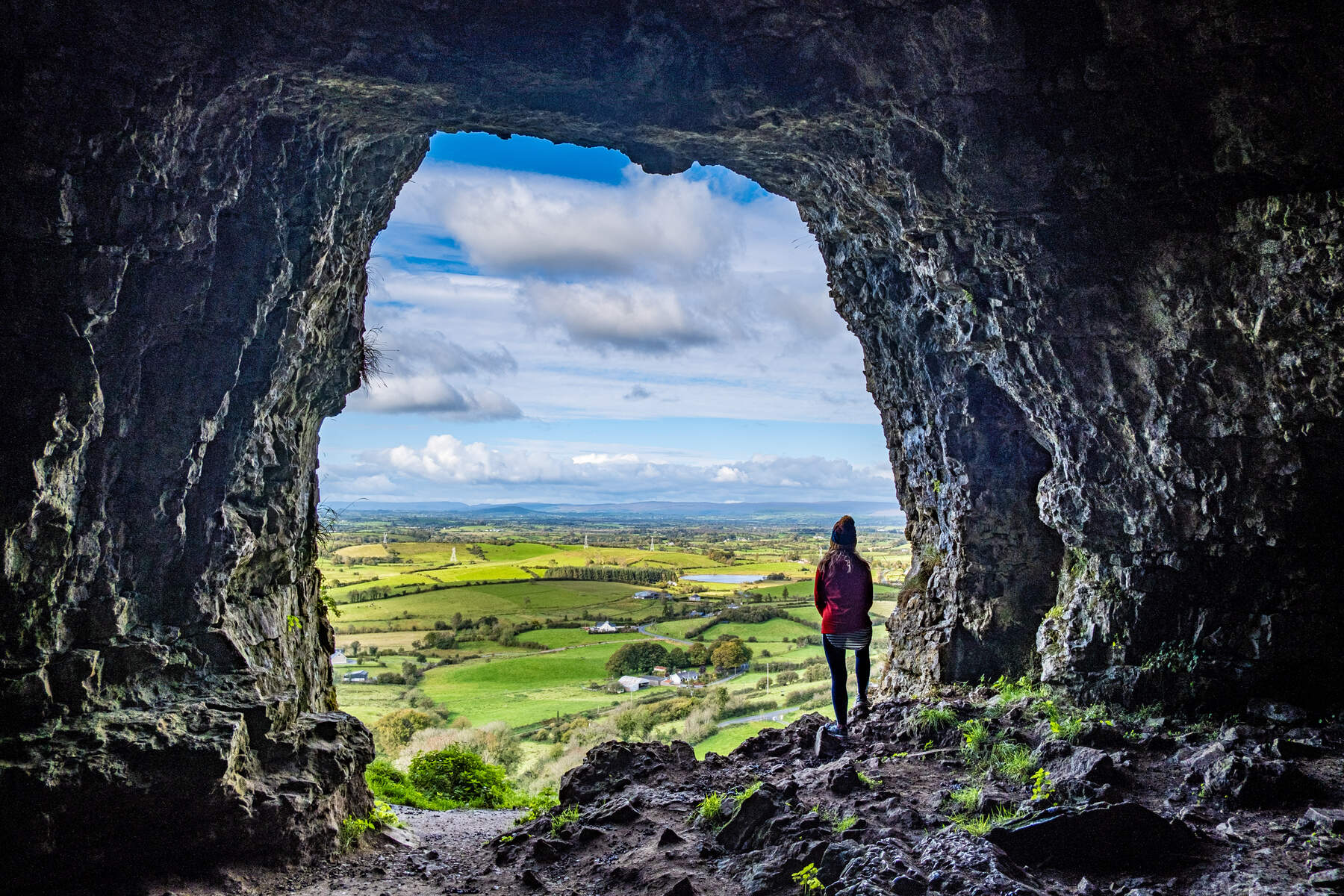
- Cave K – famed for its dramatic mouth looking out over the countryside.
- Cave P – “Plunkett Cave” – named after early excavator Thomas Plunkett.
- Cormac’s Cave (the Hermit’s Cave) – the largest chamber, offering sweeping views across Galway, Mayo and Sligo, with Croagh Patrick and Nephin on the horizon.
- Water Gallery – a twisting passage that feels like an underground river.
- Pollagcaddy (The Thieves’ Hole) – a cavern filled with limestone “cauliflower” formations, possibly a former quarry.
- Teacher’s Cave – site of a historic hedge school during penal times.
- The Summit Cairn – the highest cairn in Sligo at the hill’s summit, marking the ceremonial centre of the Carrowkeel‑Keshcorran complex.
- Sunset Watching – all caves face west, flooding the chambers with golden light at equinoxes and late‑summer evenings – a photographer’s dream.
- Keash Hill Trail – a 3.4 km way‑marked, out‑and‑back walk (ascent 88 m, grade Strenuous) that leads from the car‑park in Keash village past the caves and onto panoramic vistas of the Ox Mountains, Knocknashee and beyond.
Seasonal Highlights & Events
- Lughnasa (late July) – archaeological evidence points to the caves being a focal point for ancient Lughnasa gatherings. While no formal festival is held today, the hill remains a popular spot for locals to mark the occasion with music and picnics.
- Garland Sunday – historically the last Sunday of July saw a community assembly at the foot of the hill, featuring music, dancing and bilberry picking. The tradition faded in the 1980s but the date is still noted by heritage groups.
- Sunset Photography – the equinoxes (around 20 March and 22 September) provide the most dramatic light inside the caves, as the western-facing mouths are bathed in a full‑day glow.
- Winter Walks – the caves are accessible year‑round; however, the grassy slope can become very slippery when wet or icy, so winter walkers should wear sturdy boots and exercise caution.
Practical Information
- Access & Parking: The trailhead is the small car‑park beside St Kevin’s Roman Catholic church in Keash village (two spaces). If full, additional free parking is available across the road, opposite the church.
- Difficulty: Marked as Strenuous; a steep, grassy incline and a stile must be negotiated before reaching the caves. Good walking shoes and a reasonable level of fitness are essential.
- Gear: A torch or headlamp for deeper chambers, a camera for the striking light, and plenty of water. No dogs are allowed – the route crosses active farmland.
- Opening: Open year‑round, except during lambing season (typically the 3rd week of March for 4‑5 weeks). Re‑opens late April; check local notices for the exact date each year.
- Best Time to Visit: Late summer for sunset photography, equinoxes for full interior illumination, or early morning for quieter conditions.
- Nearest Town: Sligo (≈ 30 km) provides accommodation, food and public‑transport links.
- Weather: The site is exposed; wind and rain are common, especially in winter. Dress in layers and bring a waterproof jacket.
- Safety: Stay on marked paths, avoid climbing unstable rock, and keep children supervised in deeper chambers. The slope can be very slippery after rain.
Nearby Attractions
- Carrowkeel Megalithic Complex – a short drive north, offering a cluster of passage‑tombs and cairns that complement the ritual landscape of Keshcorran.
- Knocknashee – a challenging hill walk with panoramic views of Sligo Bay; reachable within a 25‑minute drive.
- Ox Mountains – dramatic peaks to the south‑east, ideal for longer hill‑walking itineraries.
- Ballymote Castle – a historic Norman stronghold in the nearby town of Ballymote, perfect for a cultural stop after your cave visit.
Enjoy a journey that blends striking geology, millennia‑old archaeology and the timeless allure of Irish legend on the Enchanted Caves of Keshcorran.