
Overview
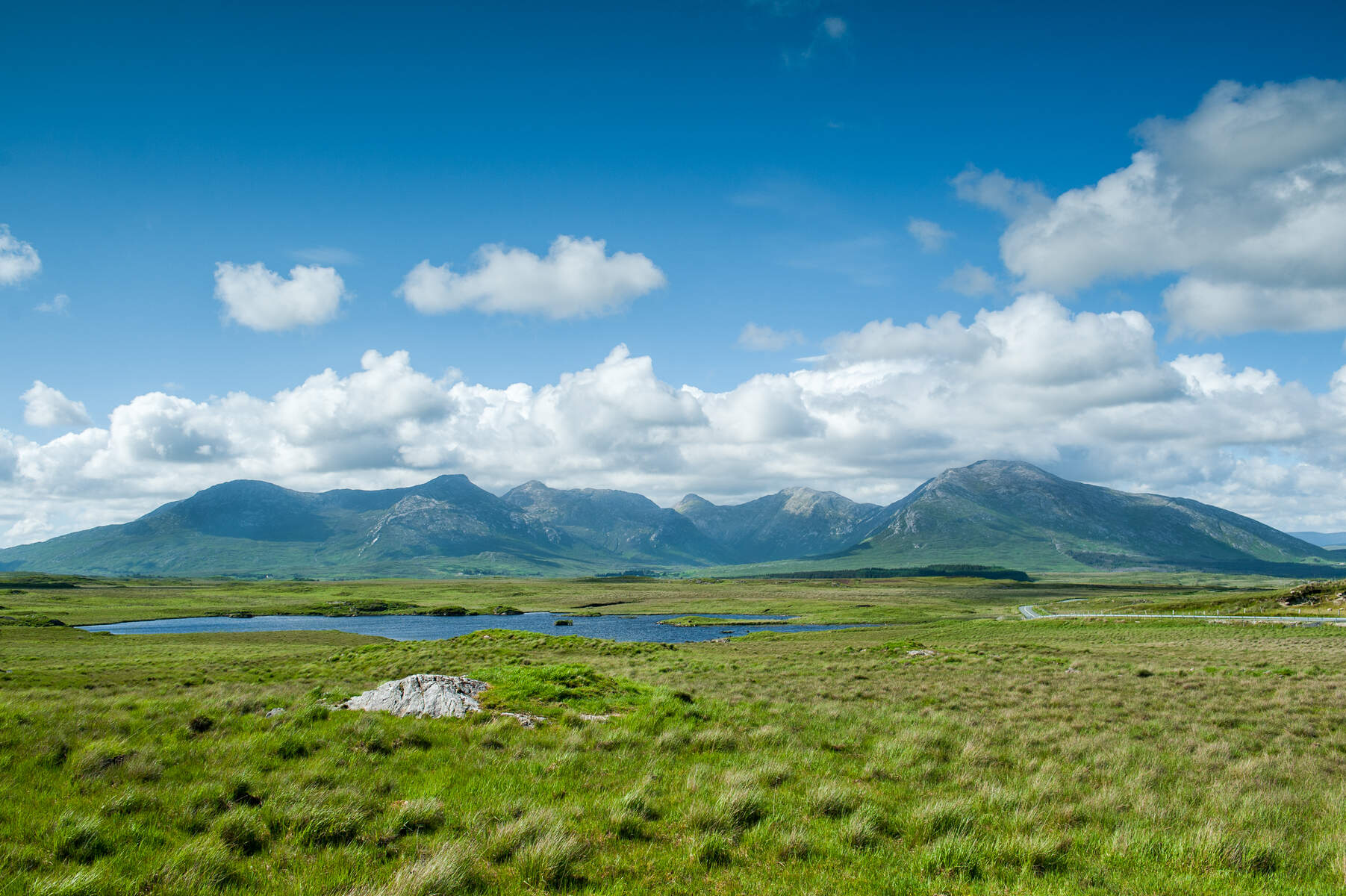
Máméan – also written as Maumeen, Mamean or Mám Éan – is a small but powerful pilgrimage site tucked into a natural mountain pass in the heart of the Maumturk range, Connemara. The Irish name means “the pass of the birds” and the location lives up to it: flocks of swallows and meadow‑larks dart among the crags, while the surrounding peaks frame spectacular panoramas of the Twelve Bens, the Inagh Valley and the distant Atlantic coastline. The site is free to visit and is open year‑round, attracting walkers, pilgrims and history‑enthusiasts alike.
History
The pass has been a focal point of ritual long before Christianity arrived. Archaeological and folkloric evidence links it to the ancient Lughnasa harvest festivals, when local communities gathered to honour the god Lugh. In the 5th century, according to Irish tradition, St Patrick travelled through Joyce Country and blessed the spot, leaving a holy well, a stone altar and a footprint on a rock. Legend tells that hostile locals hurled stones at him; the saint answered by flinging his crozier, which miraculously turned into a serpent that chased the aggressors away.
During the Penal era of the 18th century, when Catholic worship was outlawed, the site served as a clandestine outdoor church. A mass rock – a low stone slab – was used for secret Masses, and the surrounding stones were later arranged as a makeshift Stations of the Cross. By the 19th century the pilgrimage had waned, partly due to faction fighting and poitín drinking, but a revival began in 1979 under Fr Micheál MacGréil. The modern chapel, known as Cillin Phédraig, was erected in the 1980s, and sculptor Cliodhna Cussen added the iconic stone statue of St Patrick as a shepherd in 1986.
Legends & Folklore
Irish storyteller Máire MacNeill recorded several tales about Saint Patrick’s visit to Máméan. One story describes Patrick confronting the pagan deity Crom Dubh, who is said to have taken the form of a bull. The bull allegedly drowned in a nearby lake after the saint’s intervention, a motif that still colours local folklore. These legends, together with the ancient Lughnasa connections, give the pass a layered mythic atmosphere that enriches the pilgrim’s experience.
What to See & Do
| Feature | Description |
|---|---|
| Cillin Phédraig (chapel) | A modest stone oratory perched beside the pass, used for regular Masses and the three annual pilgrimages. |
| Holy well | A spring reputed to have healing properties; visitors often leave small tokens as votive offerings. |
| St Patrick’s Bed (Leaba Phádraig) | A cleft in the rock where, according to tradition, the saint rested during his journey. |
| Stations of the Cross | A circle of stones marking the traditional 14 stations; a volunteer often leads a silent procession during pilgrimages. |
| Mass rock (Carraig an Aifrinn) | The 18th‑century stone slab where clandestine Masses were celebrated under the Penal Laws. |
| St Patrick statue | Sculpted by Cliodhna Cussen in 1986, the figure shows the saint as a shepherd with a lamb at his feet – a symbol of the region’s enduring sheep‑farming heritage. |
Beyond the religious monuments, the walk itself offers a rewarding blend of geology and scenery. The trail traverses quartzite, marble and schist that formed over 450 million years ago, linking the Irish landscape to the ancient Appalachian chain. On clear days the summit of the pass provides sweeping views of the Twelve Bens to the south‑west and the rugged Maumturks spine to the north‑east.
Walking & Hiking Routes
Binn Chaonaigh – The peak of the moss (633 m) rises just north of the pass. A popular 6 km round‑trip from Máméan takes 2‑3 hours and offers close‑up views of the surrounding ridgeline. The route is well‑marked and suitable for most walkers.
Maamturks Challenge – For the more ambitious, the annual 25 km “Maamturks Challenge Walk” organised by the University College Galway Mountaineering Club tackles the full Maumturks ridge, passing over Binn Chaonaigh, Binn idir an dá Log and other summits. Check the club’s website for dates and checkpoint details.
Western Way – The long‑distance trail continues beyond the pass toward Lough Inagh and the Twelve Bens, adding another 8‑10 km of relatively easy terrain for those wanting a longer day hike.
All routes are well‑signposted from the car park, but walkers should be prepared for rocky sections that can become slippery in wet weather.
Nearby Attractions
- Benbaun – The highest peak of the Twelve Bens (729 m) lies a short drive away and makes an excellent follow‑up climb. [/benbaun/]
- Bencorr – Another striking summit in the Twelve Bens, offering panoramic views of Connemara. [/bencorr/]
Both peaks are accessible from the same road network that serves Máméan, making a combined day‑trip easy to plan.
Practical Information
Getting there – The most popular access point is the marked car park on the L5136 road, a right‑hand turn off the N59 between Oughterard and Clifden. From Galway City, follow the N59 past Maam Cross, turn right onto the L5136 and continue for about 4 km; signage points to the Máméan car park. An alternative start is at the bridge opposite Keane’s Pub in Maam, where a short tarmac stretch leads to the same track.
Parking – The car park provides a small number of free spaces (approximately 20). It can fill quickly during pilgrimage days and the summer hiking season, so early arrival is advisable.
Walk length & timing – The distance from the car park to the chapel is roughly 1.5 km (about 30–45 minutes at a moderate pace). The entire short loop – up to the chapel and back – can be completed in under an hour. Longer options are described above.
Path conditions – The approach is a mix of tarmac, a bulldozed sand‑and‑stone track and a final rocky section that can be uneven and slippery when wet. The route is not suitable for pushchairs or wheelchairs. Dogs are welcome but must be kept on a lead as sheep graze the surrounding hills.
Facilities – There is a small free parking area at the car park. No permanent visitor facilities such as toilets or a café exist on‑site; the nearest amenities are in the villages of Maam, Lough Inagh and Leenane. Carry water and snacks.
Opening hours & fees – The pilgrimage site is open all year, with no admission charge. The chapel opens for Mass on the three pilgrimage days and for occasional services; otherwise it remains accessible to the public.
Contact & further information – Detailed route maps and up‑to‑date event notices are available from the Galway tourism board page for Máméan and the Diocese of Tuam site. For enquiries about the Western Way or the Connemara Mountain Walking Festival, call +353 872 819 825.
Coordinates – 53.492484 N, 9.652963 W.