
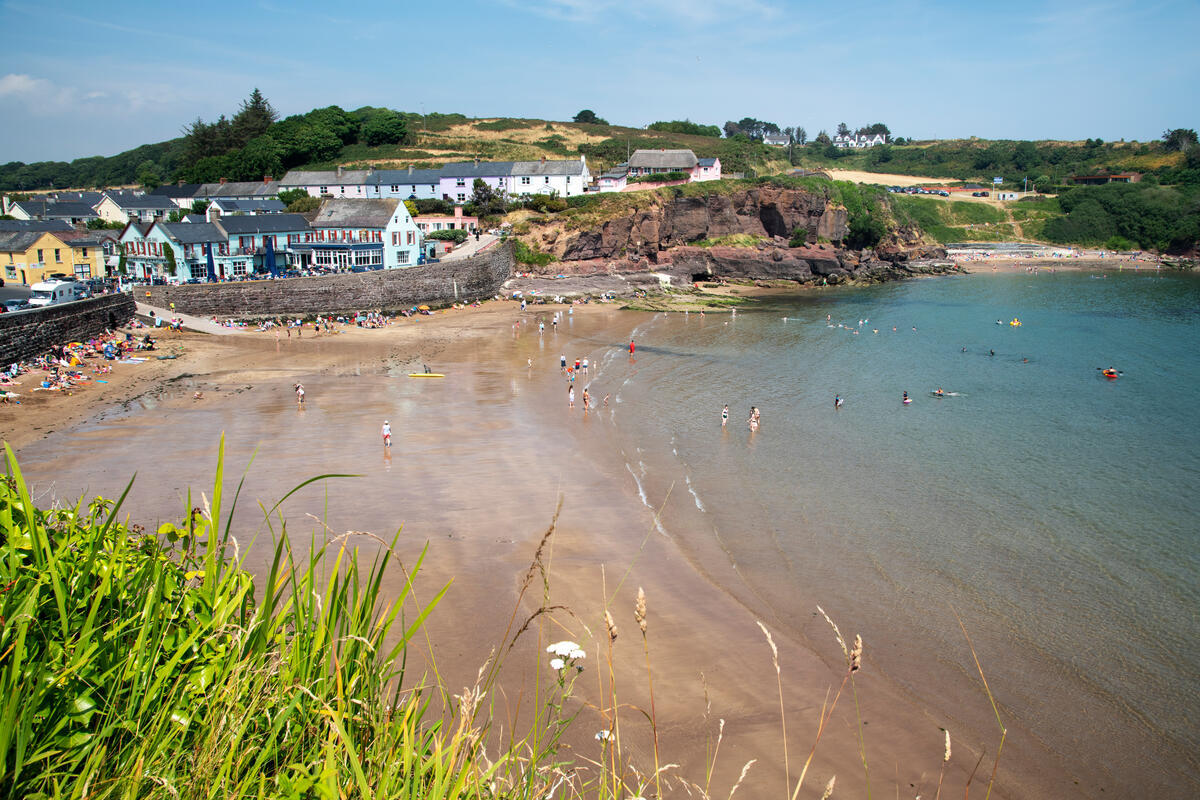
Overview
Waterford Harbour (Irish: Cumar na dTrí Uisce) is one of Ireland’s most picturesque natural harbours. Situated where the River Nore, River Suir and River Barrow – collectively known as the Three Sisters – pour into the sea, the harbour forms a wide, sheltered inlet that has supported shipping, fishing and tourism for centuries. The port can accommodate vessels up to 32,000 tons deadweight, making it a vital commercial gateway for both Waterford and the nearby town of New Ross. Beyond its industrial role, the harbour’s coastline is dotted with charming villages, dramatic headlands and one of the world’s oldest operational lighthouses, Hook Lighthouse.
History & Background
The strategic importance of Waterford Harbour dates back to early medieval times. The confluence of three major rivers made it a natural meeting point for trade and settlement, and Viking longships are known to have used the inlet as a safe anchorage. After the Norman invasion of 1170, Strongbow landed at Passage East – the eastern gateway to the harbour – before moving on to capture Waterford city.
In the 12th century the stone tower that would become Hook Lighthouse was erected, guiding ships for over 800 years. By the 19th century the harbour had been deepened under a 1816 Act of Parliament; the “Ford” channel was dredged to a depth of 21 ft at spring tide, allowing steam‑vessels of up to 800 tons to berth without waiting for high water. The Harbour Commissioners introduced three pilot boats (one of 40 tons and two of 30 tons) and installed gas‑lit quays, dramatically improving safety and efficiency.
The harbour remained a hub for shipbuilding – the Neptune Ironworks built several trans‑Atlantic liners in the mid‑1800s – and later evolved into a modern cargo port. Today the deep‑water Belview Port (locode IEWAT) handles vessels up to 32,000 DWT, while the smaller Dunmore East Port, managed by the Department of Agriculture, Food and the Marine, serves passenger traffic and leisure craft.
What to See & Do
| Location | Highlights |
|---|---|
| Dunmore East | A lively fishing village with sandy beaches, seafood cafés, bars and a range of water‑sports. The village is a popular base for exploring the harbour’s western edge. |
| Creaden Head | A rugged headland offering panoramic views across the estuary and a network of coastal walking routes, including the Creaden Head Loop (≈ 4 km). |
| Hook Head | Home to Hook Lighthouse, one of the oldest operational lighthouses in the world. Visitors can climb the tower for sweeping vistas of the harbour and the Irish Sea. |
| Passage East – Ballyhack Ferry | A short (≈ 5‑minute) passenger ferry runs regularly across the harbour, linking the villages of Passage East and Ballyhack. The service is useful for a quick coastal hop‑on‑hop‑off experience. |
| Geneva Barracks (Passage East) | Ruins of an 18th‑century military barracks built for Swiss refugees; a plaque commemorates the site. |
| Ballyhack Norman Tower House | A 15th‑century tower house built by the Knights Hospitaller, later occupied by Cromwellian forces – the origin of the phrase “by Hook or by Crook”. |
Walking & Wildlife
- Dunmore East Cliff Walk – a 5 km coastal trail that skirts the western fringe, offering sea‑level perspectives of Hook Head and the lighthouse.
- Creaden Head Loop – a moderate walk with opportunities for bird‑watching; the headland is a known spot for spotting ospreys, terns and wintering waders.
- Hook Peninsula Trail – links the lighthouse with the historic tower house at Ballyhack, providing dramatic cliff‑top views.
Water‑Based Activities
- Sailing & Cruising – the harbour is a popular base for day‑cruises; the tidal stream can reach up to 3 knots, and a speed restriction of 6 knots applies up‑river from Passage East.
- Fishing – both commercial and sport fishing operate from Dunmore East and Ballyhack; local cafés serve freshly caught mussels and fish.
- Kayaking & Paddle‑boarding – calm waters near the villages are ideal for beginners.
Golf & Cycling
Several golf courses overlook the water, including the Waterford Harbour Golf Club. Relatively flat, well‑marked cycle routes trace the estuary’s edge, connecting Dunmore East, Creaden Head and the Hook Peninsula.
Practical Information
- Access – The harbour is reached via the N25 from Waterford City (≈ 20 km). Signage directs drivers to Dunmore East, Creaden Head and the Hook Peninsula.
- Parking – Free car parks are available in Dunmore East (near the pier), at the Hook Lighthouse visitor centre and at Creaden Head. Larger vehicles can use the designated lay‑by at the harbour entrance.
- Lighthouse Opening – Hook Lighthouse offers guided tours from April to October (daily in summer, weekdays in shoulder months). A modest entry fee applies; advance booking is recommended during peak season.
- Ferry Schedule – The Passage East–Ballyhack ferry runs roughly every 30 minutes from early morning until dusk; check the local timetable for exact times.
- Boating – Anchoring is permitted in Dunmore Bay, Lumsdin’s Bay, Templetown Bay and Dollar Bay. Anchoring in the main fairway is prohibited except in emergencies. VHF channel 14 is used for port control; pilots are required for vessels over 150 gt.
- Tides & Currents – The harbour experiences a tidal range of about 4 m. The flood begins at +02 10 Dover (‑04 25 Cobh) and the ebb at –05 05 Dover (+00 45 Cobh). Currents can reach 3 knots in the central channel.
- Cruise Traffic – In 2023 the port handled 20 cruise ship calls, bringing roughly 39 000 visitors (≈ 27 000 passengers, 12 000 crew). Major operators include P&O Cruises and Hurtigruten.
- Facilities – Waterford City Marina offers fuel, water and internet. The harbour’s commercial facilities operate 24 hours, but visitor areas remain safe and accessible throughout the day.
Nearby Attractions
While the harbour itself provides a wealth of experiences, it also serves as a gateway to other Waterford highlights. The Waterford Greenway begins not far inland and offers cyclists and walkers a scenic 46‑km off‑road trail. The Comeragh Mountains lie to the north, presenting opportunities for more rugged hiking, while the historic city of Waterford, with its Viking Triangle and museums, is a short drive away.
Whether you are a sailor fascinated by the harbour’s commercial activity, a history buff eager to climb an ancient lighthouse, or a family looking for beachside relaxation, Waterford Harbour delivers a diverse and memorable Irish coastal experience.
Website: Waterford Harbour – Wikipedia